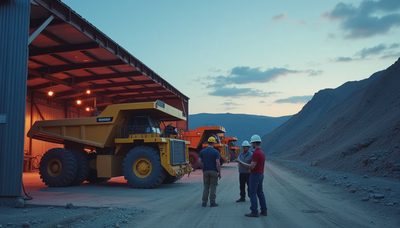
I was in Western Australia when a haul truck came into the shop with a failed final drive. The inspection showed the damage started with a missed oil sample and a service interval that existed on paper but not in the dispatch system. The truck sat for nine days, and the repair bill climbed well past the cost of several proper inspections. That is why mining equipment maintenance scheduling is not office paperwork. It is production control, risk control, and crew protection.
I spent 30 years with Caterpillar field service on mines in Australia, Chile, West Africa, Indonesia, and the western United States. I've seen this go wrong. Here's how you avoid it: build a schedule around machine hours, operating conditions, component risk, and the people who actually perform the work.
Start with the machine, not the calendar
A calendar-only plan is a weak foundation. A 24-hour mine can put 500 hours on a haul truck in a month, while a seasonal quarry may barely reach that number in a year. Mining equipment maintenance scheduling should use hour-meter readings, fuel burn, cycle counts, and duty severity rather than simply assigning work to the first Monday of each month.
Begin with an equipment register. Record the machine model, serial number, engine hours, transmission hours if available, attachment details, fluid specifications, and current component condition. Separate assets into groups such as haul trucks, hydraulic shovels, wheel loaders, dozers, graders, crushers, and support vehicles. Each group has different failure patterns. A haul truck demands close attention to brakes, tires, final drives, hoist cylinders, and cooling systems. A hydraulic shovel needs disciplined inspection of pumps, swing machinery, hoses, and contamination control.
Use the manufacturer's operation and maintenance manual as the baseline, then adjust for dust, altitude, heat, mud, steep grades, and operator loading habits. Those conditions can justify shorter inspection or sampling intervals.
Build service levels that crews can follow
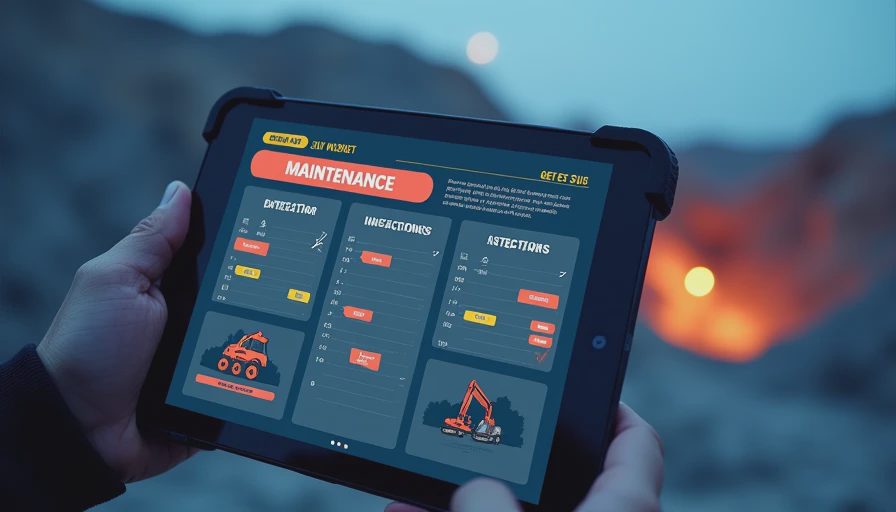
Good mining equipment maintenance scheduling has several layers. The daily walkaround catches leaks, loose hardware, damaged guards, abnormal tire condition, and warning lights before the machine enters a shift. A weekly inspection can include battery connections, grease points, air filters, fire suppression components, and undercarriage measurements. Hour-based services then cover engine oil, filters, fuel-water separators, hydraulic oil, transmission oil, and cooling-system checks.
For a large haul truck, a practical plan might include a 10-hour operator inspection, a 250-hour service, a 500-hour fluid and filter service, and a 1,000-hour inspection with deeper checks. Do not copy those intervals blindly; the correct schedule depends on the specific machine and manufacturer instructions. At 2,000 or 4,000 hours, plan major inspections well ahead of time, because a component change requires parts, lifting equipment, qualified technicians, and a safe work window.
Assign each task an owner. “Maintenance department” is not an owner. Name the operator, lube technician, planner, electrician, or mechanic responsible for completion and signoff. A task without a named person is a future failure.
Use condition data before the failure becomes expensive
Mining equipment maintenance scheduling becomes far more useful when it includes condition monitoring. Oil analysis can identify wear metals, coolant contamination, fuel dilution, and abnormal viscosity before a component destroys itself. A sample from an engine, transmission, hydraulic system, or final drive is only valuable when it is taken correctly and compared with earlier samples.
Track trends instead of reacting to one alarming result. A gradual rise in iron from a final drive deserves a planned inspection. Water in hydraulic oil demands immediate attention because contaminated oil can damage pumps, valves, and cylinders throughout the circuit. Inspection routes should also record temperatures, pressures, vibration, tire condition, brake performance, and visible seepage.
Technology helps, but it does not replace a technician's eyes and ears. Telematics can flag fault codes, idle time, payload, overspeed events, and abnormal operating temperatures. A mechanic still needs to verify the complaint. I have watched a dashboard code lead people toward the wrong component because nobody checked a loose connector or a damaged harness.
Field Lesson: On a copper site in Chile, a shovel operator reported a slight change in swing noise. The data showed nothing dramatic. A hands-on inspection found early bearing damage. Planning that repair during a scheduled outage avoided a much larger structural repair and several weeks of lost loading capacity.
Protect the maintenance window
A schedule is useless when production cancels every planned outage. The maintenance planner and shift supervisor need a daily meeting that covers available machines, parts status, labor, permits, lockout requirements, and expected return time. If a truck is due for service at 6 a.m., the filters, oils, tooling, spill kit, and service truck should be ready before the truck arrives.
Create a backlog with clear priorities. Safety-critical defects come first, followed by failures that can damage expensive components, then reliability improvements and cosmetic work. A worn brake component, leaking hoist cylinder, or damaged steering hose should never compete equally with a broken cab light.
Plan around production without hiding risk. If the only available outage is short, complete the safety inspection and critical service first, then schedule the remaining work in a controlled follow-up window. Document every deferred item with a due date and approval. “Deferred” must never mean forgotten.
Make the work package specific
Each job card should tell the technician what to inspect, what measurement to take, what acceptable range applies, and what action follows an abnormal result. “Check hydraulics” is poor instruction. “Inspect pump case drain flow, hose abrasion, reservoir level, and oil condition; record results and escalate abnormal findings” gives the mechanic something usable.
Include the correct parts and quantities. A missed O-ring can hold up a repair longer than the main component. List required tooling, lifting points, isolation steps, torque requirements, fluid grades, and disposal instructions. For high-risk work, include a job hazard analysis and a second-person verification for stored energy, raised bodies, suspended loads, and electrical isolation.
After the job, record actual hours, parts used, findings, photographs when useful, and the technician's recommendation. This history improves future mining equipment maintenance scheduling because it shows which components consistently fail early and which service tasks are being completed late.
Safety has to outrank production
Safety Alert: Never work beneath a raised dump body, loader arm, bucket, or shovel attachment without the manufacturer's approved blocking or support procedure. Hydraulic pressure can disappear without warning. Shut down, isolate, dissipate stored energy, and verify the machine is secure before entering a danger zone.
The same rule applies to tires, batteries, rotating equipment, crushers, and electrical cabinets. A maintenance plan that saves two hours but exposes a technician to an uncontrolled load is not an efficient plan. It is a bad plan with a delayed consequence.
Call a qualified shop or field specialist when the job involves structural cracking, brake system performance, high-voltage equipment, major hydraulic contamination, tire removal from a large haul truck, or a component that requires specialized tooling. A supervisor should never pressure a mechanic to improvise around a procedure that protects people.

Review the schedule every week
Mining equipment maintenance scheduling should be reviewed weekly using a few practical measures: planned work completed, emergency work hours, overdue services, repeat failures, parts delays, oil-analysis exceptions, and machine availability. If emergency repairs keep rising, the answer is not always more labor. Look for weak inspections, poor lubrication, contamination, operator training gaps, or an interval that does not match the duty cycle.
A simple review might show that a wheel loader is receiving filters on time but losing hydraulic hoses every 600 hours. That points toward routing, abrasion, pressure spikes, or poor clamping rather than a calendar problem. The schedule should then add hose inspections and a corrective engineering task.
The best plan is visible to operators, mechanics, planners, and supervisors. Use a computerized maintenance management system if the site has one, but a clean board and disciplined signoff can work for a smaller operation. The tool matters less than accurate hours, honest findings, and follow-through.
A mine does not become reliable because someone printed a maintenance calendar. It becomes reliable when every machine has a clear service trigger, every abnormal finding has an owner, and every safety-critical repair gets protected time. That is the practical purpose of mining equipment maintenance scheduling: catch trouble while it is still a repair, not after it becomes an incident, a shutdown, or a recovery job in the pit.