I spent two weeks on a copper mine in Chile trying to figure out why a 793 haul truck's steering was getting sluggish. The pump was fine, the valve spools looked clean, but the oil was turning into chocolate milk. That's when I learned the hard way: you can't fix what you don't test. If you want to keep your equipment running, you need to know **how to check hydraulic system contamination** before it shuts you down.
Contamination is the number one killer of hydraulic components. I've seen it cause pump seizures, valve sticking, and cylinder scoring across six continents. The good news? You don't need a lab coat to catch it early. With a few simple checks, you can spot trouble before it costs you a week of downtime and a $50,000 pump replacement.
Why Contamination Is Your Hydraulic System’s Worst Enemy
Hydraulic systems rely on tight clearances—sometimes less than a micron between moving parts. A single grain of dirt can score a spool valve or wipe out a pump's thrust plate. Water contamination turns oil into a milky mess, accelerates rust, and destroys lubricating properties. Field Lesson: On an iron ore site in Australia, we lost an entire dump trailer's raise circuit because a failed breather let in dust during a dry spell. The contamination cost two weeks of production. Safety Alert: Contaminated oil also increases system temperature, raising fire risk in tight engine compartments.
Field-Proven Methods to Check Hydraulic System Contamination
Over the years, I've developed a routine that catches 90% of contamination issues early. Here’s how to check hydraulic system contamination like a field engineer.
1. Visual Inspection and Sump Sampling
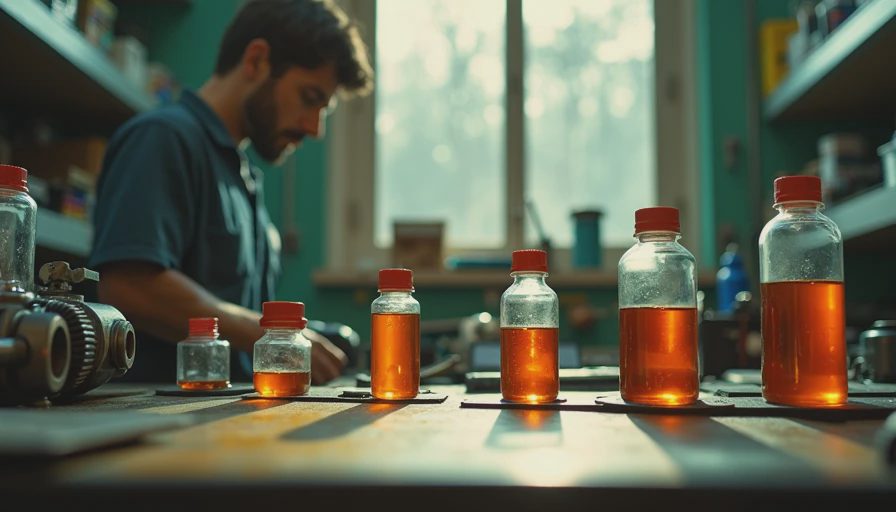
Start with the simplest check: pull the dipstick and look at the oil. Fresh hydraulic oil is clear amber or pale gold. Dark, cloudy, or milky oil means trouble. Darkening indicates oxidation from heat or long service. Milky oil means water has entered the system—common after pressure washing or in humid climates. I always carry a clean, clear bottle. Take a sample from the bottom of the reservoir (where water and sediment settle). Let it sit for 30 minutes. If you see a water layer or sludge in the bottom, you’ve got contamination.
2. Oil Analysis – The Gold Standard
Nothing beats a lab oil analysis for catching wear metals and fine contamination. On our jobsites, we took samples every 250 hours and shipped them to a lab. The report shows particle count, viscosity, and elemental wear (iron, copper, silicon). High silicon means dirt ingestion—check your breathers and seals. High iron points to pump wear. If you don’t have a lab program, you can buy a simple patch test kit: pass oil through a filter patch and compare to a chart. It’s not as accurate, but it’ll tell you if you’re heading for trouble. **I've seen this go wrong:** A contractor ignored patch test spikes and kept running. The pump failed 50 hours later. Here’s how you avoid it: set action limits. If particle count exceeds ISO 20/18/13, schedule a filter change and deeper investigation.
3. Filter Cutting – What’s Hidden in the Media
Don’t just throw away used filters—cut them open. I carry a filter cutter in my tool bag. Unroll the pleats and inspect the media. Look for shiny metal particles (bearing wear), black specks (seal degradation), or fibers (filter element failure). Field Lesson: In Indonesia, I found fibrous material in a D11 dozer’s return filter. Turned out the suction hose lining was delaminating. Caught it before debris reached the pump. Cutting filters takes five minutes and can save you thousands.
4. The Breather Check – A Common Oversight
Many contamination problems start at the breather. A cracked or missing breather cap lets dust and water straight into the reservoir. On mining sites, I’ve seen breathers clogged with mud or filled with insect nests. Check breathers every service. Replace them annually or if they look damaged. It’s a $20 part that protects a $50,000 system.

How to Prevent Contamination Before It Starts
Prevention beats detection every time. Here are the practices that kept our equipment running across Africa, South America, and the Rockies.
- **Use proper filtration:** Always use OEM or known-quality filter elements. Cheap filters can collapse or bypass, sending dirt downstream.
- **Keep drums sealed:** Store hydraulic oil drums indoors or under cover. Condensation forms in partially full drums left in the sun. Use a drum pump with a desiccant breather.
- **Flush after repair:** After any component replacement, flush the system with low-viscosity oil or a dedicated flushing rig. Never just top off and run.
- **Monitor temperature:** High heat accelerates oil breakdown and reduces additive effectiveness. If your system runs above 180°F, check for contamination or undersized coolers.
Final Thoughts
Knowing how to check hydraulic system contamination isn’t just a maintenance task—it’s a survival skill for heavy equipment. I’ve walked away from too many machines that were hours from catastrophic failure because someone took the time to look at the oil, cut a filter, or check a breather. Make these checks part of your routine. Your pumps, valves, and cylinders will thank you.
If you want to dive deeper into hydraulic system troubleshooting, grab my free checklist at ThrottleTales. It covers the exact steps I used on six continents—no desk-jockey advice, just field-proven methods.



No letters yet — be the first to write.