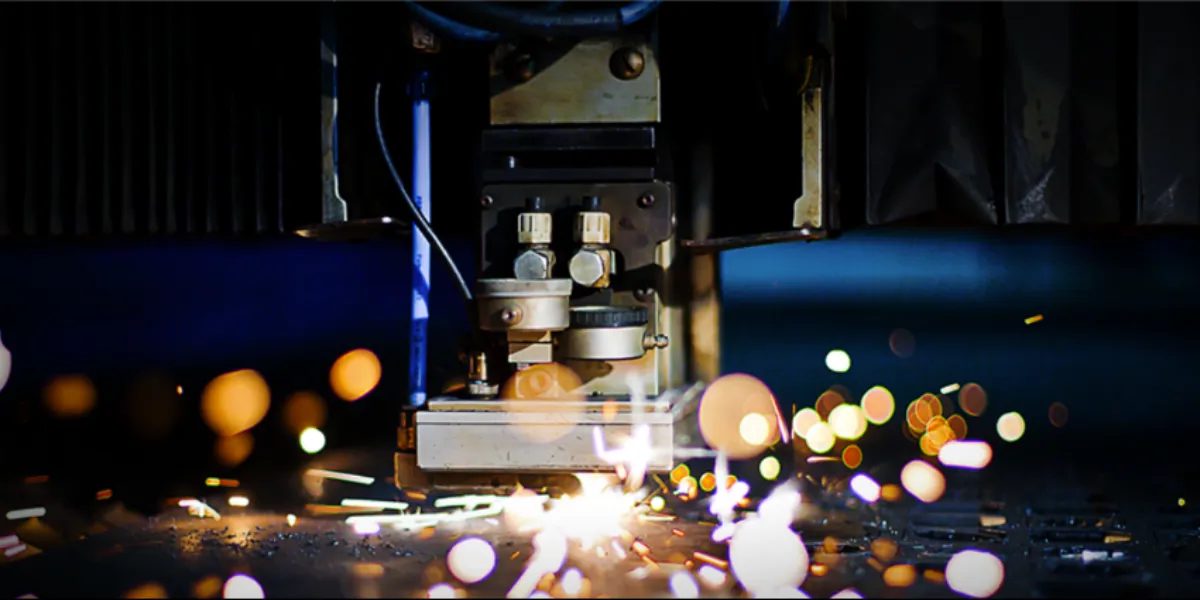
The metalworking and metal fabrication industries occupy a central place in the EU's economy, stimulating growth, fostering innovation, and creating jobs across the continent. Beyond that, this sector serves a broad spectrum of industries, ranging from construction through to consumer goods.
The metalworking sector is equally critical to the EU's transition toward a more resource-conscious and sustainable economy — a cornerstone of the bloc's strategy for 2023 and the years ahead.
Businesses operating in this space are working hard to boost efficiency and meet the ecological benchmarks established by the EU. Among the most consequential decisions in that effort is the choice of metalworking fluids.
This article covers everything you need to know about metal processing methods and machinery, and explains how the selection of lubricants affects each of them.
Let's dive in.
Metalworking refers to the shaping and forming of metal workpieces. The field is broadly organized into four principal categories: forming, cutting, casting, and joining.
Cutting encompasses a range of techniques — among them milling, routing, and turning — all of which involve removing material from a workpiece.
Cutting operations serve many purposes, spanning automotive repair through to large-scale construction.
- Milling is the process of taking a precise quantity of material from a larger piece using a milling machine. The tool spins and sculpts the metal with a high degree of accuracy. Milling machines, together with lathes, are indispensable in any metalworking environment.
- Turning — in this process, excess material is removed from a rotating workpiece. Lathes are the predominant machines employed here. That said, advances in metal cutting technology have made CNC machines increasingly common, enabling greater automation.
- Grinding is an abrasive metal processing technique applied to remove material from a workpiece, typically during the final stages of metal processing. Grinding machines vary widely in size and precision. Common grinding tools include angle grinders, bench grinders, and CNC machines. The grinding wheel itself may be made from various materials, such as stone or diamond, and it produces precise cuts while delivering a fine surface finish.
- Drilling — the name says it all: a spinning drill creates holes in a metal workpiece. A variety of machines are used for this, from CNC machines to drill presses. Keeping the bits well lubricated extends the machine's service life and helps prevent premature wear.
Joining stands in direct contrast to metal cutting. In joining operations, separate metal pieces are merged to form a single unit. The most widely used joining methods are welding and soldering.
- Soldering joins two metal surfaces by melting solder between them. This technique finds application in fields as diverse as plumbing and electronics. The typical tools involved include gas-powered torches and electric soldering irons.
- Riveting. Rivets are permanent mechanical fasteners employed to connect multiple metal pieces together.
Forming relies on the application of heat and pressure to reshape a workpiece without adding or removing any material. The most prevalent forming methods are forging and bending.
- Forging uses hammering, bending, or pressing to achieve the desired shape in a piece of metal.
- Rolling. The metal piece passes through a rolling mill, which reduces its thickness. Rolling may be performed hot or cold. In hot rolling, the workpiece is processed at temperatures exceeding its recrystallization temperature. Cold rolling, by contrast, takes place at temperatures below the metal's recrystallization temperature.
Casting is employed across a variety of creative applications, including the production of jewelry and sculptures. Molten metal is poured into a mold shaped as a negative impression of the intended form. In addition to being cost-effective and time-efficient, casting makes it straightforward to produce numerous identical pieces.
- Lost wax casting. This method builds a workpiece around a wax model and is also referred to as precision casting.
- Sand casting. Sand casting is the process in which sand serves as the mold material.
The examples above make clear that the metalworking industry encompasses many distinct branches. Each of them demands a broad array of tools and machines that must perform reliably under highly demanding conditions.
Below is an overview of the most commonly used equipment in metal processing.
Lathes rank among the oldest and most significant machines in the metal processing industry. They are capable of performing a wide variety of operations, including cutting, drilling, and turning, among others.
They function by rotating a metal workpiece to carry out different operations. In addition to ferrous and non-ferrous metals, lathes can also be used to process plastics and wood.
A milling machine is equipped with rotating cutters that strip away unwanted material from a workpiece.
Milling machines perform two primary operations: face milling and peripheral milling. Face milling is used to flatten metal surfaces, with the machine oriented at the correct angle, face down toward the workpiece. Peripheral milling, meanwhile, involves positioning the cutter parallel to the workpiece.
Highly adaptable by nature, milling machines handle everything from basic cutting operations to far more complex tasks.
Grinding machines feature an abrasive wheel that spins at high speed and removes small quantities of material from a workpiece's surface. Their functions include shaping, flattening, and smoothing metal surfaces that have been cut by other tools beforehand. They are essential across nearly all metalworking disciplines, from automotive manufacturing to construction.
Drilling machines are designed to bore holes through a range of materials, metals included. These versatile tools appear across many sectors such as construction, manufacturing, and maintenance. Typical uses include drilling holes for screws, bolts, and other fasteners; creating pilot holes for larger bits; and boring through materials for plumbing or electrical installations.
Hobbing machines are a specialized subtype of milling machine. They use a hob — a cutting tool purpose-built for cutting gears, splined parts, and similar components.
Hobbing machines are relatively economical to operate and generally require only a small crew to run. They see broad industrial use, with applications spanning aerospace through to power transmission industries.
Saw machines fall into three main categories: hacksaws, circular saws, and band saws.
Band Saw. A band saw cuts through both metal and wood. It is engineered for precise cuts and is particularly well suited to metalworking projects that demand consistent, accurate cutting movements.
Circular Saw. Circular saws use a rotating disc to make cuts in a rotary motion. Among the most versatile saw machines available, they are suited to a wide variety of cutting applications.
Hacksaw. These hand-powered, small-toothed tools are straightforward to use and play a foundational role in both professional and DIY settings. They are primarily used to cut through metal items.
The term metalworking fluids (MFs) — also called metal processing fluids — refers to oils and other lubricants used in metal forming, machining, grinding, milling, cutting, honing, and stamping operations.
These fluids serve several functions within metal processing. They clean, cool, and lubricate metalworking tools, thereby reducing friction and heat generation. In doing so, they enhance both the performance and service life of metal processing equipment. Critically, they also improve the quality of the finished product by continuously flushing away metal particles from both the cutting tool and the workpiece surface.
Metalworking fluids are sophisticated blends comprising up to 30 ingredients, built on quality base oils and augmented with advanced additives — among them emulsifiers, corrosion inhibitors, buffers, extreme pressure additives, anti-weld agents, and biocides.
Metalworking fluids are high-performance solutions engineered to deliver outstanding properties throughout metal processing. Their benefits include:
It is therefore no surprise that the European metalworking fluids market is expanding at a remarkable pace. Industry figures put the market at $2,678 million in 2020, with escalating product demand projected to push that figure to $3,856.2 million by 2027.
Based on their chemical composition, metalworking fluids can be categorized as straight oils, emulsions, semi-synthetic oils, or synthetic oils. They are typically sorted according to their use in specific metalworking processes. In Valvoline's range, for instance, you will find the broadest selection of fluids for metal processing by cutting, metal processing by deformation, and metal processing by electroerosion.
Cutting oils are mineral, non-emulsifying fluids intended for low-speed, high-resistance processing applications. They are divided into inactive and active types.
Inactive cutting oils incorporate anti-oxidation and anti-corrosion additives in an inactive form, making them well suited to non-ferrous and white metals, since they do not chemically react with those surfaces.
Active cutting oils contain sulfur, phosphorous, and chlorine-based additives in an active form. Because these additives are not tightly bound to the oil, they react chemically with the surfaces of nonferrous metals and their alloys even at low temperatures. For this reason, they are never applied to non-ferrous or light metals.
Deform oils are intended for metalworking by plastic deformation — processes in which large forces must be applied to generate the stress needed for metal modification. Plastic deformation encompasses the rolling, forging, and high-pressure torsion processes mentioned earlier. During plastic deformation, the mechanical properties of the metal are changed, producing a corresponding change in the object's shape.
These are dielectric products purpose-built for metal processing by electroerosion, in which erosive discharges occur between the tool and the workpiece. They are suitable for both rough and fine machining operations. Every erozol oil in Valvoline's lineup offers excellent thermal conductivity, low viscosity, and strong anti-corrosion characteristics.
At Valvoline, our commitment is to designing, innovating, and refining formulas for metalworking applications. Our metal processing fluids are manufactured from the highest-quality materials and are specifically engineered to extend the service life of your equipment, deliver maximum protection, and provide results you can rely on.
Selecting the right product for your metalworking processes and equipment is made simple with our help. If you are unsure where to begin, consult our Lubricant Advisor, which will guide you to the right lubricants for your specific metal processing needs.
Metalworking fluids fulfill multiple critical roles in the demanding environment of metal processing. By adopting advanced, innovative lubrication solutions, companies in this sector can meaningfully improve their operations, prolong machinery service life, and reduce costly downtime. Premium metalworking lubricants also assist them in meeting the latest low-carbon and sustainability requirements.
We trust this guide has been useful. For further information about metalworking fluids and their applications, please do not hesitate to contact us or locate your nearest Valvoline distributor.
No letters yet — be the first to write.