
I remember a 40-ton excavator on a rock job outside Phoenix that came in weak, noisy, and hot before lunch. By quitting time, the pump had scattered enough metal through the system to turn a repairable problem into a full cleanup nightmare. That job is why I take the **common causes of hydraulic pump failure** seriously. Most pumps do not die from bad luck. They die from contamination, heat, starvation, wrong settings, or plain neglect. I've seen this go wrong. Here's how you avoid it.
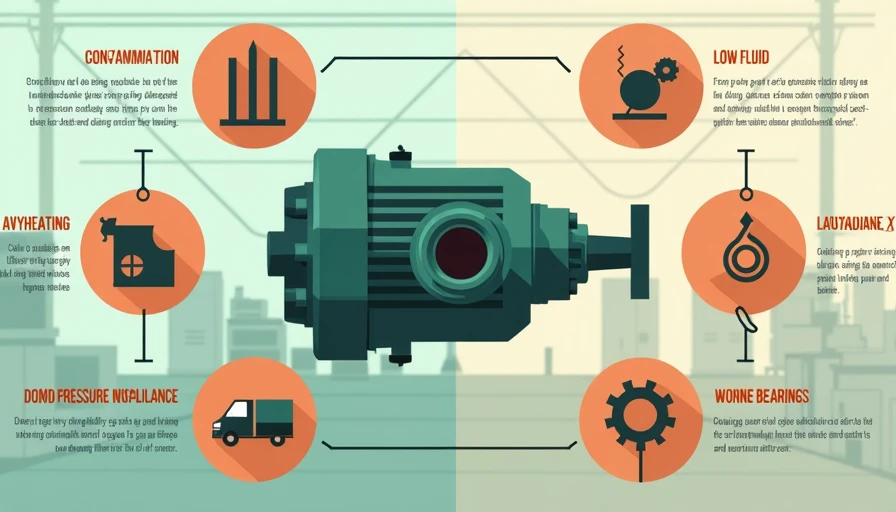
Contamination is still the number one pump killer
If you work on excavators, loaders, dozers, or drills long enough, you learn one hard truth: clean oil is cheap, dirty oil is brutally expensive. Fine dirt, metal, water, and hose debris act like grinding compound inside a hydraulic pump. Once that wear starts, clearances open up, leakage increases, heat rises, and performance falls off fast. Operators usually notice slow functions first. Techs hear the whine next.
The contamination source is often boring stuff: sloppy hose changes, dirty fill procedures, failing cylinder seals, rust from water intrusion, or a return filter left in service too long. I have opened tanks and found rags, silicone strings, and enough dust to plant potatoes.
**Field Lesson:** On a wheel loader in western Colorado, the replacement pump failed in under 200 hours because the tank was never properly flushed after the first failure. The new pump ate leftover debris and followed the first one to the scrap pile.
**Safety Alert:** Before opening any hydraulic system, lower implements, relieve pressure, lock out the machine, and treat every line as if it is still charged.

Suction restrictions and cavitation will destroy a good pump
Some of the worst hydraulic pump failures start on the inlet side, where people are not looking. A restricted suction strainer, collapsed inlet hose, plugged breather, wrong oil viscosity, or low oil level can starve the pump. When that happens, the pump tries to fill its chambers and cannot get enough oil. That creates cavitation and aeration, which are two different problems but both bad news.
Cavitation happens when vapor bubbles form and then collapse inside the pump. Aeration happens when outside air gets pulled into the oil through loose clamps, cracked hoses, or bad shaft seals. Cavitation sounds like gravel in the pump. Aeration makes the oil foamy and spongy, and cylinders may chatter.
Spent two weeks on a mine site in Chile chasing a repeat pump problem on a face shovel circuit. The root cause was not the pump model, not the relief valve, not operator technique. It was a softened suction hose liner that looked fine from the outside and folded inward under demand.
If your pump gets noisy on cold starts, under heavy load, or when the tank level drops, stop guessing and inspect the entire inlet path.
Heat and wrong oil viscosity shorten pump life fast
Heat is one of the most common causes of hydraulic pump failure, and it rarely travels alone. When oil runs too hot, viscosity drops. Once viscosity falls too far, the oil film can no longer protect rotating groups, pistons, gears, or vanes the way it should. Internal leakage rises, efficiency drops, and wear accelerates. Then the hotter oil gets, the worse the cycle becomes.
I like to ask one question in the field: what changed before the problem started? A clogged cooler, fan issue, wrong fluid, relief valve bypassing, or operators holding functions at full stroke too long can all drive temperature up. Even a machine working harder than its normal duty cycle can expose a cooling system that was already marginal.
Use the oil grade the manufacturer calls for, and think about ambient conditions. Oil that is too thick on cold mornings can starve a pump at startup. Oil that is too thin for the operating temperature can leave parts unprotected by mid-shift.
**Field Lesson:** One contractor switched fluid for convenience across mixed equipment. The excavators survived. The older loader pumps did not like it at all.
Pressure spikes, bad settings, and operator habits matter
Not every pump failure begins with contamination or heat. I have seen healthy pumps hammered to death by pressure spikes, deadheading, and bad adjustments. Relief valves set too high, compensators tampered with, or control issues that keep the pump loaded when it should destroke can all push a pump beyond what it was built to handle.
This is where backyard tuning gets expensive. Someone wants a little more breakout force or faster cycle times, so they bump pressure without checking the whole system. That extra pressure may wake the machine up for a day or two, but it also increases load on the pump, hoses, seals, and drive coupling. Then everyone acts surprised when the front pump seal blows or the shaft twists.
Operator habits count too. Holding a cylinder at the end of stroke, slamming travel changes, or repeatedly using hydraulic functions against a hard stop creates unnecessary stress and heat.
**Safety Alert:** If you do not have the correct gauges, test ports, and service procedure, do not adjust pressure controls by feel. Stop and call a qualified shop.
Misalignment, poor maintenance, and bad rebuild practices finish the job
The last group of common causes of hydraulic pump failure is the one that makes shop foremen mad, because it should be preventable. Misaligned pump drives, worn couplings, loose mounting hardware, and poor shaft support can load the pump in ways the internals were never meant to see. You may read the failure as a hydraulic problem when it started as a mechanical one.
Then there is maintenance discipline. Missed filter changes, no oil sampling, ignored noise, and running a weak pump until it grenades will always cost more than planned service. A pump that is merely worn can sometimes be caught before it contaminates every valve, motor, and cylinder downstream.
Bad rebuild practices are another repeat offender. Reusing questionable hard parts, mixing components without measurement, skipping cleanliness standards, or failing to flush lines and coolers after a catastrophic failure is how shops create comeback jobs.
I've seen this go wrong. Here's how you avoid it: keep the oil clean, protect the inlet side, control temperature, verify settings, and never install a fresh pump into a dirty system. Do those five things, and your hydraulic pump will usually tell you what it needs long before it fails.



No letters yet — be the first to write.