Every heavy equipment operator knows that a blowout in the middle of a haul cycle isn't just an inconvenience—it's a safety hazard and a thousand-dollar setback. After thirty years in Caterpillar field service, I've seen tires fail in every way imaginable: sidewall blowouts from running under-inflated, tread separations from overloads, and brand-new tires destroyed by a single hidden puncture. That's why I put together this heavy equipment tire maintenance checklist. Follow it, and you'll catch problems before they catch you.
1. Check Tire Pressure Daily—Cold
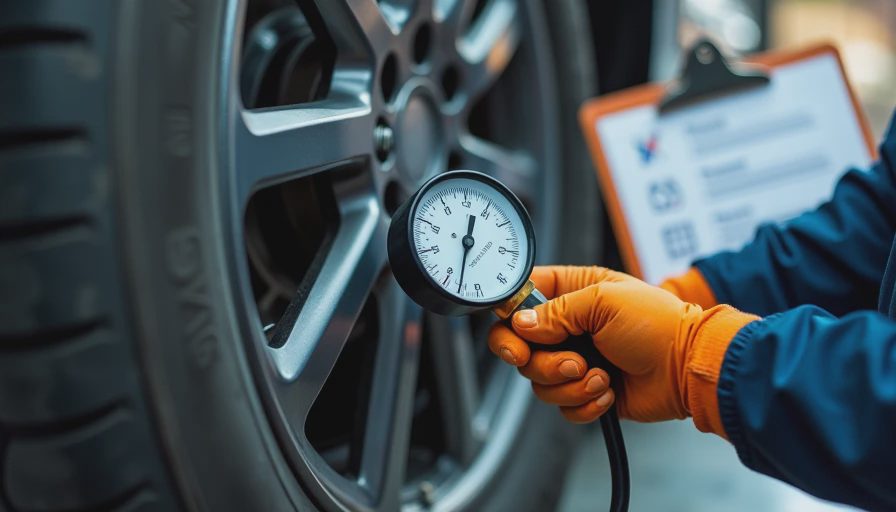
Field Lesson: I was called to a gold mine in Ghana where a 793 haul truck kept blowing right-front tires. The operator swore he checked pressure every morning. Turned out he checked it after the truck had run an hour—hot pressure reading looked fine, but cold pressure was 15 psi low. Set your gauge when the tire is cold, before the first haul. Use a calibrated gauge; the dash readout can drift. For bias-ply tires, follow the manufacturer's inflation table for the load. Radials are more forgiving but still lose performance when underinflated.
2. Inspect for Cuts, Punctures, and Sidewall Damage
Safety Alert: A sidewall gash that doesn't go all the way through can still cause a tread separation at highway speeds. On a haul road in the Copper Pit in Chile, a D11 dozer had a small cut on the sidewall—not leaking, so the operator ignored it. Two days later, the tire exploded during dozing, sending shrapnel into the fuel tank. Walk around every machine before start-up. Look for embedded rocks, nails, or cracking between tread blocks. Use a tire inspection tool to probe suspicious spots. If you find a cut deeper than the tread depth, flag it for a tire shop.
3. Monitor Tread Depth and Wear Patterns
Tread depth tells you more than just how much rubber is left. Uneven wear means misalignment, over-inflation, or under-inflation. On the 797s at an iron ore site in Australia, we saw center wear on the front tires—operator was running them at maximum pressure for the load rating, but the truck was actually running empty half the time. Drop pressure for empty hauls if the payload varies that much. Use a tread depth gauge at three points across the tire. If the difference is more than 2/32 inch between inner and outer, get an alignment check.
4. Keep Lug Nuts Torqued Correctly
I can't count the number of wheel separations I've seen caused by loose lug nuts. In Indonesia, a coal haul truck lost a rear dual on a steep grade—the truck rolled, the operator jumped, and we spent two weeks finding parts. Torque your lug nuts to the spec in the operator manual, and re-torque after the first 50 miles on a new wheel installation. Use a torque wrench, not an impact gun. And never mix Grade 5 and Grade 8 nuts on the same wheel—I've seen that cause corrosion and breakage.
5. Rotate Tires According to Manufacturer Guidelines
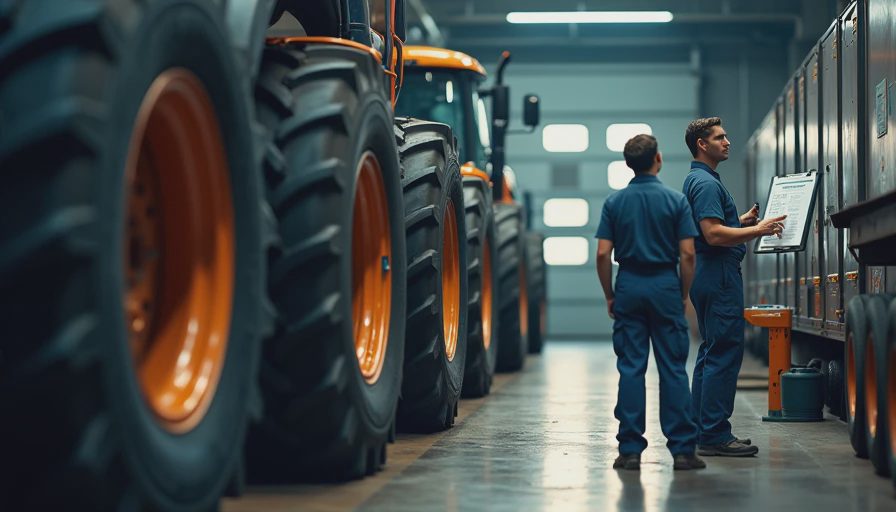
Rotation spreads wear evenly and extends tire life by 15-20%. On a motor grader, rotating front to rear can double tread life because the front tires scrub more in turns. On a wheel loader, the drive tires wear faster than the steer tires. Keep a rotation log with hour meter readings. Most OEMs recommend rotating every 500-1000 hours for mining trucks, but check your specific model. Field Lesson: In West Africa, we skipped a rotation on a 980 loader because the operator thought it was fine—four months later, the front tires were bald and the rears had 80% tread. Don't guess: follow the schedule.
6. Protect Tires from Heat and Ozone
Heat is the number one killer of off-road tires. Overloading and underinflation generate heat that can cause the rubber to delaminate. Use IR thermometers to check tire sidewall temperature after a full shift. If it's above 200°F, you're pushing the envelope. Also, ozone from electrical equipment can crack sidewalls—park machines away from welding bays or switchgear. Cover spare tires stored outside; UV light breaks down rubber just as fast as heat.
7. Store Spare Tires Properly
I've seen brand-new spare tires sitting in the sun for two years, cracked and useless. Store them in a cool, dry place off the concrete floor (concrete leaches oils). If stored vertically, rotate them every few months to prevent flat spots. Keep them away from solvents, fuel, and hydraulic fluid. And mark the storage date—rubber has a shelf life. Most tire manufacturers recommend replacing tires older than 6 years from date of manufacture regardless of wear.
8. Keep a Tire Repair Kit Onboard
On remote sites, a minor puncture can turn into a full shutdown if you don't have the tools to patch it. Your kit should include: tire plugs, a reamer, an insertion tool, a CO2 inflator (or air hose from lube truck), and a patch kit for tube-type tires. Field Lesson: In a copper mine in Arizona, a 785 haul truck picked up a drill steel in the tread. The operator had a plug kit in the cab—ten minutes later, the tire was sealed and he finished the shift. Without it, we'd have been down half a day waiting for a tire truck.
Final Word
This heavy equipment tire maintenance checklist isn't exhaustive, but it covers the failures I've seen most often. Print it out, laminate it, and post it in the shop. And remember: when it comes to tires, what you don't catch can catch you. I've seen this go wrong. Here's how you avoid it.