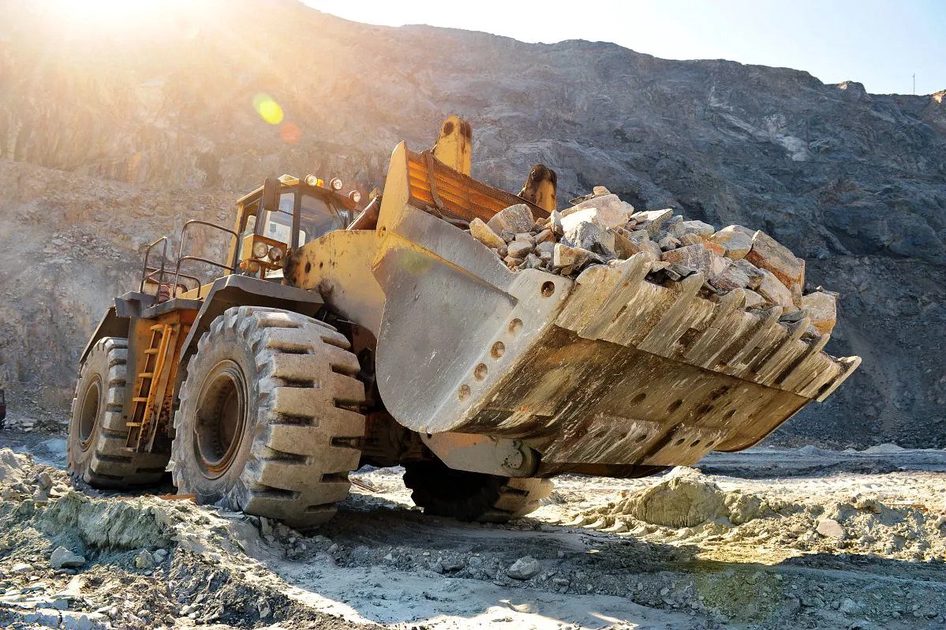
Machines deployed on steep grades or across rugged terrain encounter a distinct set of mechanical demands:
Taken together, these factors underscore the critical importance of lubricants that withstand extreme pressure and wear while sustaining consistent performance through temperature fluctuations.
1. Select High-Performance Hydraulic Fluids
Hydraulic systems form the foundation of most off-road equipment — excavators, loaders, graders, and similar machines. Valvoline advisors consistently stress that choosing hydraulic oils with superior anti-wear protection, viscosity stability, and oxidation resistance is essential for uneven terrain applications. The Ultramax HVLP series was developed specifically for these conditions. These heavy-duty premium hydraulic fluids incorporate high-performance anti-wear additive packages, and their high-viscosity-index base oils preserve a stable lubricating film across varying temperatures — reducing the risk of metal-to-metal contact when shock loads occur.
2. Grease Selection Is Critical
Grease plays an indispensable role in protecting pinned joints, bearings, and open-gear systems. Valvoline's grease-type guide emphasizes that the thickener, base oil, and additive package must all be matched to the actual operating conditions — including load, temperature, speed, and contamination levels — to deliver durable protection. In demanding terrain applications, a heavy-duty lithium complex or molybdenum-disulphide (moly) grease typically represents the optimal choice. Multipurpose Moly Grease is another strong option, delivering solid boundary lubrication under heavy shock loads and sliding contact conditions. This helps safeguard pins and bushings in situations where conventional grease would be displaced entirely.
3. Keep Grease Secured at the Lubrication Point
On steep slopes, gravity actively works against grease retention. Choosing greases with strong tackiness and adhesive characteristics prevents migration away from lubrication points. Lithium-complex greases are specifically formulated to deliver this kind of adhesion. Additionally, re-greasing schedules should account for slope-induced stresses — in zones subject to high vibration or shock loading, intervals will likely need to be shorter than those used in flat-terrain operations.
4. Preserve Hydraulic Fluid Cleanliness
Contamination can substantially degrade both the performance and service life of hydraulic oil, particularly when equipment operates across off-road or uneven surfaces. High-efficiency, well-maintained hydraulic filters are essential. Oil-change intervals should follow heavy-duty schedules rather than standard on-road guidelines. Investing in fluid analysis is also highly recommended, as it can reveal early signs of oxidation, water ingress, or other forms of contamination before they cause serious damage.
5. Track and Respond to Thermal Variations
Equipment running on slopes frequently experiences rapid temperature swings — significant heat buildup under uphill loading followed by rapid cooling during idle periods or descents. Lubricants with a broad, stable viscosity range are far better equipped to sustain film strength through these thermal transitions. Closely monitoring hydraulic and component temperatures during operation is necessary to confirm that selected lubricants are performing as intended. If readings indicate excessive viscosity thinning under high load or problematic thickening during cold starts, a different viscosity grade may be required.
6. Invest in Thorough Maintenance Team Training
Human factors carry considerable weight in lubrication outcomes. Both maintenance personnel and equipment operators must have a clear understanding of the lubrication requirements specific to slope operations:
7. Verify Grease Compatibility During Product Changes
When a machine requires a grease change — for example, transitioning from a standard multipurpose grease to a molybdenum disulphide blend — compatibility must be confirmed before proceeding. Different thickeners and additive systems frequently do not interact well with one another. Incompatible combinations can cause grease to soften, separate, or lose structural integrity. Manufacturer data sheets should always be consulted to verify that the incoming grease is compatible with any residual product still present in the system.
Equipment operating across all types of terrain endures stresses that conventional on-road vehicles never encounter. For this reason, dependable lubrication is fundamental to both operational safety and long-term machine life. When lubrication practices are paired with proper operating procedures and diligent system monitoring, equipment can perform safely and effectively throughout the entire working season.