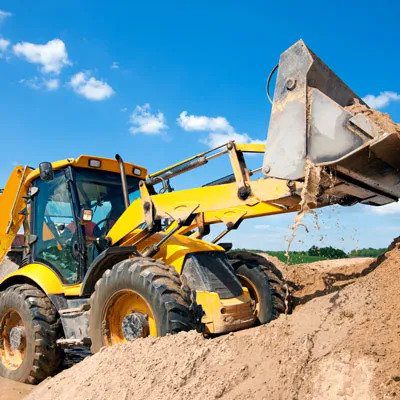
Fluids are what keep these machines performing at their best. Engine oil, hydraulic fluid, coolant, and transmission oil do far more than lubricate and cool—they guard against wear, transmit power, and maintain system integrity. There is just one catch: their protective qualities diminish over time. So what is the right change frequency for each of them?
There is no universal answer. The correct interval depends on how the machine is operated, the conditions it faces, and whether the fluids themselves are fit for the job. Let us go through each fluid type individually—and take a practical, ground-level look at what fleet operators and maintenance professionals need to monitor.
Off-highway applications put engine oil through serious punishment. Heavy loading, prolonged idling, and constant dust exposure all accelerate fluid breakdown. Even the best diesel engine oils have their limits.
For most heavy-duty diesel equipment, engine oil change intervals generally fall between 250 and 500 operating hours. That range, however, assumes clean fuel, controlled dust levels, and moderate loads—conditions that rarely reflect real-world operations.
This is why many operators turn to oil analysis rather than relying solely on the hour meter to schedule changes. Regular analysis uncovers metal wear particles, soot levels, fuel dilution, and oxidation—all of which signal that the oil is losing its ability to protect the engine.
Selecting a high-quality product matters just as much. Premium Blue One Solution Gen2 is purpose-built for off-highway diesel engines, including those powered by CNG or LNG. It delivers strong oxidation resistance and excellent soot management, sustaining oil life even under demanding conditions. For mixed fleets or operations subject to varying emissions standards, a high-spec oil like this streamlines inventory while improving overall performance.
Behind every movement an off-road machine makes, hydraulics are doing the heavy lifting—something experienced operators know well. When hydraulic fluid degrades through heat, contamination, or oxidation, the consequences include sluggish response, accelerated component wear, and potential system failure.
Hydraulic fluid change intervals typically range from 1,000 to 2,000 hours, though contamination is a critical variable. Equipment working in sandy or muddy conditions, or with ageing seals, can accumulate debris far faster than anticipated. Water intrusion poses another serious threat, particularly in humid environments or after high-pressure washing.
Select fluids engineered for long service life and resistance to water contamination. Fluid condition monitoring systems—or at minimum, routine sampling—are strongly recommended. Waiting for sluggish hydraulics to signal a problem is comparable to waiting for smoke before reaching for the fire extinguisher.
Coolant in off-highway equipment faces a more demanding environment than in passenger vehicles. It must manage extreme heat generated by heavy workloads while also preventing freeze-up in unpredictable climates—all while protecting intricate cooling systems from internal corrosion.
Change intervals vary by coolant type. Conventional green coolant may require replacement every 1,000 hours or on an annual basis, whereas extended-life coolants (ELCs) can often last up to 6,000 hours when supplemented with compatible additives.
Valvoline's Zerex Dex-Cool Coolants are formulated specifically for heavy-duty diesel equipment, providing reliable protection against scaling, corrosion, and liner pitting. They perform particularly well in mixed-metal cooling systems, which are common in modern off-highway machinery.
One frequently overlooked practice: test pH and nitrite levels on a regular basis, particularly when coolant has been topped up from unverified sources. Blending incompatible coolant types is a quietly destructive habit found across many fleets.
Transmission and final drive oils are often the most neglected fluids, largely because they are the most difficult to access. Yet these systems endure enormous torque and pressure. Deferred maintenance in this area almost inevitably leads to gear wear and clutch slippage.
Change intervals vary considerably—1,000 to 2,000 hours for powershift transmissions, and potentially longer for final drives. Time alone should not drive these decisions. Watch for warning signs such as shuddering, delayed gear changes, or milky-colored oil, which may indicate water ingress.
Manufacturer-specified intervals provide a useful baseline, but sound maintenance practice always accounts for actual operating conditions. Equipment running in quarry dust, tropical humidity, or frozen ground requires adjustments that laboratory-derived recommendations simply do not reflect. The most effective approach combines scheduled maintenance with condition-based monitoring.
Investing in fluid analysis kits yields returns quickly. These straightforward tests can detect early fluid breakdown, creeping contamination, or escalating internal wear. Many large-scale operators already use this data to safely extend fluid service life—without exposing equipment to the risk of failure.