A hose starts sweating on an underground loader, and the temptation is to give the fitting another turn and get back to work. That's how a small leak becomes an injection injury. On Sandvik equipment, as on any heavy machine, shut down, isolate the energy, and follow the service procedure before putting a wrench near a pressurized line. I've seen this go wrong. Here's how you avoid it.
Sandvik is a Swedish engineering company known in the mining trade for underground loaders and trucks, drilling equipment, rock-processing machinery, and tooling. It also makes metal-cutting tools used in machine shops. For a mine crew, the question isn't simply who built the machine. It's which machine you're dealing with, what its service book says, and whether your site can support it when it stops underground.
Where Sandvik fits on a mine site
Sandvik underground loaders, often called load-haul-dump machines or LHDs, are built for moving broken rock in confined workings. Underground trucks take material over longer haul routes. Drilling equipment handles tasks such as production drilling and development, depending on the machine and its setup. Surface and underground applications can have very different service demands, so don't assume a procedure carries over just because the badge matches.
The company also supplies crushing and screening equipment and rock-drilling tools. A worn drill bit, a damaged crusher component, and a loader hydraulic fault belong to different maintenance conversations. Start by identifying the exact product and the job it performs before ordering parts or chasing a fault code.
At the shop counter, bring the model and serial number, not just a photo of the logo. Include the component identification when it's accessible and safe to read. Machines can be modified during their working lives, and the machine serial number alone may not settle every parts question. A good parts person will ask about those differences before the order goes in.
What operators should watch on underground machines
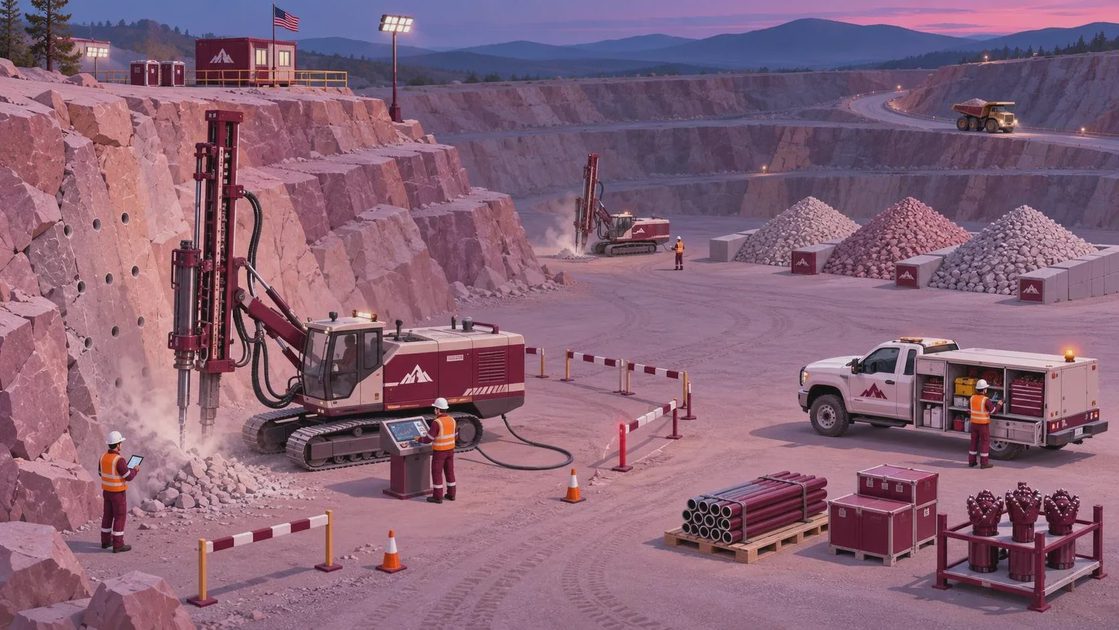
A pre-shift walkaround should look for fresh leaks, damaged hoses, loose guards, tire damage, and buildup around hot components. Check the fire-suppression system's visible condition as required by the site procedure. Make sure access steps, handholds, lights, and warning devices are in usable condition. Report defects through the site's process; don't quietly pass them to the next shift.
On a Sandvik loader or truck, pay attention to changes in steering feel, braking, transmission behavior, and hydraulic response. A machine that suddenly needs more steering correction or raises a loaded bucket unevenly needs a report, not a stronger arm. Park it in a safe place and follow site rules for removing defective equipment from service. Don't diagnose a brake or steering problem while continuing to haul.
Field Lesson: A clean starting point makes a leak easier to find. Record where the oil first appears, when the operator noticed it, and whether the machine was cold or at working temperature. Oil can travel along a hose or frame before it drips. The wettest spot isn't necessarily the failed part.
Hydraulic leaks and stored energy
Safety Alert: Never use a bare hand to search for a hydraulic leak. Fluid under pressure can penetrate skin, and the opening may look insignificant. If injection is suspected, get emergency medical treatment immediately and tell the medical team that a hydraulic-fluid injection may have occurred. Don't wait for pain or swelling.
Before service, park on suitable ground, lower attachments where the procedure calls for it, shut down, lock out the relevant energy sources, and release stored pressure according to the machine-specific instructions. Hydraulic accumulators can retain energy after the engine stops. Electrical, mechanical, pneumatic, and gravitational energy may need isolation too. Verify the machine is safe to work on; an engine that isn't running is not proof that every circuit is harmless.
For Sandvik hydraulic troubleshooting, the service manual and the site's isolation procedure come before guesswork. Use the specified equipment and test points, and have a qualified technician perform pressure checks. If the repair requires a raised bucket, boom, or other attachment, use the approved mechanical supports and procedure. Never trust hydraulic pressure alone to hold a load over a person.
Parts, filtration, and contamination control
Hydraulic contamination can turn one failed component into a much bigger repair. When a pump or motor fails, replacing the damaged unit without investigating the circuit can leave debris ready to damage its replacement. The proper cleaning, inspection, and flushing steps depend on the failure and the machine. Get the manufacturer's procedure and involve a qualified hydraulic shop when the extent of contamination isn't clear.
Keep replacement hoses capped until installation, protect open ports, and clean around connections before opening them. Match hose assemblies and fittings to the manufacturer's requirements, including pressure rating, size, routing, and compatibility. A hose that rubs against a frame or pulls tight through articulation is a future breakdown even if it seals today.
Use the specified fluids and filters, and follow the maintenance intervals for the machine and operating conditions. Sandvik service documentation may specify checks that differ from another manufacturer's equipment. Oil sampling can help identify changes over time, but a lab report doesn't replace inspection or prove a machine is safe to operate. Compare results with the machine's history and investigate abnormal findings.
Planning support before a machine goes down
Underground access changes the arithmetic of a repair. A component that is straightforward to lift in a surface shop can be difficult to remove in a low heading. Before starting a major job, check the service instructions for machine positioning, lifting points, component weight, required tooling, and clearance. Use a lift plan and rated equipment as required by the site. If those details aren't available, stop and get them.
Ask the local Sandvik representative or authorized support provider about parts availability, technician coverage, diagnostics, and training for the specific fleet. For a remote operation, find out which critical parts the site should stock and how long technical support may take to arrive. Availability varies by location and machine; a promise made for one mine isn't a guarantee for another.
When a fault involves brakes, steering, structural damage, fire suppression, high-voltage equipment, or an unfamiliar stored-energy system, bring in the people and procedures qualified for that work. A production target won't make a bad repair safe. Get the machine identified, make the area safe, and give the technician a clear description of what changed. That's a better shift handover than a loader parked in the heading with a mystery fault and nobody willing to own it.