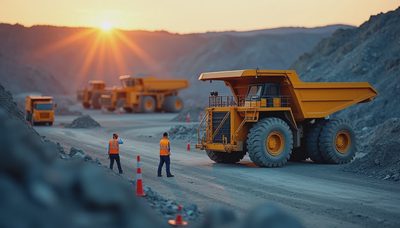
I learned the hard way that mining excavator selection matching class is not a brochure exercise. At an iron-ore site in Western Australia, a crew paired a large bucket with an excavator that looked powerful enough on paper. The machine dug aggressively for three shifts, then hydraulic temperatures climbed, cycle times slowed, and the swing drive began showing distress. Nobody had asked the basic question: did the excavator class match the material, truck fleet, haul distance, and duty cycle? I've seen this go wrong. Here's how you avoid it.
A mining excavator earns money by loading consistently, not by posting the biggest horsepower number. The right choice balances operating weight, bucket size, digging force, hydraulic flow, swing performance, access, and dealer or shop support. Start with the production job, then select the iron. Reversing that order is how a mine ends up owning an expensive machine that spends too much time waiting, overheating, or being rebuilt.
Start With the Production Job
Mining excavator selection matching class begins with the truck and material, not the excavator nameplate. List the haul trucks the machine must load. A 100-ton truck needs a different loading arrangement from a 240-ton truck. The target is usually a practical loading pattern that fills the truck without excessive spillage or awkward repositioning. If the excavator needs too many passes, truck queues grow. If the bucket is too large, payload control and structural stress become problems.
Write down the material density, fragmentation, bench height, digging depth, and expected truck payload. Loose overburden behaves differently from blasted hard rock. A machine loading shot rock needs breakout force, robust front-end components, and a bucket that survives abrasion. A machine handling clay may need a different bucket profile and tooth arrangement, even if the nominal volume looks similar.
Then calculate the complete cycle: dig, swing, dump, return, and reposition. A fast cycle is worthless if the truck spotting area forces long swings. I have watched operators lose minutes every pass because the loading floor was designed around a drawing instead of the machine's actual tail swing and working envelope.
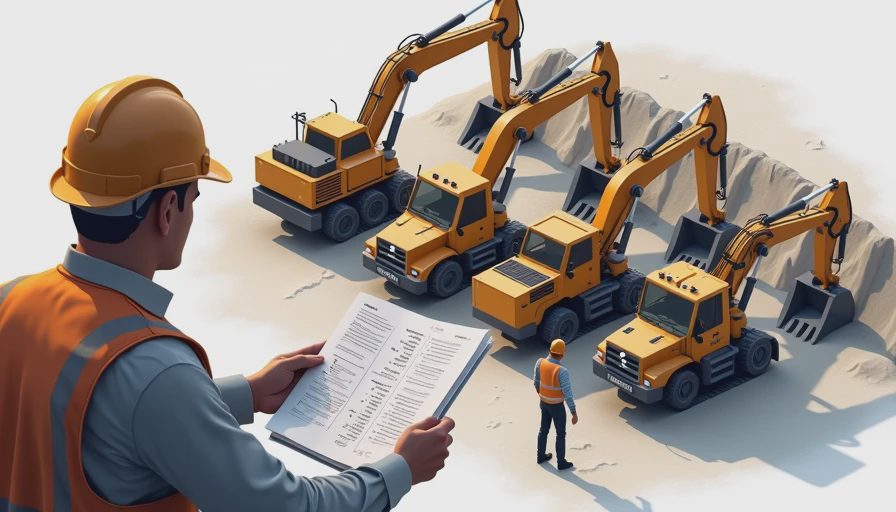
Field Lesson: On a copper operation in Chile, a foreman improved daily output without buying a larger excavator. He changed truck spotting and bench preparation, cutting swing angle and reducing cleanup work. The lesson stayed with me: match the machine to the whole loading system, not one isolated specification.
Match Excavator Class to Truck Fleet
Mining excavator selection matching class should be tested against payload, not just bucket capacity. A small hydraulic excavator might load a haul truck, but the pass count can make the combination uneconomical. A much larger machine can fill the truck quickly, yet it may be difficult to transport, hard to position, and expensive to maintain for a modest production target.
As a rough field approach, compare the machine's rated bucket range with the truck body and payload requirement. Four to six passes is often a useful starting point for evaluating a loading match, but actual results depend on fill factor, material density, operator technique, and truck body design. Do not treat that range as a rule carved in stone. Use it to identify combinations worth timing in the pit.
Look at reach and dump height as well. The excavator must clear the truck body without forcing the operator into a high-risk swing or awkward dump. If the machine has ample breakout force but cannot place material cleanly, the class is wrong for the application. Ask the dealer for a production study using your truck model, bucket, bench geometry, and material—not a generic demonstration with ideal dirt.
A useful comparison includes three scenarios: current production, planned expansion, and a reduced shift caused by weather or maintenance. The best class should remain productive in all three. Buying solely for a future tonnage target can leave today's crew with an oversized machine and poor utilization.
Check Ground Conditions and Front-End Stress
Ground conditions decide whether mining excavator selection matching class succeeds after the sales team leaves. Hard, uneven floors punish tracks, rollers, boom foot pins, and undercarriage frames. Frozen ground changes digging resistance. Wet clay increases cleaning time and can pull an excavator sideways during a swing. Loose blasted rock creates impact loads that operators feel through the boom and attachment.
Choose the undercarriage for the site, not the shipping brochure. A wide track may improve flotation but create transport and clearance issues. A heavy-duty undercarriage can handle rougher work, though it brings more cost and component weight. Inspect the proposed machine's track frame protection, belly guards, swing bearing access, and hose routing. A rock quarry will find weak guards quickly.
Bucket selection deserves the same attention. General-purpose buckets are not automatically suitable for abrasive ore. Consider heavy-duty or severe-duty designs, tooth systems, wear packages, and side cutters. A bucket that lasts longer can justify its purchase through fewer changeouts and less downtime, even if its initial price is higher.
Safety Alert: Never use bucket breakout force as permission to attack an unstable face. A machine can move more material than the bench can safely support. Keep people out of the swing radius, establish exclusion zones, and stop work when cracks, falling rock, or unexpected ground movement appears.

Compare Hydraulic Performance and Duty Cycle
Mining excavator selection matching class also means matching hydraulic capacity to the work pattern. Excavators that dig hard material all day generate heat and load pumps, valves, cylinders, and hydraulic oil. A machine that performs well for a short test may struggle across a twelve-hour shift if cooling capacity, filtration, or service access is inadequate.
Review rated flow, pressure, pump control, cycle speed, and cooling package together. High flow alone does not guarantee fast production. Poor control response can make an operator feather functions constantly, wasting fuel and adding heat. Ask how the machine behaves when digging and swinging at the same time, especially when the bucket is full and the truck is close.
Fuel burn should be measured against tons moved, not gallons per hour in isolation. A larger excavator may consume more fuel but still cost less per ton if it loads trucks in fewer passes and maintains production. Conversely, an oversized unit running below its useful workload can create unnecessary fuel, transport, and maintenance expense.
Request service data for hydraulic oil sampling, filter changes, cooling-system cleaning, and major component intervals. If a technician cannot reach filters without removing guards or climbing over hot components, that inconvenience becomes real downtime. I spent two weeks on that site. Here's what I learned: serviceability is a production specification.
Evaluate Support, Transport, and Parts
The best mining excavator selection matching class can fail if the mine cannot support it. Confirm local technician coverage, parts availability, field-service tooling, and rebuild capability before signing a purchase order. A machine waiting three weeks for a swing motor seal kit is not an asset; it is a parked capital expense.
Ask for realistic lead times on buckets, teeth, hydraulic hoses, pumps, travel motors, filters, and electronic sensors. Compare the dealer's response plan for a night-shift failure. Determine whether technicians can reach the pit, whether major components can be changed on site, and what lifting equipment the work requires.
Transport matters from the first day. Check machine width, height, shipping weight, counterweight removal, permitted routes, and assembly requirements. A large excavator that requires special escorts and extensive field assembly may be worthwhile for a long-life mine, but it can be a poor choice for a short contract or remote project with limited lifting capacity.
Make the Final Selection on Evidence
Before final approval, build a simple scorecard for mining excavator selection matching class. Give separate scores for production, fuel per ton, availability, operator visibility, safety systems, undercarriage durability, service access, transport, and lifetime support. Require the supplier to explain every assumption behind its production estimate.
Run a timed demonstration in representative material if possible. Record bucket fill, cycle time, truck loading time, fuel use, hydraulic temperature, and operator feedback. Have a mechanic inspect hose routing, grease points, access panels, wiring protection, and signs of difficult daily maintenance. A clean demonstration machine tells you little about long-term ownership unless you inspect how it will be serviced.
My final rule is straightforward: choose the smallest excavator that reliably meets the production plan with a sensible loading pattern, then add enough durability for the ground and duty cycle. Do not buy capacity you cannot feed, and do not save money by underclassing a machine that will work at its limit every shift. Mining excavator selection matching class is ultimately a field decision. Put the proposed machine beside the actual truck, bench, rock, road, crew, and support plan. That is where the truth shows up.