Picture a hose rubbing against a steel bracket on an excavator boom. The outer cover wears through, a wire braid starts to show, and a replacement suddenly becomes urgent. That’s a common failure scenario, not a job to solve by grabbing the first hose that looks close. Parker Hannifin makes hydraulic hoses, fittings, filters, valves, and other motion and control components used across heavy industry. For a technician, the useful question is whether the particular component is correct for the machine and the job.
A Parker name on a hose or fitting is a starting point for identification, not proof that every part on the assembly is compatible. Get the machine information, inspect the damaged part safely, and match the complete assembly to the application before the wrench comes out.
Where Parker Hannifin fits in a hydraulic system
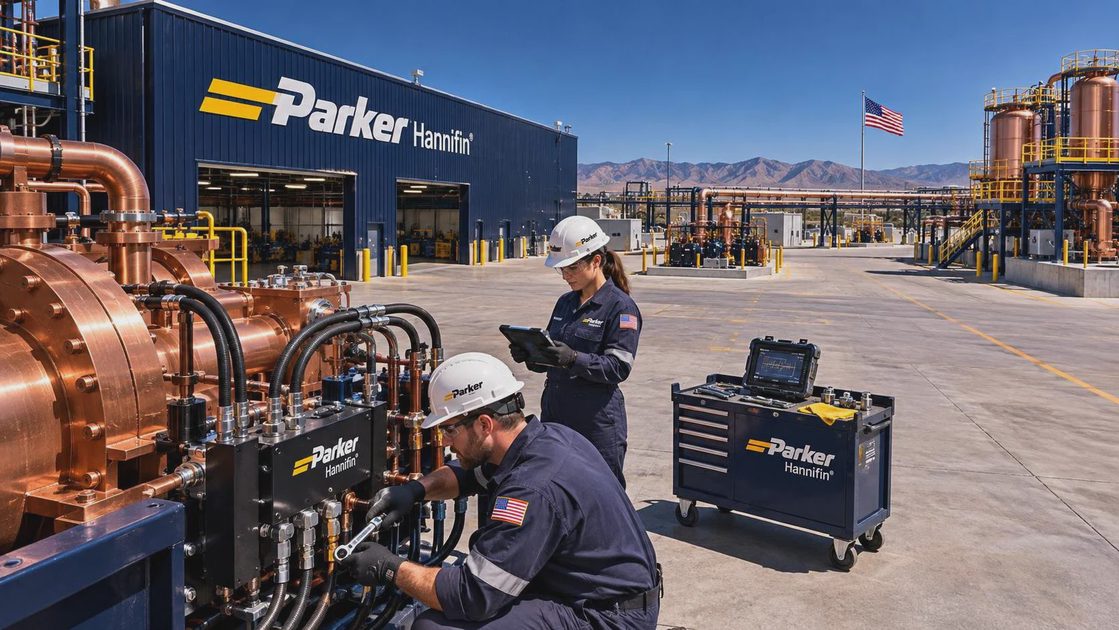
Parker Hannifin supplies components for equipment manufacturers and replacement markets. Depending on the machine, you may encounter its hose and fittings, hydraulic valves, pumps, filtration products, seals, or fluid connectors. A machine can also have components from several manufacturers, so don’t assume the brand on one fitting identifies the entire hydraulic system.
For a shop foreman ordering a replacement, the distinction matters. The equipment manufacturer’s parts catalog may identify a complete hose assembly by machine model and serial number. A hose shop may instead need the original assembly, its markings, end connections, length, routing details, and operating requirements. Neither route excuses an inspection of why the old hose failed.
Field Lesson: A rubbed-through cover tells you where to look, but not always why the hose moved there. Check clamps, guards, nearby metal edges, and the machine’s full range of movement. A new assembly routed against the same bracket can fail the same way.
Matching a Parker Hannifin hose assembly
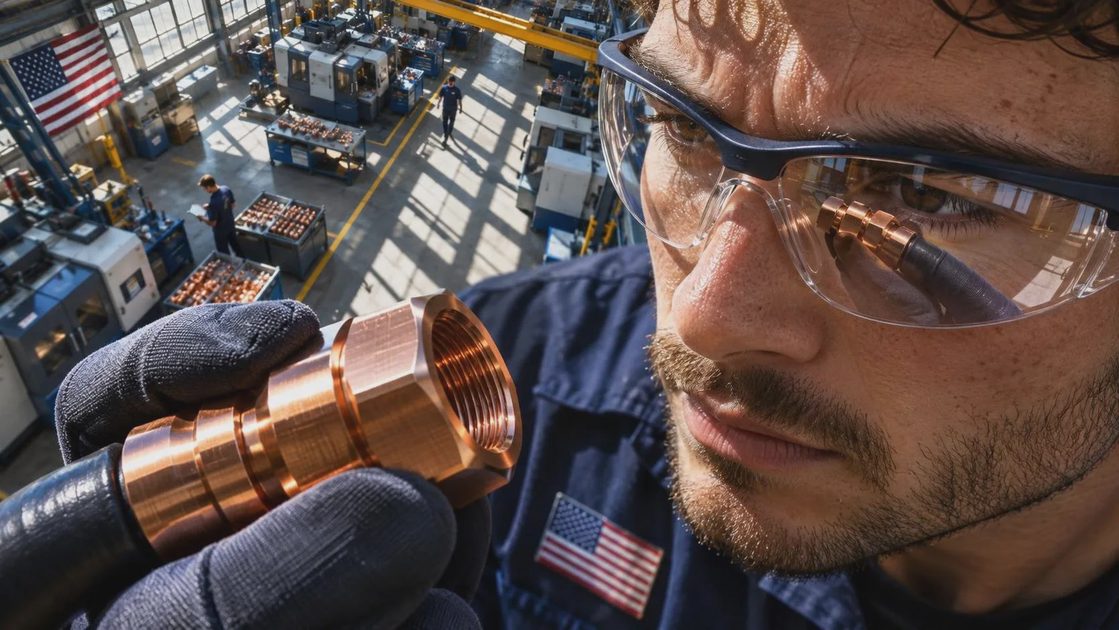
Start with the equipment manufacturer’s part number when it’s legible and available. Give the supplier the machine model and serial number too; similar-looking machines can have different plumbing. If the assembly has to be made up from specifications, the hose shop needs more than the inside diameter.
Working pressure, fluid compatibility, temperature, hose construction, bend radius, end connections, overall length, and fitting orientation all matter. A hose that is too short can pull tight as a cylinder moves. One that is too long can snag or rub. Measure the original assembly according to the supplier’s instructions, and account for any damage or previous incorrect repair that may have changed its shape.
Don’t mix hose, fittings, and crimp specifications just because the pieces physically fit together. Ask the hose shop to verify that the components are approved as a system and crimped to the applicable manufacturer’s specifications. A sound-looking crimp is not a measurement.
Safety Alert: Hydraulic fluid under pressure can penetrate skin through a tiny opening. Never use a hand or finger to find a leak. Shut down, isolate energy, lower or mechanically support raised equipment, and relieve stored pressure according to the machine manufacturer’s procedure before disconnecting anything. Accumulators and trapped circuits can retain pressure after the engine stops.
If fluid injection is suspected, get emergency medical care immediately, even if the wound looks small. Tell the medical team that high-pressure fluid injection is suspected; it can cause severe tissue damage.
Fittings, threads, and the temptation to make them fit
A leaking connection isn’t always a bad hose. The sealing surface may be damaged, the fitting may be mismatched, or the joint may have been assembled incorrectly. Parker Hannifin makes different types of fluid connectors, and a fitting that starts by hand is not necessarily the right thread or seal type.
Clean the connection externally before opening it, then identify the thread and sealing arrangement with the correct gauges and manufacturer information. Look for damaged threads, nicks on sealing faces, and hardened or cut seals. Protect open lines and ports from dirt while parts are off the machine.
Don’t rely on extra torque or sealant to rescue an unidentified connection. Follow the applicable assembly instructions for that specific fitting, including lubrication and torque requirements where specified. If you can’t identify the connection confidently, take the fitting or assembly to a qualified hydraulic shop.
Filters and contamination: find the source
Parker Hannifin also sells filtration products, but a filter that screws into place isn’t automatically the right replacement. Match the specified element and housing to the machine’s requirements. Filtration rating, flow capacity, pressure limits, bypass characteristics, and seal compatibility can all matter. Use the equipment manufacturer’s specification or a verified cross-reference rather than judging by dimensions alone.
A damaged pump or motor can spread debris through a hydraulic circuit. Replacing the failed component and spinning on a fresh filter may leave contamination in hoses, coolers, cylinders, and the reservoir. Follow the machine maker’s cleaning and flushing procedure, and involve a hydraulic repair shop when the extent of contamination is unclear.
Field Lesson: Save the removed filter when investigating a major failure. A qualified shop can inspect the element and debris as part of the diagnosis. Don’t assume every shiny particle points to the same failed component; the material and the rest of the system history matter.
What to bring when ordering parts
Before calling a dealer or hydraulic supplier, record the machine make, model, serial number, and the equipment manufacturer’s part number if you have it. Photograph the installed routing and both ends before removal. Note protective sleeves, clamps, and any identification printed on the hose or component. Those details help the supplier ask better questions and help the mechanic put the assembly back where it belongs.
For Parker Hannifin components, provide any readable manufacturer markings without assuming they are a complete assembly number. If a hose has failed violently, is missing a section, or appears to have been modified before, say so. The old part may no longer be a reliable pattern.
After installation, secure the hose as specified, clear tools and personnel, and follow the machine manufacturer’s procedure for returning the system to service and checking for leaks. Watch the routing through the permitted range of motion from a safe position. If a connection seeps, shut the system down and relieve pressure before correcting it. A few extra minutes in the shop beat another failure in the pit.