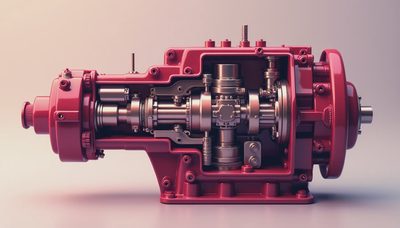
A leaking component and a worn nameplate can turn a routine repair into a long shift. Picture a technician pulling a replacement from the parts shelf, only to find that the ports or shaft do not match. That is an illustrative shop situation, not a particular job report, but the lesson is real: Eaton is a component name, not a complete parts specification. Identify the unit and the machine application before ordering or troubleshooting. A familiar logo is not enough to tell you what is inside the housing.
Where Eaton fits in the equipment world
Eaton is a power management company whose name appears on electrical equipment and vehicle drivetrain components, among other products. In a heavy-equipment shop, you might encounter the name on an older hydraulic component, a truck transmission, or electrical equipment serving a facility. Those are different systems with different service procedures. Start by establishing what you are looking at rather than assuming every component with the same name belongs to one product family.
There is an ownership wrinkle worth knowing. Eaton sold its hydraulics business to Danfoss in 2021. That does not mean every old hydraulic unit automatically has an interchangeable Danfoss replacement. It means you may need to use historical identification information and work with the appropriate distributor to trace support for the exact unit.
For truck transmissions, identify the actual assembly and support channel rather than relying on a general web search. Eaton Cummins Automated Transmission Technologies is a joint venture associated with certain automated transmissions; that does not make every Eaton-branded transmission an automated model or a joint-venture product. The model and serial information decide the next step.
Field Lesson: A casting number is a useful clue, not necessarily the complete assembly number. Housings can look alike while internal configurations, controls, or mounting details differ. Record the whole tag before anyone carries the old unit to the scrap pile.
Identify the component before you order
Start with the machine make, model, and serial number. Then find the component tag and record its full model number, serial number, and any other codes. Photograph the tag straight on, plus the overall assembly, shaft end, ports, fittings, and control connections. If the tag is painted over or damaged, do not grind it clean and destroy the stamping. Ask the parts supplier how best to recover the information.
Next, compare what is installed with the machine parts book. Equipment gets modified over a long working life. A previous owner may have changed a pump, fitted an adapter, or installed an assembly from another configuration. The machine book gives you a starting point; the component tag and physical details help establish what is actually on the iron.
For an Eaton hydraulic unit, tell the supplier whether you need a complete assembly, a seal kit, or internal parts. Provide port and mounting details if requested, but do not use a rough measurement as a substitute for the model code. Rotation, displacement, control arrangement, and shaft configuration can matter. Ask the supplier to confirm the replacement against the complete identification and application.
For a drivetrain component, include the transmission model and serial number and describe the control arrangement. A truck application is not necessarily a match for an off-highway machine, even when the housings look similar. Confirm the service information and lubricant specification for the exact assembly before work begins.
Diagnose the system, not just the nameplate
A slow hydraulic function does not automatically mean the pump has failed. Low fluid, a restricted inlet, an incorrect control command, an internal leak elsewhere, or a fault in the driven component can produce similar symptoms. Begin with the machine's troubleshooting procedure and record what happens under the specified operating conditions. Note whether the problem affects one function or several, whether it changes as the oil warms, and whether there are unusual noises or visible leaks.
Safety Alert: Hydraulic oil under pressure can penetrate skin. A pinhole leak is not something to trace with your fingers or a rag held against a hose. Shut down, isolate the machine, lower or mechanically support attachments, and relieve stored pressure according to the manufacturer's procedure before disconnecting anything. An injection injury is a medical emergency, even if the wound looks small.
Pressure and flow tests can narrow the fault, but only when performed at the correct ports with properly rated equipment and the manufacturer's procedure. A pressure reading by itself does not establish pump flow or prove that an Eaton unit is good. If you do not have the test setup, specifications, or training, stop and bring in a qualified hydraulic shop.
What a failure leaves behind
When a pump or motor fails internally, replacing the damaged assembly without addressing contamination can put the replacement at risk. Inspect the oil and filters, and follow the equipment manufacturer's repair and cleaning instructions. Depending on the failure and system design, hoses, coolers, reservoirs, valves, and other components may need inspection or cleaning. A qualified shop can help determine what can be cleaned and what must be replaced.
Do not assume a filter catches everything before it reaches another component. Flow paths differ. Identify where the failed unit sits in the circuit and where debris could have traveled. Save the filter and a representative oil sample when practical; the service shop may want to examine them before the evidence is discarded.
Field Lesson: Write down the original complaint before teardown. A note saying the machine was slow only when hot is more useful than a work order that says simply “bad pump.” Record any warning, operating condition, and recent repair. That history helps the next technician distinguish a failed component from the problem that caused it.
Know when to send the job out
Internal work on a hydraulic pump, motor, or transmission calls for the right service literature, clean working conditions, measuring tools, and experience with that specific design. If the tag cannot be read, the replacement cannot be positively identified, or metal has circulated through the system, get the relevant dealer, distributor, or specialist shop involved before ordering parts.
Safety Alert: A heavy transmission or hydraulic assembly needs a suitable lifting plan and rated equipment. Support the machine and the component independently; do not trust a jack or a hose to hold the load. Follow site lockout procedures and the machine manufacturer's instructions before putting hands in the work area.
The practical rule for Eaton equipment is simple: identify the exact assembly, diagnose the circuit or drivetrain around it, and deal with the cause before fitting the replacement. That takes longer than guessing at a parts counter. It usually costs less than doing the job twice.