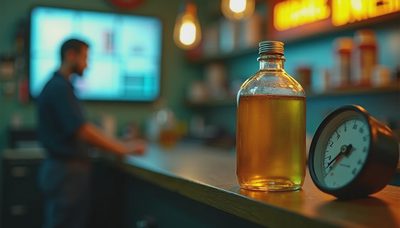
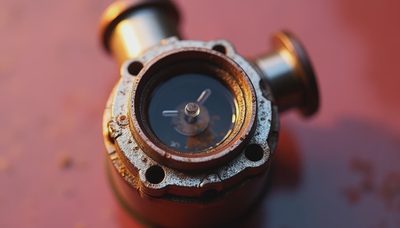
I'll never forget the call from a copper mine in Chile. A Cat 797 haul truck, brand-new rebuild on the main pump, and the **hydraulic system won't build pressure** past 500 psi. The foreman was ready to pull the pump again—that's a 12-hour job underground. I told him to hold off. Twenty minutes later, I found the problem: a failed O-ring on the pump inlet line, sucking air. That truck had been down for three shifts over something that cost $0.80. I've seen this go wrong. Here's how you avoid it.
When your **hydraulic system won't build pressure**, the natural reaction is to blame the pump. But in my 30 years in the field, from Australian iron ore to Indonesian coal, the pump is rarely the first thing that fails. Most pressure losses come from simpler issues—contamination, cavitation, or a stuck relief valve. Let's walk through the troubleshooting steps I've used on six continents.
Start with the Obvious: Check the Reservoir and Filters
Field Lesson: Before you touch a wrench, check the hydraulic oil level and condition. I've shown up to sites where the **hydraulic system won't build pressure** and found the reservoir low because a hose had a pinhole leak. Or worse—the oil looks like chocolate milk from water contamination. In West Africa, I had a D11 dozer that wouldn't lift its blade. The return filter was completely blocked with clutch material from a failed transmission. Two hours of filter changes and flushing, and it was back to work.
Low oil level means the pump can't draw enough fluid. Air gets entrained, and the pump loses prime. Check the sight glass or dipstick first. If the oil is foamy or milky, you've got air or water ingress. Don't run the system like that—it'll destroy the pump bearings in minutes.

Pump Failure or Cavitation: The Most Common Culprit
If the reservoir and filters check out, it's time to look at the pump itself. Cavitation is the number one killer of hydraulic pumps. A **hydraulic system won't build pressure** when the pump is starved for oil. This happens when the inlet line is restricted—collapsed hose, blocked suction strainer, or a worn-out coupling that lets the pump cavitate.
I once had a 992 wheel loader in Colorado that couldn't steer. The **hydraulic system won't build pressure** to the steering circuit, but the implements worked fine. That told me the problem was in the priority valve, not the main pump. We pulled the valve and found a broken spring. Replaced it for $15, and the loader was operational in an hour. Moral of the story: don't shotgun parts. Listen to the system. If the pump is whining or the oil is foaming, you've got cavitation. If the pump is quiet but pressure is low, suspect internal wear or a stuck relief valve.
Relief Valves and Compensators: The Hidden Gremlins
Safety Alert: Never adjust a relief valve unless you have a pressure gauge and the manufacturer's specs. Some technicians crank them up to get more power, but that bypasses the system's protection and can burst hoses or blow seals. I've seen a loader bucket arm fail because someone set the relief too high—the cylinder rod bent.
When a **hydraulic system won't build pressure**, a stuck-open relief valve is a prime suspect. Contamination can lodge a piece of debris under the poppet, letting oil bypass directly to tank. In a copper mine in New Mexico, a 777 truck had no brakes. The **hydraulic system won't build pressure** to the brake accumulator. The entire brake circuit was dead. After pulling the relief valve, I found a small piece of seal material holding it open. Flushed the system and installed a new valve—fixed in under an hour.
Compensator controls on variable-displacement pumps can also fail. If the compensator spool sticks, the pump derates and you get low pressure. Clean the control spool or replace it. Always use a pressure gauge to verify the compensator setting—don't guess.
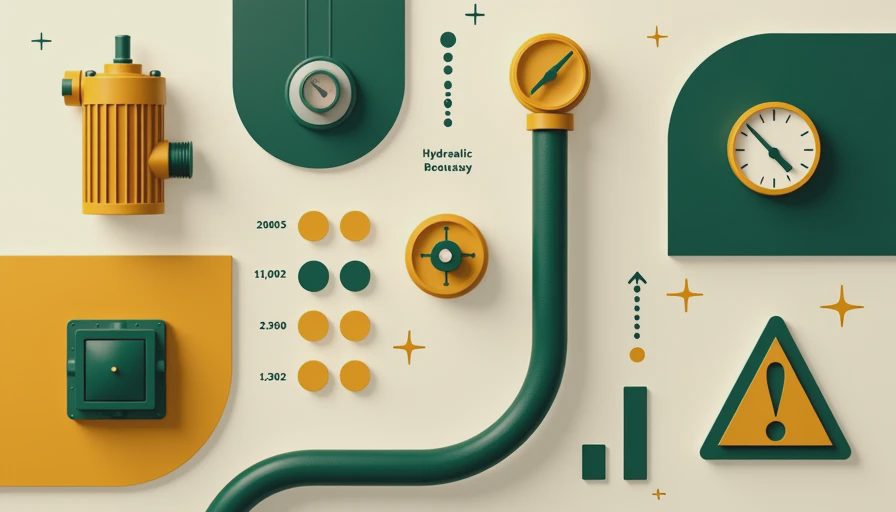
Internal Leakage: The Hardest to Diagnose
Internal leakage is the sneakiest cause of low pressure. Worn cylinders, spool valves, or motor bypass seals can let oil go to tank without doing work. If your **hydraulic system won't build pressure** but the pump sounds healthy and filters are clean, you've got internal bypassing.
On a mine site in Australia, a D10 dozer lost its ripper function. The **hydraulic system won't build pressure** to the ripper cylinder. The main pump was fine, relief valve was fine. I capped the cylinder ports and ran a pressure test—the cylinder was leaking internally past the piston seal. One rebuild kit and it was back to ripping hard rock. To test for internal leakage, use a flow meter or perform a cylinder drift test. If the cylinder drifts down quickly under load, the seals are shot.
Final Thoughts and a Word on Safety
I've worked on hydraulic systems from Cat to Komatsu to Hitachi. The principles are the same. When your **hydraulic system won't build pressure**, don't panic. Start with the simple stuff: oil level, filters, and inlet lines. Then move to relief valves and compensators. If all else fails, check for internal leakage. And never, ever skip safety. Relieve pressure before opening any port—hydraulic fluid at 3,000 psi can inject into your skin and cost you a limb.
Field Lesson: The most expensive mistake I've seen is replacing a pump when the real problem was a $2 O-ring. Slow down. Test before you replace. Your equipment—and your bottom line—will thank you.
Got a hydraulic system that won't build pressure? Drop your machine model and symptoms in the comments. I'll tell you where to look first.