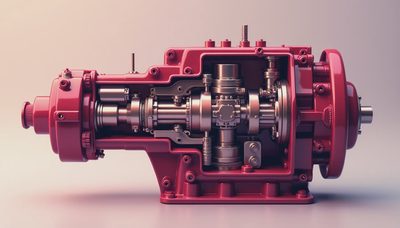
I've seen a crew pull a brand-new hydraulic pump off a Cat 994 loader because the bucket quit lifting. Spent two weeks on that site in Chile, and the pump wasn't bad at all. It was a collapsed hose liner inside a pressure line, it only showed up under load. Hydraulic system fault finding is about looking at the whole circuit, not just the first suspect.
Field Lesson: Pressure loss on the gauge tells you where to look, not what to replace. A low work-port reading could be a bad pump, a leaking relief valve, a plugged screen, or a hose that's delaminating. Jumping to the pump costs you time and money. I've watched that mistake cost a crew three days.
A Simple Hydraulic System Fault Finding Routine
After thirty years turning wrenches on mining iron, I get the same question on every site: how do you find a hydraulic problem without tearing the whole machine apart? There's no magic, just a repeatable routine.
Start with a walk-around. Look for leaks, bent rods, broken mounts, and wire chafing. Check the oil level cold and at operating temperature. Look at the color: milky oil means water, dark and gritty means worn components.
Then take it to the bench. Put a pressure gauge on the main relief circuit. Warm the hydraulic system to operating temperature, then cycle the function and watch the gauge. Compare your reading to the spec in the manual. A 500 psi drop under load is normal; a 2,500 psi drop is a problem. So is a reading that jumps erratically when you crack the relief valve.
Then isolate the circuit. If you have a joystick that runs the boom, bucket, and auxiliary functions, you can often switch lines or use a flow meter to see which branch is starving. That's real hydraulic system fault finding, not guesswork.

The Five Faults I See Most Often
I've flown to six continents to fix machines that suddenly had no power. Here's what I find over and over:
Air in the system. Loosen a fitting at the highest point of the line and slowly cycle the function; foam means a suction leak. Clogged return filter: check the pressure drop across the element, not just the filter. Failed pump control, like a dirty pilot line, causes fade under load on variable-displacement pumps. Worn spool in the control valve feels like a slow function and only shows up on a flow test. Bad hose with a delaminated inner liner leaves rubber bits in the filter, as it did in Chile. Those five account for most of what I've seen in the field.
Safety Alert: Never Forget High-Pressure Oil
Before you start any hydraulic system fault finding, get your mind around the risk. Hydraulic fluid at 3,000 psi will cut through a glove and into your hand faster than you can pull away. I've seen an oil injection injury turn a man's finger black. Set the machine down, lock the controls, relieve pressure at the accumulator. Wear a face shield when you crack a fitting. That's not a suggestion.
The Two-Hour Diagnosis: A Field Checklist
Here's a drill you can run on a machine that's acting up. Time yourself. Two hours should be enough to get you to a high confidence answer.

First, check the sight glass or dipstick. Record oil level and condition. Low oil causes pump cavitation and it's free to fix. Second, cut open the filter and spread out the element. Bronze chunks mean pump wear, rubber chunks mean a hose, silver flakes mean bearings. Third, do a pressure test at the relief valve. Warm up the system, push the function, write down the number. Fourth, do a flow test on the return line. Compare idle and full throttle flow; a drop of more than 15% points to the pump. Fifth, use a thermal imager or your hand across the reservoir. Hot spots localize a bad relief valve or a slipping hose.
That list covers 90 percent of hydraulic failures I've seen in the field. If it doesn't pinpoint your problem, it will tell you exactly which component to bench-test next.
When to Call It and Bring in the Shop
There is no shame in admitting that a hydraulic system fault finding job is beyond your shop. I've seen too many attempts where a tech with five wrenches and a hammer turned a $5,000 job into a $50,000 one. If your main pump needs a full teardown, or you don't have the test cart to properly flow a cylinder, stop. Call the dealer or a local hydraulics shop. A good bench test with the proper gauges and a calibrated flow meter gives you a definitive answer in an afternoon. A dealer will also have the technical manuals and special tools you don't have in your box. That's the cheapest part of the whole repair.
I've seen this go wrong. Here's how you avoid it: slow down, follow the routine, and let the evidence point to the failed part. Most hydraulic problems are simple once you get the story straight. And always watch out for the pressure. Whether you're running a dozer, a loader, or a haul truck, the same logic applies.