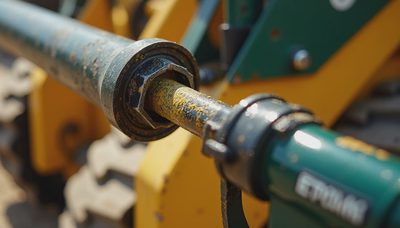
In a copper pit outside Calama, Chile, I watched a nearly new haul truck sit dead for four days because a cooling-system failure was treated as a cheap hose problem. The purchase team had saved money on the initial deal, but the mine lost production, paid for emergency freight, and sent a crew into a difficult repair. That is the lesson behind equipment lifecycle cost analysis: the invoice is only the first number. Fuel, labor, downtime, rebuilds, tires, technology, and resale determine what a machine really costs.
I spent 30 years with Caterpillar field service, and I have seen good machines look expensive on paper while cheaper machines quietly drain a fleet budget. I've seen this go wrong. Here's how you avoid it.
Start With the Complete Cost, Not the Purchase Price
A useful equipment lifecycle cost analysis begins before a salesperson hands over a quote. Write down every cost category expected from delivery through retirement. Include the purchase price, freight, taxes, commissioning, operator training, attachments, telematics subscriptions, and financing charges. A $450,000 wheel loader can become a $500,000 project before it moves its first bucket if it needs a specialized attachment, upgraded tires, and site preparation.
Then estimate operating costs. Fuel is usually one of the largest expenses for dozers, loaders, excavators, and haul trucks. Use realistic hours and duty cycles rather than the brochure's best-case consumption. A loader moving dense rock in short, aggressive cycles will burn fuel differently from one loading sand at a steady pace. Add scheduled service, filters, lubricants, wear parts, undercarriage components, tires, and expected shop labor.
Do not bury downtime in a miscellaneous column. Assign a dollar value to each lost production hour. If a loader normally moves 350 tons per hour and the margin is $8 per ton, one idle hour represents $2,800 in lost contribution before emergency repair costs. The exact figure depends on the operation, but the method is sound.
Build a Practical Cost Model
The best equipment lifecycle cost analysis is simple enough for a foreman to challenge. I prefer a spreadsheet with one row for each year or 2,000-hour service interval. The columns should include hours, fuel, preventive maintenance, corrective repairs, tires or undercarriage, labor, downtime, and estimated resale value.
For example, consider a used articulated truck purchased for $280,000. In the first year, the budget might include $52,000 for fuel, $18,000 for planned service, $12,000 for tires, and $25,000 for repairs. If unexpected downtime costs $30,000, the first-year operating burden reaches $137,000 before financing. After five years, the machine might sell for $110,000, but only if its frame, transmission, tires, and maintenance records remain attractive to the next owner.
Use three scenarios instead of one forecast. The base case uses normal utilization and service intervals. The conservative case assumes higher fuel prices, more repair hours, and lower resale. The strong case assumes good operators, clean fluids, and steady work. This range exposes a fragile purchase. If a machine only makes financial sense under perfect conditions, it does not make financial sense.
Separate Ownership Cost From Operating Cost
Ownership costs continue even when the machine is parked. Depreciation, insurance, interest, property taxes, and storage belong in that group. Operating costs rise with hours and include diesel, DEF, lubricants, repairs, and wear parts. Separating the two shows whether low utilization is hurting the fleet.
A $300,000 excavator used 400 hours per year carries a much heavier ownership cost per hour than the same excavator working 1,800 hours. That does not automatically justify running it harder. Low utilization can be a signal to rent, share, or replace the machine with a smaller unit. Equipment lifecycle cost analysis makes that trade visible instead of leaving it to instinct.
Account for Failure, Downtime, and Human Factors
A spreadsheet that assumes every repair happens during a scheduled shop visit is fiction. Machines fail at the worst possible time: halfway up a haul road, beside a trench, or during a weather window that closes tomorrow. Put major failure events into the forecast. An engine rebuild, hydraulic pump replacement, final-drive repair, or transmission exchange can cost tens of thousands of dollars, with remote-site labor and freight pushing the bill higher.
Operator practice changes the numbers. A smooth excavator operator who avoids shock-loading the bucket can protect pins, bushings, and hydraulic components. A dozer operator who turns aggressively on rocky ground can accelerate track and undercarriage wear. Training is not a soft expense; it is part of the machine's cost-control program.
Safety Alert: never turn cost pressure into a reason to extend an unsafe repair. A cracked loader arm, damaged ROPS structure, leaking high-pressure hydraulic line, or failing brake system requires a qualified inspection and proper repair. Hydraulic oil can penetrate skin, and a suspended attachment can kill. Lock out the machine, release stored energy, and use the manufacturer's service procedure. If the failure involves structural integrity, brakes, steering, or an unfamiliar high-pressure system, stop and call a real shop.
Compare New, Used, and Rental Options
New equipment usually brings warranty coverage, current emissions technology, improved operator controls, and predictable early maintenance. It also carries the steepest depreciation. A new compact track loader might be the right answer for a contractor who needs reliable availability and wants to build a service history, while a carefully inspected five-year-old loader could suit a seasonal operation better.
Used equipment demands a stronger inspection budget. Check oil-sample history, service records, hour-meter consistency, frame welds, articulation joints, hydraulic drift, cooling-system cleanliness, and undercarriage percentage. A low-hour machine that sat outside with contaminated fuel can be worse than a higher-hour unit maintained by a disciplined fleet.
Rental deserves a place in the comparison. A $4,000 monthly rental can look expensive beside ownership, but it may eliminate depreciation, long-term storage, and a major repair during a six-month project. Compare the rental rate with the full monthly ownership cost, not just the loan payment. Equipment lifecycle cost analysis often shows that renting peak-demand machines while owning core-production units produces a healthier fleet.
Turn the Analysis Into a Fleet Decision
Once the numbers are assembled, rank machines by cost per productive hour, not cost per engine hour alone. Track utilization, fuel consumption, unscheduled downtime, repair cost, and production output. A machine with slightly higher fuel use may still win if it loads faster and spends fewer hours waiting for parts.
Review the model after every major repair. If a hydraulic pump replacement costs $22,000 and the machine has 11,000 hours, that does not prove it should be sold. Look at the next likely events: injectors, tires, transmission, cooling package, or undercarriage. A $15,000 repair that buys another 3,000 productive hours can be sensible. A $15,000 repair before a known $70,000 drivetrain overhaul may not be.
Field Lesson: on one western construction fleet, a supervisor tracked repair invoices but ignored idle time. After adding lost production, two supposedly cheap machines became the most expensive units on the site. The fleet replaced one and reassigned the other to lighter work. The monthly payment changed little; availability improved dramatically.
A Field-Ready Checklist
Before approving a purchase, confirm the expected annual hours, duty cycle, fuel rate, service intervals, parts availability, technician capability, warranty limits, and resale market. Ask whether the nearest qualified dealer can support the model and whether common filters, hoses, seals, and wear parts are stocked locally. A machine that needs a specialist flown in for every electrical fault is not cheap in a remote operation.
Document assumptions so the next manager can understand them. Record why you selected a tire life estimate, repair reserve, resale value, or downtime rate. Revisit those assumptions quarterly using actual work orders and fuel records. Equipment lifecycle cost analysis is not a one-time purchasing exercise; it is a maintenance and production tool.
Start with one machine class this month. Compare one new unit, one credible used unit, and one rental option over the same operating hours. Put downtime and safety-related repairs in the numbers. The result will not remove every surprise, but it will keep a low purchase price from disguising a high-cost machine.