15 Essential Construction Machine Types: What Each Does for Uptime, Cost Control, and Jobsite Safety
The Big Picture
I watched a contractor try to “make do” with the wrong iron on a remote road job years back—used a loader like it was a dozer, then tried to trench with an excavator bucket that wasn’t suited for the utility line. Burned daylight, tore up the work, and nearly tagged a buried line. The real cost wasn’t the bent metal—it was schedule slip, rework, and risk.
Fleet managers don’t buy machines for bragging rights. You buy uptime, predictable preventive maintenance schedules, and fewer surprises that hammer total cost of ownership. The most basic decision still matters: matching the machine type to the task. Below are 15 essential construction machine categories and what they’re actually for, based strictly on the source list—no brochure talk, no fantasy specs.
Safety Alert: Using a machine outside its intended function is how you end up with tip-over exposure, struck-by hazards, and uncontrolled loads. OSHA doesn’t care that you were “just trying to get it done.”
Key Details
The source lays out 15 heavy machinery types and their primary roles. Here’s the practical breakdown decision-makers can use for planning fleets and aligning equipment to work packages.
Earthmoving, digging, and grading
1) Excavator
Used for digging, lifting, and material handling, built around a hydraulic arm with a bucket or other attachments. This is your go-to for excavation and versatile handling where rotation and reach matter.
2) Bulldozer
Has a large blade at the front for pushing and leveling soil, debris, or other materials. If the job is mass push, rough grade, and clearing, this is the right tool.
3) Loader (front loader / wheel loader)
Equipped with a front bucket for scooping and moving materials. This is production material movement—stockpiles, trucks, and general site handling.
4) Backhoe loader
A combination of a loader at the front and a small excavator at the rear for digging, loading, and material handling. It’s the “Swiss Army knife” when you need versatility on smaller sites or mixed tasks.
5) Grader
Uses a long blade mounted underneath for leveling and grading surfaces, like roads or building sites. When finish grade and shaping are the priority, graders earn their keep.
6) Scraper
A large machine for earthmoving: cutting, loading, and hauling soil or other materials. If you’re moving dirt across a site efficiently without a separate load/haul chain, scrapers are built for that workflow.
7) Trencher
Used for digging narrow and deep trenches, primarily for installing utility lines or irrigation systems. If your scope is linear utilities, don’t fake it with an excavator bucket and call it good.
Field Lesson: I’ve seen crews dig utility trenches too wide with the wrong tool, then pay twice—once to excavate extra material and again to backfill/compact it. A purpose-built trencher keeps trench geometry tight and predictable.
Lifting, placing, and access at height
8) Crane
Used for lifting and moving heavy loads vertically and horizontally. The source calls out mobile cranes, tower cranes, and crawler cranes as common types. Selecting crane type is about matching mobility and job constraints to lift requirements.
9) Aerial lifts
Used for working at heights and access to elevated areas during construction or maintenance. They’re access equipment, not material handling substitutes.
Safety Alert: Anything involving suspended loads or working at height is a high-consequence operation. Plan the lift, control the area, and don’t treat access equipment like a shortcut.
Material transport and internal logistics
10) Dump truck
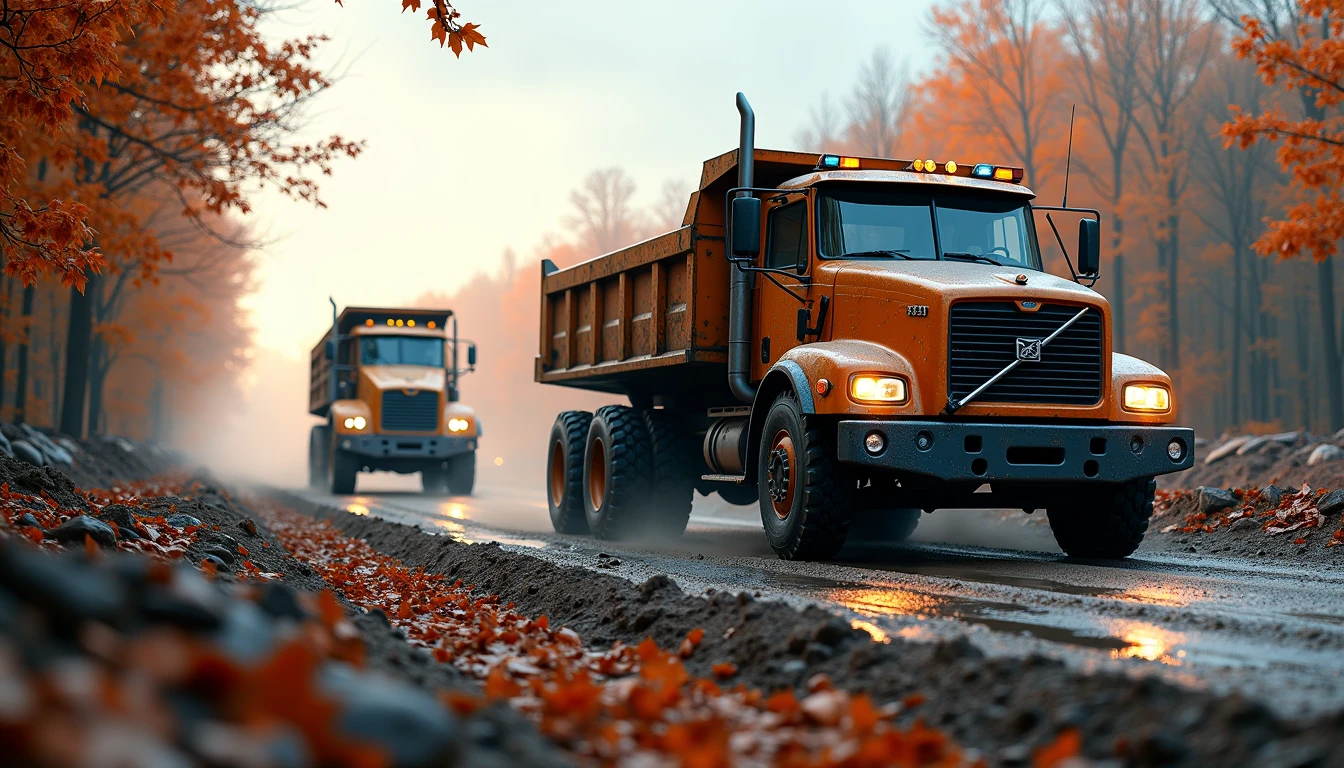
Designed for transporting and unloading bulk materials, with an open-box bed that tilts to unload. If your job burns time waiting on material movement, dump capacity and cycle discipline can make or break productivity.
11) Forklift
Described as among the most maneuverable vehicles for lifting and moving heavy loads on pallets or other materials within construction sites or warehouses. It’s the right tool for palletized loads and tight movement—not for rough terrain unless you’ve planned for it.
Paving, compaction, and concrete operations
12) Paver
Used for laying asphalt or concrete surfaces—roads or parking lots—with precise thickness and smoothness. This is about surface quality and consistency.
13) Roller
Used to compact soil, asphalt, or other materials to create a stable surface. Compaction is not optional if you care about long-term performance.
14) Concrete mixer truck
Equipped with a rotating drum to mix and transport concrete to job sites. This supports supply continuity and workable material delivery.
15) Concrete pump truck
Used to transport and place liquid concrete into specific locations, especially for high-rise or large-scale construction projects. If placement access is the bottleneck, pumps are the solution.
Operational Impact
This is where fleet decisions get real: the machine type you assign determines how smooth your operations run—and how clean your maintenance planning looks.
- Uptime starts with correct application. A dozer pushing and leveling is normal; a loader trying to do dozer work is a wear-and-tear generator. Matching task-to-tool reduces abuse, which is the quiet killer of mean time between failures—even when nobody’s tracking MTBF formally.
- Preventive maintenance schedules are easier to hit when the machine isn’t being misused. Overloading, side-loading, and using the wrong attachment for the job all drive unplanned downtime. The source highlights excavators using buckets or other attachments—attachments are productivity multipliers, but only when used as intended.
- Workflow planning affects total cost of ownership. For example, earthmoving can be handled by excavators, dozers, scrapers, and loaders—but each supports a different production method (dig/load, push/grade, cut/load/haul, scoop/carry). When you align equipment to the workflow, you cut idle time, reduce rework, and stabilize crew productivity.
- Specialized equipment prevents rework. Trenchers exist for narrow/deep trench requirements; pavers exist for thickness and smoothness control; rollers exist for stable surfaces. Cutting corners in these phases often means fixing failures later.
Field Lesson: I’ve watched asphalt go down looking perfect, then fail because compaction wasn’t taken seriously. A roller isn’t “nice to have”—it’s how you keep the surface stable and avoid callbacks.
What to Watch
- Regulatory exposure and jobsite risk. The source doesn’t cite standards directly, but in real operations, lifting (cranes), working at height (aerial lifts), and internal load handling (forklifts) are where safety compliance gets tested hard. Treat these as high-risk categories and manage them accordingly.
- Scope creep in machine utilization. When schedules slip, crews start improvising—using the wrong machine because it’s “available.” That’s how incidents and breakdowns happen. A fleet plan that includes the right mix of excavation, hauling, access, placement, and compaction equipment is a risk control measure, not just a cost item.
- Concrete placement constraints. High-rise or large-scale projects (explicitly noted for concrete pump trucks) can bottleneck at placement. If your pours depend on access and reach, plan pumping capacity early instead of reacting on pour day.
Bottom Line
If you want better uptime and a lower total cost of ownership, start with the unglamorous step: assign the right machine type to the right task—excavators for digging/lifting/handling, dozers for pushing/leveling, graders for leveling/grading, trenchers for narrow/deep utilities, pavers and rollers for surface quality, and the right transport and placement equipment for material flow (dump trucks, mixer trucks, pump trucks, forklifts).
Safety Alert: “Make it work” is how people get hurt and iron gets wrecked. Build your fleet and your work plan so crews don’t have to improvise in the first place.