At a copper operation outside Calama, Chile, I watched a haul truck lose a final drive after a small oil leak went unnoticed for three shifts. The operator had reported a dark spot, but nobody logged it. By the time the truck came into the bay, the planetary gears were turning in low oil and the repair bill had climbed well past $40,000. That is why a preventive maintenance schedule for heavy equipment is not paperwork. It is how you find a $200 seal before it becomes a major component failure.
I spent 30 years around Caterpillar machines, from D11 dozers in wet ground to 797 haul trucks working at altitude. The exact intervals always depend on the model, application, fluids, and manufacturer instructions, but the working pattern stays remarkably consistent: inspect every shift, service by hours, sample fluids, and record what the machine is telling you.
Build the schedule around hours and conditions
Start with the hour meter, not the calendar. A machine running 12 hours each day reaches a 250-hour service much faster than a loader used twice a week. Most off-highway equipment programs divide work into daily or shift inspections, 50-hour checks, 250-hour services, 500-hour services, and larger 1,000- or 2,000-hour intervals. Your operator manual and serial-number-specific service information take priority over any generic list.
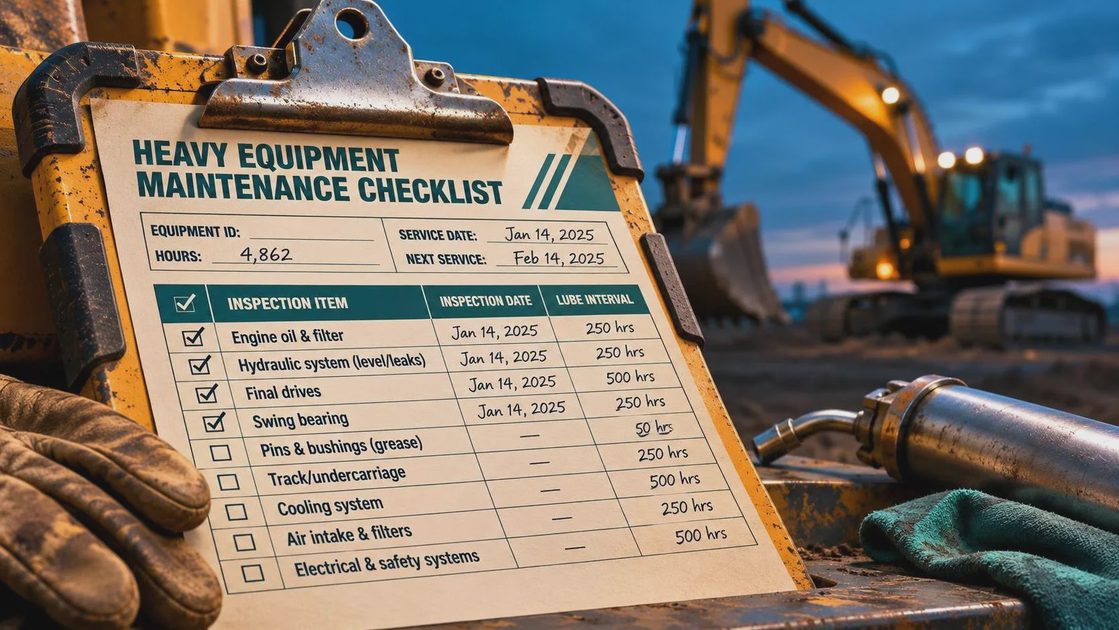
A practical preventive maintenance schedule for heavy equipment should include four columns: machine hours, task, person responsible, and findings. Add the date, fluid quantity, filter part number, and next due hour. That simple record catches patterns. If a hydraulic filter is collapsing early, engine oil level keeps rising, or a track needs repeated adjustment, the machine is giving you evidence of a developing problem.
Operating conditions change the schedule. Dusty quarries load air cleaners quickly. Demolition work damages cooling cores with debris. Cold starts increase battery and lubrication stress. Mud accelerates undercarriage wear, while high-production mining can justify shorter inspection intervals than the standard manual recommends. Do not stretch service intervals because the machine still starts. Starting is a low bar; reliable production is the goal.
Field Lesson: On an Australian iron-ore site, we cut radiator-cleaning intervals after seeing packed fines reduce cooling performance before the temperature gauge showed trouble. The crew spent more time cleaning, but stopped losing shifts to overheated engines.
What to inspect every shift
The operator is the first line of defense. Before starting, walk completely around the machine with the engine off, parking brake applied, and attachments lowered when possible. Look for fresh oil, fuel, coolant, or hydraulic leaks. A wet fitting, a shiny hose, and a puddle are three different stages of the same warning.
Check engine oil, coolant, hydraulic oil, fuel-water separator bowls, and windshield washer fluid where fitted. Inspect tires for cuts, exposed cords, and low pressure. On tracked equipment, look for loose hardware, damaged shoes, packed mud, leaking rollers, and abnormal track sag. Examine bucket teeth, cutting edges, dozer blades, lift-arm pins, and quick couplers for cracks or missing retainers.
Start the machine only after the walkaround is complete. Watch warning lamps and gauges during the first minutes. Listen for a new whine from a hydraulic pump, a sharp exhaust leak, a rod knock, or air leaks around brakes. Test steering, service brakes, backup alarms, lights, and horn in a controlled area. A daily inspection does not need to take an hour; a disciplined operator can find serious problems in 10 to 15 minutes.
Safety Alert: Never climb under a raised bucket, boom, blade, or dump body supported only by hydraulics. Lower attachments, shut down, isolate energy sources, and install the manufacturer-approved blocking or support before entering a danger area. Hydraulic pressure can remain stored after shutdown.
Service intervals that prevent expensive failures
At roughly 50 hours, inspect lubrication points, track tension, wheel-nut torque, belts, hoses, battery connections, and attachment pins. Greasing is not a contest to see how much grease you can pump. Stop when fresh grease appears at the correct seal, and investigate a joint that will not accept grease or immediately pushes the seal out.
At 250 hours, complete the scheduled oil and filter work specified for the machine. Inspect the engine air system, fuel system, cooling package, articulation joint, driveline, and hydraulic tank breather. Cut open used filters when your shop has the tools and training to interpret what is inside. Shiny metal, brass-colored flakes, or unusual clutch material deserves attention before the component fails.
At 500 hours and beyond, include deeper checks: valve lash where required, fuel-system inspection, transmission and axle oil, final drives, hydraulic return filters, structural welds, and electronic fault-code downloads. Fluid sampling is especially useful on large engines, transmissions, hydraulic systems, and final drives. A laboratory trend can reveal coolant contamination, silicon from dirt, or wear metals before a gauge moves.
A good preventive maintenance schedule for heavy equipment also assigns parts before the service begins. Keep common filters, seals, drain-plug washers, belts, grease, and approved fluids in stock. Waiting three days for a filter turns a planned service into an avoidable production delay.
Reading the warning signs before failure
Machines rarely fail without leaving clues. Rising coolant temperature can point to plugged cores, a damaged fan, low coolant, or an engine problem. Slow hydraulic functions may indicate low oil, a restricted filter, pump wear, or a relief-valve issue. Blue exhaust suggests oil consumption; white smoke during warm operation can indicate fuel or coolant trouble; black smoke often means too much fuel or not enough air.
Watch trends instead of isolated readings. A transmission that used to run at 180 degrees and now reaches 205 under the same load is telling you something, even if the alarm threshold is higher. Photograph leaks and damaged components, record the hour meter, and describe when the problem occurs. “Hydraulics weak” is not enough. “Boom slows after 30 minutes, bucket circuit normal, whine rises under load” gives a technician a starting point.
Field Lesson: In Indonesia, a loader operator reported that the machine hesitated only when turning left. The first assumption was a transmission fault. Inspection found a damaged harness rubbing against the frame and intermittently interrupting a control signal. Good descriptions prevent expensive parts-swapping.
Make the schedule work in the real world
Post a one-page inspection sheet in the cab or service truck, but keep the master record digital or in a durable shop log. Assign every defect a priority: stop immediately, repair at the next shift change, or monitor with a due date. A leaking brake line and a cracked mirror cannot receive the same response.
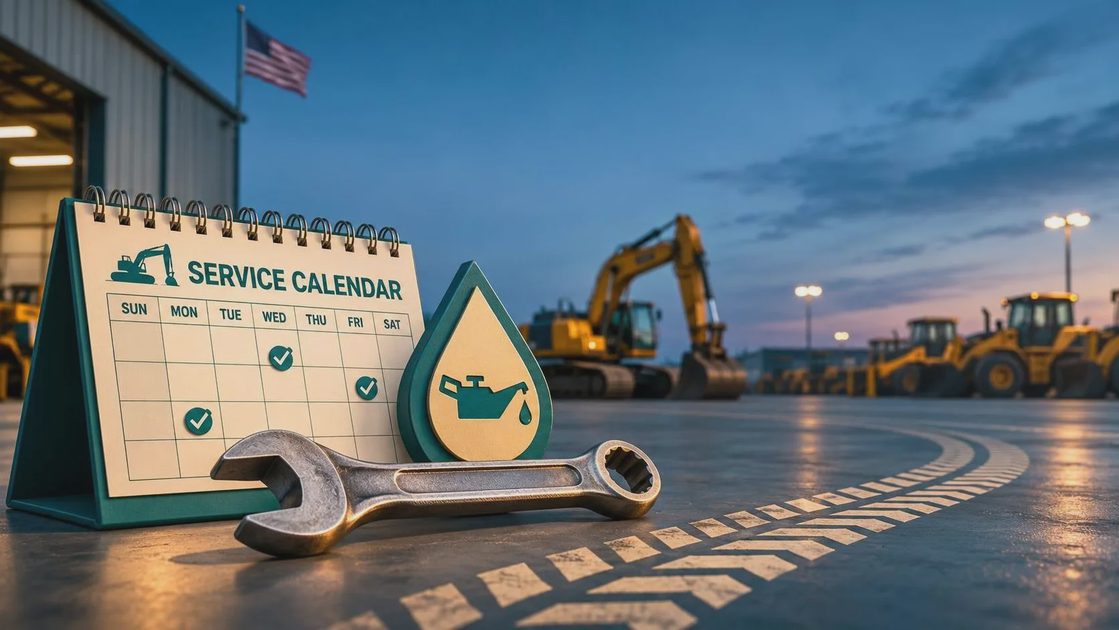
Use planned downtime. A 30-minute daily inspection, a two-hour weekly service window, and a scheduled monthly inspection are easier to protect than an emergency shutdown. Compare downtime cost with repair exposure. Replacing a $90 hose during planned maintenance is different from losing a loaded truck on a haul road during the night shift.
Train operators to report facts, not diagnose beyond their skill. Train technicians to verify complaints before replacing parts. Use lockout and tagout procedures, wear eye protection around pressurized systems, and bleed stored pressure according to the service manual. If a crack is structural, a tire is damaged, a brake problem appears, or high-pressure injection components are involved, stop and call a qualified shop.
A field-ready checklist
Before each shift, inspect leaks, levels, tires or tracks, attachments, safety equipment, and warning indicators. At each service interval, use the correct filter, fluid, torque value, and grease specification. Record the hour meter and every abnormal finding. Review oil-analysis trends instead of filing reports unread. Adjust cleaning and inspection frequency for dust, mud, extreme cold, heat, altitude, and production demand.
The best preventive maintenance schedule for heavy equipment is the one people actually follow. It does not need fancy software, though fleet systems can help manage dozens of machines. It needs ownership, accurate records, and the authority to park unsafe iron. I have seen this go wrong. Here is how you avoid it: catch small changes early, make the repair visible, and never trade a safe inspection for one more load.
A machine that is serviced on time earns more than lower repair bills. It gives operators predictable controls, protects the crew around it, and keeps production moving when weather and schedules are already working against you.