Years ago, on a dusty construction site outside Perth, I watched a telehandler operator raise a pallet of block when the boom began to drift down. The machine had a worn hydraulic fitting and a neglected cylinder seal. Nobody was hurt, but the load landed hard enough to scatter block across the pad. That failure would have been caught in five minutes with a proper telehandler maintenance checklist. I've seen this go wrong. Here's how you avoid it.
A telehandler works as a forklift, crane, and rough-terrain loader, so it carries more failure points than a plain warehouse lift truck. Boom sections, forks, stabilizers, axles, tires, hydraulic valves, and electronic safety systems all deserve attention. A clean inspection is not paperwork theater. It is how you keep a small leak from becoming a dropped load or a $15,000 repair.
Start with a Safe Walkaround
Before touching a wrench, park on firm, level ground, lower the boom and attachment, set the parking brake, shut down the engine, and remove the key. Chock the wheels if the machine is parked on a grade. Never inspect underneath a raised boom unless it is mechanically supported with the manufacturer-approved device. Hydraulic pressure can remain trapped after shutdown, and gravity does not care how experienced you are.
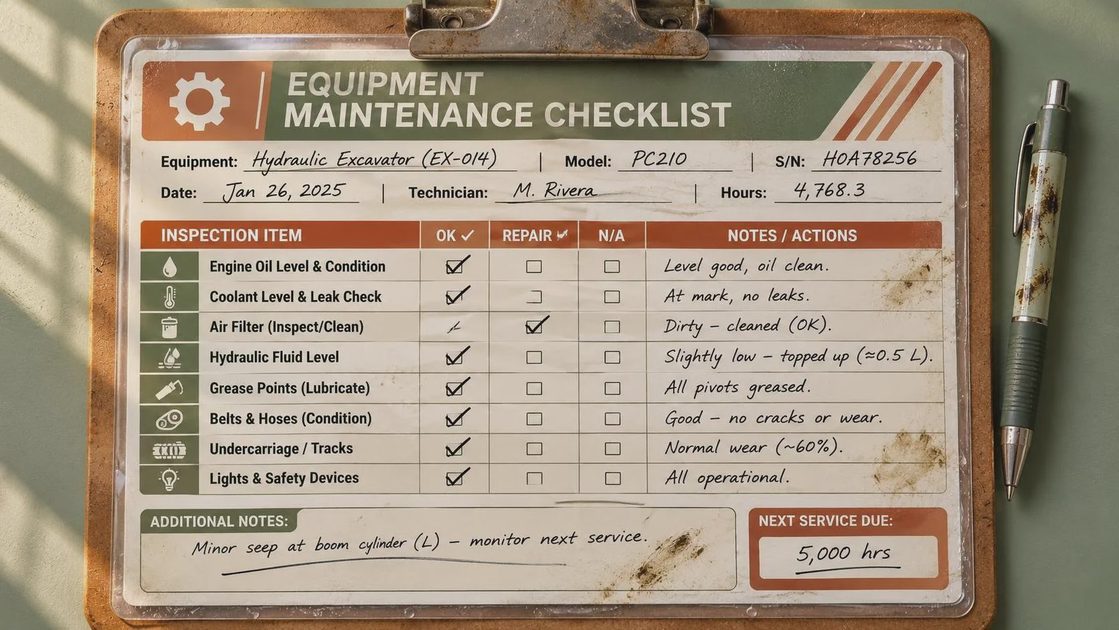
Use the telehandler maintenance checklist in the same direction every time. I walk clockwise from the operator station, because a fixed route prevents the tired-tech mistake of inspecting the same side twice. Look for cracked welds, loose guards, missing pins, bent steps, damaged mirrors, and oil or coolant on the ground. Check the data plate and load chart for legibility. If the chart is missing or unreadable, stop lifting until the correct capacity information is restored.
Field Lesson: At an iron ore site in Western Australia, a loose access-step bolt nearly sent an operator onto the rocks. The defect was not dramatic, but it was found during a routine walkaround. Small hardware deserves the same respect as a major component.
Daily Checks for Tires, Axles, and Attachments
Tires take punishment on rough ground, especially when a telehandler carries a load with the boom extended. Inspect each tire for cuts, exposed cords, sidewall bulges, embedded steel, and uneven wear. Use a pressure gauge and follow the machine maker's specification; do not guess from appearance. A tire that looks acceptable can still be dangerously underinflated. Inspect wheel nuts for movement, damaged studs, or bright metal dust around the nut seat.
Examine forks for cracks, bent heels, worn locking pins, and excessive wear at the tips. Both fork tines should sit evenly and lock positively to the carriage. Check buckets, lifting hooks, work platforms, and other attachments for damaged couplers or missing retaining hardware. Never improvise with a chain, welded tab, or homemade pin. The attachment must match the telehandler's rated capacity and approved configuration.
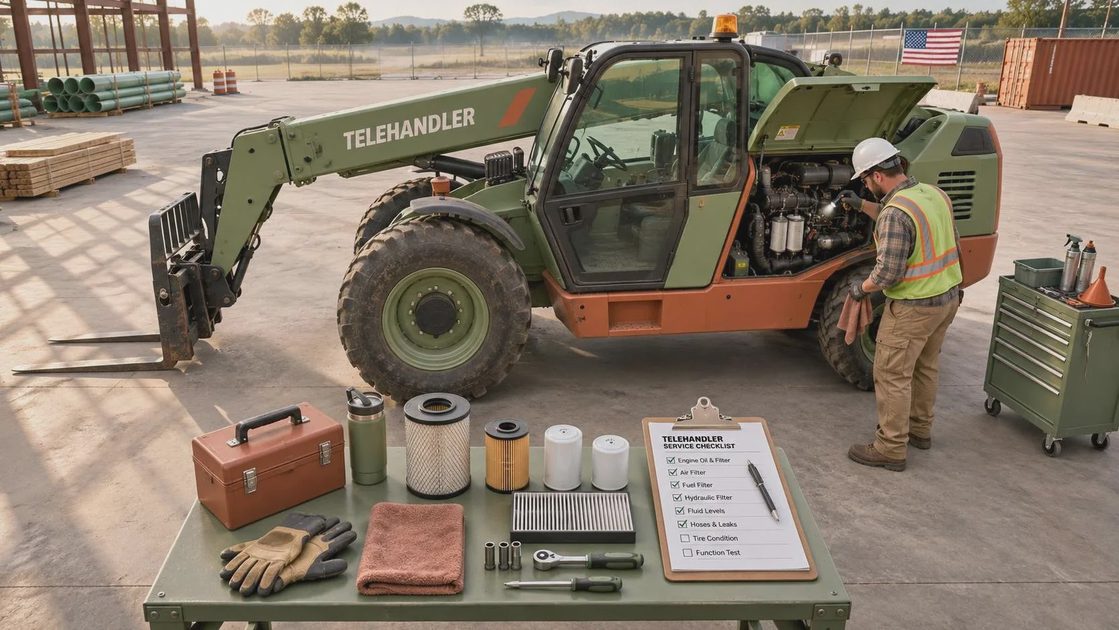
A useful telehandler maintenance checklist also includes the frame articulation area, axle housings, driveline guards, and steering cylinders. Look for grease pushed out of a seal, fresh oil around a hub reduction, or a hose rubbing against a tire. These clues tell you where to investigate before the machine is loaded.
Boom, Carriage, and Hydraulic Inspection
The boom deserves a slow inspection, not a glance from ten feet away. Check each boom section for dents, cracks, distorted wear pads, and missing bolts. Inspect rollers and slide pads for abnormal gaps. Cycle the boom, tilt, auxiliary, and stabilizer functions at low idle in a clear area. Listen for chatter, watch for jerky motion, and see whether a cylinder creeps after the control is released.
A practical telehandler maintenance checklist calls for checking every hydraulic hose along its full route. A hose can fail from abrasion, heat, twisting, or a loose clamp long before its outer cover looks destroyed. Pay close attention near the boom head, carriage, and frame articulation point. Replace damaged hoses with the correct pressure rating and fittings. Do not search for a leak with your hand. A pinhole injection injury can require emergency surgery, even when the wound looks like a tiny scratch.
Safety Alert: Never tighten a hydraulic fitting on a pressurized circuit. Lower the attachment, shut down, move the controls through their positions to release stored pressure, and follow the service manual. If a leak is spraying or a cylinder is settling rapidly, isolate the machine and call a qualified technician.
Fluids, Filters, and Engine Compartment Checks
Open the engine compartment only after the machine is cool enough to work around safely. Check engine oil, coolant, fuel, hydraulic oil, and axle or transmission levels according to the manufacturer's procedure. A foamy hydraulic sight glass, milky axle oil, or coolant with an oily film is not a top-off situation; it is a diagnostic clue. Record the level and color instead of dismissing it.
Inspect the air filter indicator, radiator and oil cooler cores, fan belt, battery connections, and wiring harnesses. Chaff, mud, and plastic wrap can block cooling airflow. Blow debris out from the clean side when the service instructions permit it, and avoid bending fins with excessive air pressure. Clean the battery top so a conductive layer of dust does not create a slow discharge.
The telehandler maintenance checklist should include fuel-water separators and drain points where fitted. Water in diesel fuel can damage injection equipment and create hard starting. Replace filters at the stated interval, but shorten the cleaning interval when the machine works in demolition dust, grain handling, or high-chaff conditions.
Controls, Safety Systems, and the Operator Station
Climb into the cab and test the seat belt, seat switch, horn, lights, beacon, windshield wipers, mirrors, and backup alarm. Confirm that the parking brake holds the machine on a controlled test area. Check steering modes and make sure the selected mode indicator agrees with the wheel position. A telehandler that crab-walks when it should steer normally can damage tires and put the operator in a bad position near obstacles.
Test the overload protection, boom angle indicator, frame-leveling display, and attachment recognition system if equipped. These devices support safe operation, but they do not replace the load chart or the operator's judgment. Never bypass an interlock because production is behind schedule. Tag out a machine with a failed safety system and report the fault clearly.
Keep the operator's station clean enough that a loose bottle, rag, or tool cannot jam a pedal. Grease on steps is a fall hazard. Replace a damaged belt immediately rather than tying it out of the way. Good housekeeping is part of the telehandler maintenance checklist because many injuries begin before the engine starts.
Weekly, Monthly, and Service-Interval Work
Daily inspections catch obvious trouble. Weekly work should include greasing all specified pins and bushings, checking pivot play, inspecting battery hold-downs, and examining the boom wear pads. Use the grease grade and points listed by the manufacturer. Pumping grease into a blocked fitting only blows out a seal, so replace clogged zerks rather than forcing them.
At scheduled service intervals, take hydraulic, engine, and transmission oil samples when your fleet program supports sampling. Trend results over time; one sample is a clue, while repeated changes can identify contamination or wear. Torque critical fasteners according to the service manual, not a universal guess. Have a qualified technician inspect the boom structure, load-sensing system, brakes, and drivetrain at the prescribed interval.
A completed telehandler maintenance checklist should record the machine hours, date, inspector, defects, parts used, and release decision. “Checked” is not enough. Write “right tilt hose abraded, replaced,” or “left fork heel cracked, attachment removed.” Clear records help the next shift and protect the foreman from sending a known-defective machine back to work.
When to Stop and Call the Shop
Stop operating immediately for a crack in a load-bearing structure, failed brake, missing fork lock, uncontrolled boom drift, hydraulic injection leak, damaged tire cord, steering fault, or malfunctioning overload protection. Lower the attachment if it can be done safely, secure the area, tag the machine, and contact a competent service professional. Do not let schedule pressure turn a repair into an incident investigation.
The best telehandler maintenance checklist is the one operators actually use, understand, and sign. Walk the machine in the same order, record defects while they are fresh, and separate safe-to-run items from no-go failures. That habit kept machines productive across mines, farms, and construction sites I visited for three decades. Spend ten careful minutes today, and you can avoid days of downtime tomorrow.