At a copper site outside Calama, Chile, I watched a haul truck sit dead for two shifts because a small electrical connector had been allowed to collect dust and moisture. The repair took less than an hour once we found it. The lost production did not. That truck was one line on a spreadsheet, but its idle time affected loading, hauling, crushing, and the night shift. That is the real meaning behind CONEXPO 2026 fleet ROI uptime: the machine only earns money when the whole production chain can use it.
I spent 30 years chasing failures on Caterpillar equipment from Western mines to highway projects in the United States. Equipment manufacturers will show you impressive horsepower, cab technology, and telematics dashboards at CONEXPO. Those features matter. The harder question is whether your shop can keep them working at 6 a.m. on a frozen Colorado morning or during a wet Australian shutdown. I've seen this go wrong. Here's how you avoid it.
Start with uptime that reflects production
Do not let a vendor define uptime with a clean laboratory number. Your operation needs a practical measure. Track scheduled hours, available hours, mechanical downtime, waiting time for parts, and delays caused by operators or site logistics. A loader that starts every morning but waits 40 minutes for a fuel truck is not delivering the same value as one that loads continuously.
For a simple baseline, record each machine's planned operating hours and actual productive hours for at least three months. A 2,000-hour annual schedule with 300 hours lost to repairs, inspections, parts delays, and recovery work gives you a very different picture from a brochure promising high availability. Separate preventable downtime from unavoidable work. A worn bucket edge is a maintenance planning issue; a cracked frame requires a different capital decision.
At CONEXPO 2026 fleet ROI uptime discussions, ask vendors exactly how they define availability. Ask whether scheduled maintenance, changeouts, software updates, weather delays, and parts waiting time are included. If the answer is vague, the number is not ready for a budget meeting.
Calculate ROI beyond the purchase price
Fleet ROI is not just purchase price minus resale value. Build a five-year view that includes fuel, tires or undercarriage, planned maintenance, unplanned repairs, operator training, transportation, financing, and disposal. A $450,000 wheel loader that burns less fuel but loses two weeks to a specialized hydraulic repair can cost more than an older machine supported by a strong local shop.
Use production units instead of guessing. If a haul truck moves 180 tons per cycle and completes 18 cycles per shift, estimate the contribution from those tons. Then subtract the cost of fuel, labor, wear parts, and overhead. You do not need false precision. A useful range is better than a polished fiction.
For example, a contractor comparing two excavators might find that one machine costs $60,000 more but saves roughly $18,000 per year in fuel and avoids several days of rental replacement. That difference can recover the premium in about three years. If its parts take ten days to arrive, however, the calculation changes. CONEXPO 2026 fleet ROI uptime should lead to those hard questions, not end with a glossy demonstration.
Field Lesson: On a road project in Nevada, a foreman focused on hourly fuel burn and overlooked hydraulic hose routing. The newer excavator saved fuel on paper, but abrasion took out two boom hoses during the first season. The repair bill was manageable. The traffic control, cleanup, and lost crew hours were not.
Inspect serviceability at the show
At a major equipment exhibition, climb past the paint and look for the work a technician must perform. Can the daily inspection points be reached without standing on an awkward tire? Are grease fittings grouped logically? Does the engine compartment provide room for filters, belts, and sampling ports? Can a technician remove a hydraulic hose without dismantling half the machine?
Ask for the maintenance schedule in writing. Check fluid capacities, filter part numbers, recommended sampling intervals, and expected labor for common services. Ask which repairs require dealer software or factory tools. A machine that needs a laptop for every diagnostic step can still be a good machine, but your support plan must include access to that laptop and someone trained to use it.
Talk to the parts manager, not only the salesperson. Ask what commonly fails, what is stocked locally, and which components are exchange units. Brands such as Caterpillar, Komatsu, John Deere, Volvo, and Hitachi all offer different dealer footprints and support strengths by region. The best choice is the one your operation can feed with parts and skilled hands.
Use telematics as a maintenance tool
Telematics is useful when it changes behavior. Engine fault codes, idle time, fuel consumption, fluid levels, location, and utilization can help a shop identify trouble before a failure becomes a recovery job. It is not useful when nobody reviews the alerts or when every warning is treated as equally urgent.
Set a small number of rules. A rising coolant temperature deserves immediate attention. Excessive idle time deserves an operator conversation and a fuel calculation. Repeated low-voltage events deserve electrical testing before they strand a machine. Review alerts during the morning planning meeting, assign an owner, and close the loop after inspection.
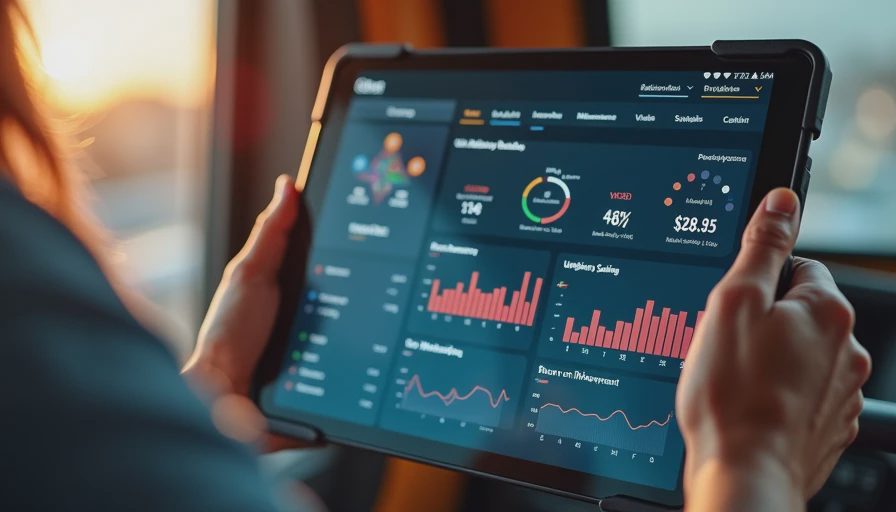
A good dashboard should connect a warning to a work order, parts request, and machine history. CONEXPO 2026 fleet ROI uptime becomes measurable when you can show that an alert prevented a failed alternator, reduced emergency towing, or moved a planned repair into a scheduled service window.
Safety Alert: Never inspect a running machine from an unsafe position because a telematics screen says the fault is minor. Lock out equipment where required, lower attachments, control stored hydraulic energy, and follow the manufacturer procedure. A dashboard does not make a rotating shaft safe.

Build the uptime plan before delivery
Before signing a purchase order, write the support plan. Name the dealer contact, emergency number, escalation path, warranty process, parts stocking agreement, and expected response time. Decide which filters, hoses, sensors, belts, and wear parts will live in your own crib. Price a service truck, lifting equipment, and technician training instead of treating them as afterthoughts.
Create a commissioning checklist for the first 100 hours. Verify fluid levels, torque marks, attachment settings, tire pressures, software configuration, fire suppression equipment, cameras, alarms, and operator familiarization. Capture baseline fuel use and cycle times under normal conditions. That information helps separate an equipment problem from an operating problem later.
One contractor may need maximum dealer coverage because its crews move from state to state. A remote mine may value rebuild support, component exchange, and parts warehousing more than a low initial price. The same machine can be a smart investment in one fleet and a poor fit in another.
A field-tested decision at CONEXPO
Walk the show with three numbers written on a card: your current productive hours, your average unplanned downtime cost, and your five-year support budget. Every machine conversation should answer how it improves one of those numbers. If a feature cannot improve production, safety, service access, or cost control, it belongs lower on the list.
Then bring the information home. Compare proposals on a single worksheet, including warranty limits, service intervals, training, telematics fees, transport, attachments, and resale assumptions. Call two owners who run similar equipment and ask what failed after the first year. Do not ask only whether they like the machine. Ask how long they waited for parts and which repair surprised them.
That is the practical value of CONEXPO 2026 fleet ROI uptime. It is not a slogan for a booth wall. It is the discipline of connecting production, maintenance, people, parts, and safety before the iron arrives. Buy the machine your crew can support, measure the hours that create revenue, and plan failures before they become emergencies. The best fleet is not the newest one on the site. It is the one that keeps moving when the schedule, weather, and ground conditions turn ugly.