I’ve lost count of how many Terramite backhoe units I’ve worked on over the years – from the old T5s to the newer T9s. Most of them came into the shop with the same handful of problems, and I’d bet a month’s pension that yours has at least one of them right now. If you run a Terramite backhoe, you know they’re tough little machines, but they’ve got quirks that’ll bite you if you aren’t paying attention. I’ve seen this go wrong. Here’s how you avoid it.
What Usually Breaks on a Terramite Backhoe
The first Terramite backhoe I touched was on a mine site in Nevada back in ’03. A T5C, about 2,000 hours on it, and the owner swore it was cursed. Every other week something leaked or seized. I cracked the belly pan and found the hydraulic pump mount bolts had worked loose – not from poor maintenance, but from the pump being slightly out of alignment from the factory. That’s a pattern I’ve seen on a dozen more Terramite backhoes since. The fix is simple: check the pump-to-engine alignment every 500 hours, and use Loctite on the bolts. Save yourself a $1,200 pump replacement.
Another common failure on the Terramite backhoe is the steering cylinder seals. These machines see a lot of tight-quarter work, and the cylinders take a beating. I’ve replaced seals on units with under 300 hours because the wiper seals let grit in. Field Lesson: swap the stock wipers for aftermarket double-lipped seals. They cost twenty bucks more but add years to the cylinder life.
Hydraulics – The Heart of the Terramite Backhoe
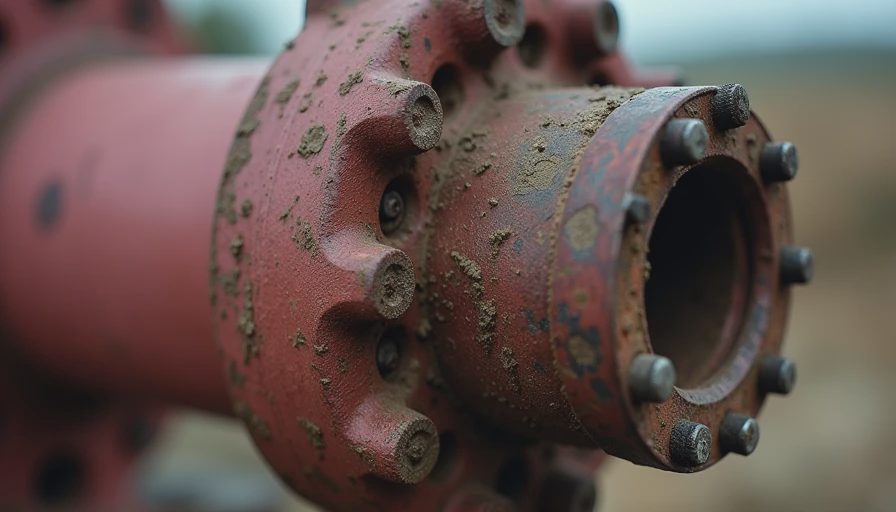
If you own a Terramite backhoe, odds are you’ve dealt with a sluggish boom or a weak bucket curl. The problem is often not the pump but the relief valve settings. I’ve seen operators crank them up thinking they’ll get more breakout force, but all they do is blow seals and overheat the oil. The spec is 2,500 psi on most newer models. Leave it there. If you need more grunt, you’ve got the wrong machine.
Another hydraulic gotcha on the Terramite backhoe: the return-line filter can plug up if you use cheap hydraulic oil. I always recommend Mobil DTE 25 or equivalent – something with good thermal stability. These machines run hot in summer, and cheap oil breaks down fast. I’ve pulled filters that looked like they were packed with mud. That’s a direct path to pump cavitation and a $3,000 repair bill.
Safety Alert: Never work under a raised backhoe boom that’s only held by hydraulics. Use mechanical stops. I saw a guy in New Mexico lose two fingers because a hose burst when he was underneath. A Terramite backhoe isn’t heavy enough to kill you quickly, but it’ll mess you up for life.
Engine and Transmission Care
Most Terramite backhoes use a Kubota or Yanmar diesel. Solid engines, but they have a weakness: the fuel filter housing. It sits low on the block and catches road spray if you drive through puddles. Water in the fuel kills injection pumps. I’ve seen it on Terramite backhoes working in rain or on wet job sites. Change the fuel filter every 200 hours, not the manual’s 400. And add a water separator if yours didn’t come with one – it’s a hundred-dollar part that’ll save you thousands.
The transmission on these machines is a hydrostatic drive. The weak point is the charge pump. It pulls oil from the reservoir, and if the suction screen gets clogged, the pump starves and fails. I’ve replaced three charge pumps on one Terramite backhoe in a year because the owner never cleaned the screen. It’s a 15-minute job. Do it every 100 hours.
Buying a Used Terramite Backhoe: What to Look For
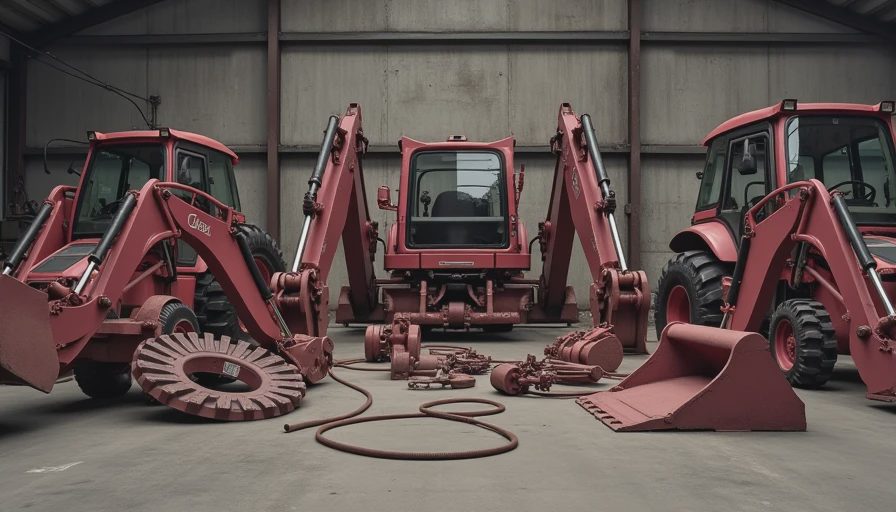
If you’re shopping for a used Terramite backhoe, here’s what I check first: the rear axle pivot bushings. They wear out fast if the machine has seen much loader work. Look for play when you rock the machine side to side. Also, pull the dipstick on the hydraulics – if it smells burnt or looks milky, walk away. Those are signs of internal leakage or water intrusion, and a full hydraulic rebuild on a Terramite backhoe runs north of $5,000.
Also check the steering cylinders for chrome rod pitting. If the rod is rough, the seal will fail quickly. New cylinders are about $400 each, so factor that into your offer. I’ve seen Terramite backhoes with 1,500 hours that looked beat because the previous owner never greased the zerk fittings. A machine that’s been greased every 8 hours will outlast one that hasn’t by thousands of hours.
The Terramite backhoe isn’t a Cat 420 or a Deere 310 – it’s a light-to-medium duty tool. It’ll dig trenches, lay pipe, and load trucks, but don’t expect it to handle rock all day without issues. If you treat it right and follow these guidelines, you’ll get good years out of it. If you don’t, you’ll be calling a guy like me to come fix it.
Field Lesson: Keep the grease gun handy, check the fuel filter often, and never trust a hydraulic ram to hold a boom when you’re underneath. That’s the kind of advice that keeps you walking and your Terramite backhoe running.




No letters yet — be the first to write.