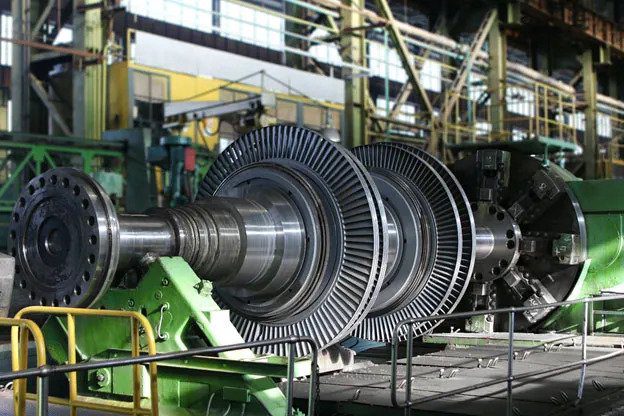
Heavy industrial and automotive equipment operates across a wide range of demanding environments and difficult working conditions. Accordingly, it demands careful attention during upkeep, encompassing specialized procedures and the application of purpose-built products.
Valvoline supplies heavy equipment greases designed for diverse machines and applications, spanning agricultural equipment, trucks and buses, marine vessels, industrial machinery, and mining and construction machines. Achieving peak durability, efficiency, and performance requires the engines driving this equipment to withstand the most grueling operational demands.
Among the most critical maintenance decisions is selecting the appropriate heavy equipment grease. The available options are numerous, and while settling on the right one may feel overwhelming, a well-informed choice will extend equipment life and minimize unplanned downtime.
This article explores the difficulties associated with heavy-duty equipment maintenance and the key factors involved in identifying the best heavy equipment grease for any given operation.
Maintenance falls into two fundamental categories: preventive and reactive. Consistent and thorough preventive maintenance keeps the need for reactive maintenance to a minimum — or eliminates the need for it altogether.
Preventive maintenance carries distinct advantages: it is less expensive, less complex, and less time-consuming. When carried out consistently and correctly, it results in far less downtime than diagnosing and repairing or replacing failed equipment components.
Routine preventive maintenance encompasses lubricant replacement, cleaning, and inspection of machinery for signs of wear and tear. Beyond this, equipment must be operated within its performance specifications, personnel must be properly trained on its use, and all maintenance and servicing activities must be recorded.
Lubrication holds a central place in any maintenance program for good reason. Regardless of equipment type, heavy machinery depends on lubricants to function effectively. Greases and oils lower friction, thereby limiting wear and tear, and they also help maintain a clean interior by preventing the accumulation of contaminants.
Grease levels must be monitored regularly, and any excess grease should be removed promptly. Insufficient lubricant leads to accelerated wear and tear, while over-lubrication causes grease to accumulate and can trigger performance problems.
Selecting a grease with the appropriate viscosity, additives, and thickening agent will reduce maintenance downtime and extend replacement intervals. It will also maximize equipment service life by minimizing wear and tear.
All greases consist of oil combined with thickeners, which are typically soaps. Heavy equipment or heavy-duty greases are engineered specifically to withstand harsh operating conditions, demanding environments, and abrupt shifts in temperature or load. They frequently include additives that enhance lubricating performance, such as molybdenum disulfide (commonly referred to as moly), graphite, molybdenum disulfide, or polytetrafluoroethylene (Teflon).
Choosing the correct grease is essential to getting the best possible performance from equipment. Because no single grease suits every situation, the selection process can have a meaningful impact on operational efficiency and reliability. A grease tailored to the specific operational requirements will deliver outstanding performance regardless of the environment.
For heavy equipment applications, higher viscosity grease is generally preferred due to the need to handle elevated loads. Additional key characteristics include water resistance, dropping point, thermal stability, and mechanical stability. Although every application calls for a specific grease, seeking high ratings across all of these properties is a sound general guideline.
As previously noted, grease selection is tied directly to the specific application at hand. Determining the right product typically involves weighing the equipment's design characteristics, operational parameters, and surrounding environment together. Variables such as temperature, humidity, and operating location — whether at altitude, underground, or in a marine setting — each present distinct lubrication challenges.
For most greases, the primary selection criteria are water resistance, temperature rating, viscosity, and ease of application.
When evaluating heavy-duty grease options, three core components deserve close attention: oils, thickeners, and additives. These elements work in concert to lubricate and protect the parts to which the grease is applied.
Greases that lack ratings for specific high or low temperatures risk melting or freezing, both of which can seriously compromise equipment performance. Viscosity governs the thickness and consistency of the grease. Grease with too low a viscosity may be too thin to offer adequate lubrication and can be hard to apply, whereas grease with too high a viscosity can be difficult both to dispense and to remove afterward.
Each of these characteristics plays a role in how easily the grease can be applied. A good heavy equipment grease should be straightforward and practical to use. High-consistency grease that can be applied directly or with a grease gun represents the ideal option.
Premium greases create a protective barrier that shields heavy equipment from contamination and helps prevent leakage — the high viscosity of such greases means they can serve as an effective sealant. They additionally reduce friction, promoting smooth movement of all moving components, improving performance, and boosting overall efficiency. Furthermore, they extend operational life by guarding against physical damage and corrosion (oxidation).
Greases are broadly categorized into multipurpose (MP), extreme pressure (EP), marine, heavy-duty, specialty, automotive, industry greases, and others. A particularly critical element of any grease is the thickening agent, which falls into one of seven categories — though blended formulations do exist.
Calcium grease ranks among the earliest grease types produced for general-purpose use. As a water-resistant multipurpose grease, it delivers solid corrosion protection and mechanical stability. It performs best at low temperatures and in colder environments, as its structure can degrade at elevated temperatures. Primary applications include automotive, marine, agricultural, and industrial uses.
Lithium greases are widely used multipurpose greases valued for their high viscosity, durability, and stability. They offer reliable, long-lasting defense against corrosion, wear and tear, and extreme temperature conditions.
Lithium complex greases stand out in particular for their outstanding lubrication and water-resistance characteristics. They are also capable of handling shock loads and high pressures. In heavy equipment contexts, these greases are predominantly applied in demanding metal-to-metal applications, in buses and trucks, and in industrial machinery.
This grease type is highly versatile, capable of tolerating extremely high temperatures while also offering excellent water resistance. It resists corrosion and exhibits strong shear stability. Although its primary application is in the food industry, it is also well suited to construction, agriculture, and automotive uses.
This is a high-performance grease distinguished by excellent mechanical stability and strong high-temperature resistance. It is also resistant to water, oxidation, and chemical exposure. Barium complex greases find their primary use in exceptionally demanding applications involving heavy loads, including marine, industrial, aeronautical, and manufacturing equipment.
This clay-based lubricant employs bentonite clay as its thickening agent. Because it has no dropping point, it is commonly referred to as a non-melt lubricant. It offers outstanding resistance to temperature change, delivers strong wear and tear protection, water tolerance, excellent mechanical stability, and good adhesive properties. Bentone grease is well suited to highly demanding industrial applications and is commonly found in manufacturing, construction, and mining equipment.
This adaptable grease is characterized by exceptional water resistance, excellent oxidation stability, durability, rust and corrosion prevention, good mechanical stability, and strong high-temperature performance. These properties make polyurea grease particularly well suited to long-lasting applications, and it sees use across a broad range of industries.
Sodium grease offers adequate mechanical stability and lubrication, but its poor oxidation stability and water resistance are notable limitations. As a result of these drawbacks, it is commonly blended with other greases when used in heavy-duty formulations.
The choice between mineral and synthetic oil greases hinges on the anticipated lubrication frequency. Mineral oil greases are appropriate for equipment operating in moderately demanding conditions that require regular lubrication in line with the manufacturer's schedule. They represent an economical solution for less challenging working environments.
For harsh environments, severe operating conditions, and extreme temperature ranges, synthetic oils are the superior option. Their significantly longer service life means less frequent reapplication, which translates into reduced downtime.
The National Lubricating Grease Institute (NLGI) defines viscosity as a measure of softness or hardness. Its scale ranges from 000 to 6, spanning completely fluid to very hard consistency.
As with all greases, heavy-equipment grease can serve multiple purposes. Many multipurpose greases remain suitable for industry-specific applications, given that they combine the right protective and lubricating qualities.
Marine greases are lubricants engineered specifically for marine environments. Maintaining effectiveness even in wet conditions requires superior water resistance. These greases are applied to boat trailer wheel bearings and can also serve propellers, trailer winches, and anchor reels.
An often-neglected factor in marine grease selection is safety. Given that these products are used in boating contexts, a non-toxic, water-safe formulation is essential when the health of aquatic ecosystems is a consideration.
For marine applications, we recommend Valvoline Marine Calcium 2, Valvoline Industry Calsul 2, Valvoline Industry Calsul Moly 2, Valvoline Industry Calsul Moly PT 2, Valvoline Multipurpose Calcium 2, and Valvoline Multipurpose LICAL 2/3. These products are formulated with premium ingredients that deliver excellent water resistance and corrosion protection along with a broad range of performance characteristics.
Greases intended for agricultural machinery are typically engineered to endure harsh weather conditions, heavy loads, strong shocks, and water exposure. Regardless of the equipment type involved, an effective grease must offer protection, lubrication, and oxidation resistance.
Valvoline Marine Calcium 2, Valvoline Earth Lithium 2, Valvoline Open Gear 3, Valvoline Open Gear 0, Valvoline Multipurpose Complex Red 1, 2, and 3, and Valvoline Multipurpose Moly 2 deliver the precise combination of properties needed to protect agricultural machinery across all operating conditions.
Industrial applications span a vast spectrum of uses and demand flexible lubrication solutions. Greases developed for industrial service tend to be multipurpose, allowing them to address the wide-ranging temperature requirements of ball and roller bearing lubrication. Formulations with high dropping points demonstrate excellent resistance to leakage, dripping, and throw-off at elevated operating temperatures.
Valvoline Industry Calsul 2, Valvoline Industry Calsul Moly 2, Valvoline Industry Calsul Moly PT 2, Valvoline Industry Calsul ST 1.5, Valvoline Multipurpose Lithium EP-X 2, Valvoline Industry BT 2, Valvoline Earth Open Gear 0, Valvoline Earth Open Gear 3, and Valvoline Endurance Lithium EP 2 all deliver strong industrial performance and cover a wide scope of applications.
Large commercial vehicles such as buses and trucks demand more specialized greases than are required by lighter passenger vehicles.
Valvoline's multipurpose and specialty greases are suitable for lubricating chassis, wheel bearings, trailer coupling devices, and fifth wheels. For central chassis lubrication, lithium greases represent the most widely used option. Greases with higher base oil viscosity incorporating lithium calcium complex soaps and special solids such as graphite are appropriate for other components of heavy vehicles.
For automotive applications, we recommend Valvoline Endurance Lithium EP 2, Valvoline Semi Fluid 00, and Valvoline Multipurpose Complex Red 1, 2, and 3, all of which have been developed with outstanding protective performance as the guiding priority.
Mining and construction equipment is subjected to particularly severe fatigue, abrasive wear, and adhesive wear. Such machinery requires specialized lubrication, and Valvoline's high-performance mining and construction lubricants are specifically formulated to lower the risk of equipment failure.
These products are engineered to absorb extreme shock loading while simultaneously reducing vibration, operating temperature, sludge build-up, friction, wear, and noise.
Valvoline Industry Calsul 2, Valvoline Industry Calsul Moly 2, Valvoline Industry Calsul Moly PT 2, Valvoline Earth Lithium 2, Valvoline Industry Calsul ST 1.5, Valvoline Earth Open Gear 3, and Valvoline Earth Open Gear 0 have demonstrated exceptional durability and protective performance, ensuring long service life and reliable operation of mining and construction equipment alike.
Heavy equipment must withstand some of the harshest working conditions imaginable — extreme stress, high pressures, temperature swings, and substantial loads. Proper lubrication is an indispensable element of maintaining such machinery.
Purpose-formulated heavy-duty grease is engineered to shield equipment from wear and tear, extend service intervals, reduce maintenance costs, and improve operational efficiency. With the right lubricants in place, equipment operators can extract the full potential from their machinery.
Valvoline offers an extensive range of high-quality lubricants suited to diverse industries and heavy-duty applications, along with guidance on how to select the most appropriate grease for specific operational scenarios.



No letters yet — be the first to write.