
The construction sector is a cornerstone of the European economy. It generates employment opportunities, drives economic expansion, and tackles emerging ecological demands. According to official figures, the industry accounts for 18 million direct jobs and contributes 9% of the EU's GDP.
In this fiercely competitive sector, construction and earthworks companies continually seek ways to innovate their workflows and boost the efficiency of heavy-duty machinery. Lubricant selection and maintenance are central to achieving those goals.
Why does construction lubrication matter? What should guide product selection? Read on to find out.
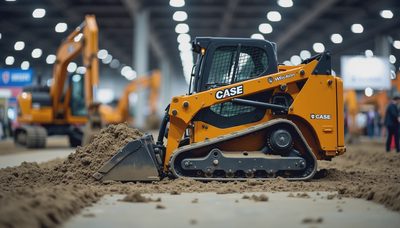
Construction and earthworks sites depend on modern, highly engineered heavy-duty machinery, vehicles, and earth-moving equipment. Common examples include bulldozers, compactors, dumpers, and excavators.
Construction and earthworks rank among the most punishing operating environments imaginable. On top of that, servicing construction machinery in the field is considerably more difficult than performing the same work in a controlled workshop setting.
It comes as no surprise, then, that companies in this sector place a strong emphasis on maximizing equipment efficiency, extending service life, and keeping downtime as low as possible. Achieving those outcomes depends on thorough equipment checkups and maintenance schedules, with proper lubrication standing out as a critical element.
Lubrication products are central to the efficiency and productivity of every construction site. Poor lubrication gives rise to a broad spectrum of performance problems — shortened drain intervals, premature equipment deterioration, and unexpected machinery failures. These issues cascade into unplanned downtime, lost productivity, and costly repairs. When tight project deadlines are missed as a result, the damage to your company's reputation and finances can be severe.
Choosing high-quality industrial lubricants matched to the demands of your construction machines, by contrast, delivers lasting benefits. Equipment that is properly lubricated performs at a higher level and lasts significantly longer. You also strengthen client relationships and drive down maintenance and repair expenditure.
These lubricant formulations are purpose-built to support the rigorous demands of construction operations and hold up under even the most unforgiving working conditions.
Construction lubricants are engineered with high load-carrying capacity and sophisticated wear control at their core. They reduce operating temperatures and deliver outstanding thermal and oxidative stability. Their durability and adaptability enable you to extract maximum performance from your construction machines.
When evaluating a quality construction lubricant, the following properties deserve close attention:
Viscosity describes the thickness of an oil. It governs the thickness of the oil film that forms between metal surfaces in contact. As a general principle, higher oil viscosity produces a thicker protective layer.
Choosing the appropriate oil viscosity is critical. If viscosity is too low, it may fail to deliver adequate hydraulic lubrication, allowing continuous metal-to-metal contact that accelerates equipment wear. Conversely, excessively high viscosity restricts the lubricant's ability to flow freely and reach the engine components it is meant to protect — an outcome that can equally lead to premature damage or component failure.
Oil viscosity diminishes as operating temperature rises. The viscosity index (VI) quantifies how much a lubricant's viscosity shifts in response to temperature changes. A low VI signals greater susceptibility to viscosity loss at elevated temperatures. Lubricants with a higher viscosity index facilitate reliable cold-start performance and maintain stable oil film integrity at high operating temperatures.
The pour point is the lowest temperature at which an oil retains its ability to flow. Below this threshold, the oil begins to thicken and its flowability deteriorates. Selecting industrial lubricants aligned with your actual operating conditions is therefore essential.
The flash point denotes the lowest temperature at which a lubricant-air mixture becomes capable of igniting. It serves as an indicator of whether a given lubricant is suitable for use on construction sites, where the risk of fire is typically elevated.
Construction and earthworks equipment relies on a broad array of specialized lubricants — hydraulic oils, industrial gearbox oils, industrial greases, and more. These products can be grouped into several categories based on formulation, equipment type, or application. The following overview covers the essential construction lubricant types.
Like all lubrication products, construction lubricants are composed of base oils and additives. Based on the type of base oil used, they fall into either the mineral or synthetic category.
MINERAL-BASED CONSTRUCTION OILS
As the name implies, mineral oils are refined from crude oil, or petroleum. Their affordability, wide availability, and versatility make them the preferred choice for the majority of construction and earthworks applications. They also demonstrate strong compatibility with a variety of sealing materials. For these reasons, mineral oils are expected to maintain a dominant position in the construction industry in the coming years.
That said, mineral-based lubricants carry certain drawbacks. Because they originate from natural resources, they inherently contain impurities and contaminants. Furthermore, their temperature stability, pour point, and flash point fall noticeably short of what synthetic alternatives offer. This makes it especially important to select mineral-based oils equipped with high-performance additive packages.
SYNTHETIC-BASED CONSTRUCTION OILS
Synthetic-based construction oils are manufactured through laboratory processes rather than refined from crude oil. They are considerably purer and offer a range of advantages over mineral-based products — notably superior stability under harsh operating conditions and extreme temperatures. Synthetic oils also deliver higher chemical resistance, viscosity index, shear stability, and drain intervals.
These favorable characteristics, which align with the most stringent industry standards, position synthetic oils as an excellent choice for demanding industrial applications such as construction and earthworks.
A broad variety of lubrication solutions are employed in the upkeep of construction and earthworks machinery. The following highlights the most significant:
Construction vehicles, machinery, and equipment demand high-quality engine oils formulated specifically for off-road use. Engine oils serve multiple functions in heavy-duty environments. Their single most important role is lubrication and protection of the engine. Beyond that, they improve fuel efficiency, remove deposits, and prevent the accumulation of heat.
A quality heavy-duty engine oil should exhibit the following characteristics:
Within Valvoline's engine oil lineup, you will find a range of products developed for off-road applications including construction and earthworks. Notable examples include:
Coolants are among the most indispensable fluids used in construction vehicles and machinery. They serve numerous functions within the cooling system — water pump seal lubrication, heat dissipation, freeze protection, and corrosion inhibition. They also extend the service life of plastic and rubber components within the cooling system. Coolant technologies, benefits, and types have been covered in detail elsewhere on our blog.
A selection of Valvoline's heavy-duty coolants suited to construction applications includes:
GEAR AND TRANSMISSION OILS
Gear and transmission oils perform analogous functions in heavy-duty construction vehicles, though each serves a distinct purpose — gear oils are used in manual transmissions, while transmission oils are designed for automatic systems. Both are engineered to safeguard critical drivetrain components, including gears and bearings in drive axles and differentials, transmissions, industrial gearboxes, and power take-off units.
Our gear and transmission oil recommendations include:
Heavy-duty greases are essential to the efficient operation of construction facilities. They are particularly well suited to machinery that is difficult to access for routine lubrication. Quality greases protect hard-to-reach components for extended periods without requiring frequent reapplication.
Greases are also the preferred choice for heavy-duty machinery operating under extreme conditions — high temperatures or shock loads, for example — as they lubricate moving surfaces without being displaced by gravitational force.
In addition, greases are critically important for preserving worn heavy-duty components. Unlike oils, greases form and sustain a thick protective film, which can substantially prolong the service life of damaged machine parts.
Greases can be classified by base oil type as either mineral or synthetic. They are further categorized by thickener type into calcium greases, aluminum complex greases, lithium greases, bentonite (clay) greases, polyurea greases, sodium greases, and others.
Valvoline offers the most comprehensive range of industrial greases, including:
Hydraulic power has been embraced across many industries, and construction is no different. Today's construction and earthworks machinery incorporates advanced hydraulic systems that deliver safer, faster, and more efficient operation.
A wide range of off-road and heavy-duty construction machines are hydraulically powered, including:
Within hydraulic systems, hydraulic fluids — also called hydraulic oils — are the medium through which energy is created and transmitted. Their primary function is power transmission within hydraulic machinery, making the selection of a quality hydraulic oil essential. Our product recommendations are:
Industrial oils are designed to meet the stringent requirements of the most demanding off-road construction machinery and vehicles. They deliver a suite of benefits to construction equipment, including exceptional thermal stability, low foaming tendencies, advanced anti-wear protection, and resistance to corrosion.
Valvoline's range includes the broadest selection of industrial oils available for construction and earthworks environments. Among them are:
Lubrication errors are common in industrial settings. A few of the most frequently encountered include:
Applying too much lubricant creates its own set of machinery problems — among them grease churn, overheating, damage to the electric motor, and seal deterioration.
Using too little lubricant accelerates wear due to insufficient oil or grease. Inadequate fill levels in a bearing housing lead to excessive friction between moving parts and a corresponding rise in heat generation.
THE LACK OF FLUID ANALYSIS
Contamination is one of the leading causes of premature bearing failure, which can escalate to equipment breakdowns and even total component failure. Maintaining and replacing lubricants in accordance with OEM specifications is therefore non-negotiable.
Tracking lubricant health through regular fluid analysis is equally important. Valvoline's Fluid Analysis plan gives you access to laboratory testing for engine oil, hydraulic oil, greases, coolants, and other lubrication products.
The construction industry is growing at a remarkable rate, and there is no room for operational inefficiency. Sound lubricant selection and maintenance practices reduce downtime and improve the overall performance of your construction and earthworks operations. Completing projects correctly and on schedule strengthens client relationships, lowers machinery maintenance costs, and expands your standing in this highly competitive field.
For more than 150 years, Valvoline has developed a comprehensive portfolio of premium lubricants serving numerous industries, construction and earthworks among them. Every construction lubricant in our range is formulated to satisfy the highest industry and safety standards. Our product lineup encompasses engine oils, hydraulic fluids, industrial oils, greases, gear oils, and coolants tailored to the specific requirements of your construction vehicles and machines.
If you are uncertain which product best suits your needs, reach out to a Valvoline dealer in your area or use our online Lubricant Advisor. We are here to help you identify the lubricants that will keep your machines performing reliably across the most rugged terrain and at the most extreme temperatures.



No letters yet — be the first to write.