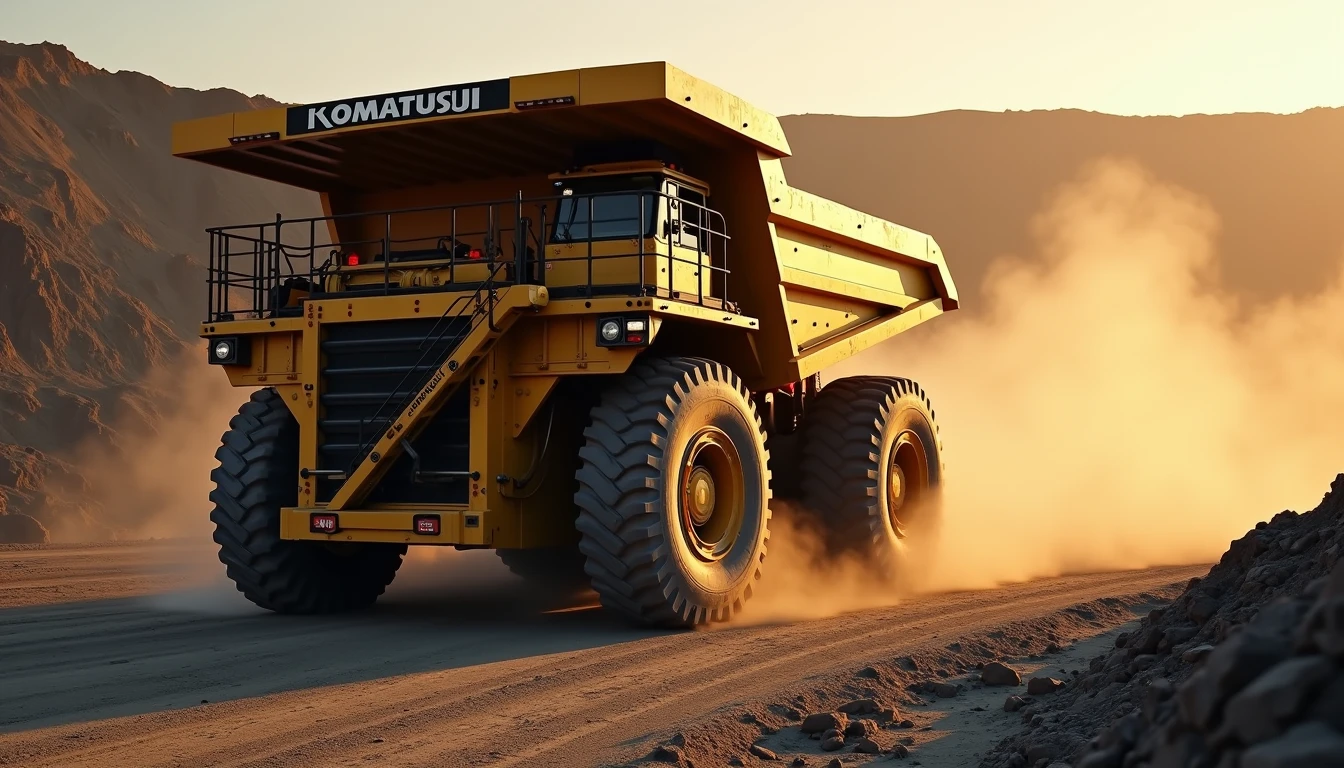
Komatsu PC9000-12 Global Launch Delivers 8000 Tons Per Hour Capacity for Surface Mining
The Big Picture
I've spent thirty years crawling under machines in conditions that would kill a desk jockey in an hour. I've seen excavators buckle when operators push cycle times too hard, and I've seen fleets bleed money because the match factor was off by a single pass. Komatsu Germany Mining Division (KGM) just announced the global launch of the PC9000-12, their largest hydraulic mining excavator. They claim it's the next evolution in surface mining. Maybe. But what matters to you is the cost per ton.
Field Lesson: I watched a site in Wyoming try to force a 4-pass match with a machine rated for five. They saved seconds per cycle but burned out swing motors in half the expected life. Don't chase the headline number if your haul trucks can't handle the rhythm.
The PC9000-12 follows successful operations in Canada, specifically an oilsands operation where the inaugural unit was delivered in May 2025. SMS Equipment acted as the launch partner. Now, it's available worldwide. The goal here is straightforward: higher productivity, improved efficiency, and lower cost per ton. If you're running a surface mine, you're looking at production rates of around 8,000 tons per hour under optimal conditions. That's the number you put in your ROI spreadsheet, not the marketing fluff.
Key Details
Let's talk iron. The PC9000-12 comes in front shovel and backhoe configurations. You're looking at a 46 m3 front shovel bucket or a 49 m3 backhoe bucket. It's optimized to load Komatsu's largest mining trucks in the range of 240 – 400 short tons. The match factor is critical here: Komatsu specifies a 3 – 5 pass match.
Safety Alert: High payload means high momentum. With more than 80 tons per pass, swing radius clearance is non-negotiable. I've seen ground personnel vanish because they assumed an operator could see them in a blind spot. Trust the monitoring systems, not your eyes.
The machine can be configured with diesel Tier 4, diesel unregulated, or electric drive. This flexibility matters for regulatory compliance depending on where you dig. In terms of raw speed, Komatsu states it can load a Komatsu 980E truck in just five passes in under 150 seconds. That efficiency is engineered for double-sided loading, which cuts shuttle time if your pit layout supports it. It's also compatible and integrated with Komatsu's FrontRunner Autonomous Haulage System. If you're moving toward autonomy, this integration reduces the friction of retrofitting later.
Operational Impact
For a fleet manager, the "so what" is total cost of ownership (TCO). The PC9000-12 is designed to reduce production costs through optimized cycle times. Peter Buhles, Vice President Sales & Service, says the machine sets a new benchmark for global surface mining operations. He notes the versatile configurations allow them to serve all major mining operations worldwide.
From a maintenance standpoint, the operator cabin is spacious and ergonomically optimized. Advanced monitoring systems support reduced operator fatigue. Why does that matter to maintenance? Because tired operators make mistakes that break components. Improved visibility and enhanced situational awareness enable high performance throughout every shift. If your operators aren't fighting the controls, your hydraulic seals last longer.
The electric drive option is significant for sites facing stricter emissions regulations. While the source doesn't give specific fuel consumption numbers, the ability to switch between diesel Tier 4, unregulated, or electric allows you to align equipment selection with site-specific conditions. This affects your preventive maintenance schedules significantly. Electric drives eliminate engine oil changes and filter replacements associated with diesel, shifting labor hours to electrical system checks.
What to Watch
Regulatory compliance is tightening globally. The availability of diesel Tier 4 versus unregulated options means you need to know your local EPA or equivalent standards before ordering. If you buy unregulated for a site that later falls under stricter jurisdiction, you're stuck with stranded assets.
Automation is the other trend. The integration with FrontRunner Autonomous Haulage System isn't just a feature; it's a requirement for future-ready mine sites. If your competitors are running autonomous haulage with precise loading cycles and you're still manually spotting trucks, your cost per ton will drift higher. The PC9000-12 is built with this in mind. Watch for how the autonomous integration affects your insurance premiums and safety protocols.
Bottom Line
Here's the verdict. If you're moving material in the 240 – 400 short ton range and need to hit 8,000 tons per hour, the PC9000-12 fits the profile. The 150-second load time on a 980E truck is solid, provided your haul roads can sustain that throughput.
Field Lesson: Don't buy the biggest bucket if your ground conditions are abrasive. A 49 m3 backhoe bucket is useless if you're spending every weekend repairing wear points. Match the configuration to the material, not just the truck.
My recommendation: Verify the match factor with your existing fleet before committing. If you're already running Komatsu 980E trucks, the integration is seamless. If you're mixed fleet, validate the 3 – 5 pass claim with your own cycle time studies. Ensure your maintenance team is trained on the advanced monitoring systems. This machine delivers power and reliability, but only if you respect the specs and maintain the safety protocols. Lower emissions per ton and seamless integration are good, but uptime pays the bills.