Optimizing Bulldozer Fleet Selection for Terrain and Production Requirements
I remember a job site in Wyoming where a fleet manager bought large production dozers for a finish grading job on a college campus. He saved on upfront acquisition costs but burned through undercarriage components in three months because he was running metal tracks on paved surfaces. That's not maintenance; that's negligence. I've seen this go wrong. Here's how you avoid it. Selecting the right iron isn't about horsepower alone; it's about matching machine classification to the ground conditions and the work scope. If you mismatch the asset to the application, your total cost of ownership spikes before the first service interval hits.
The Big Picture
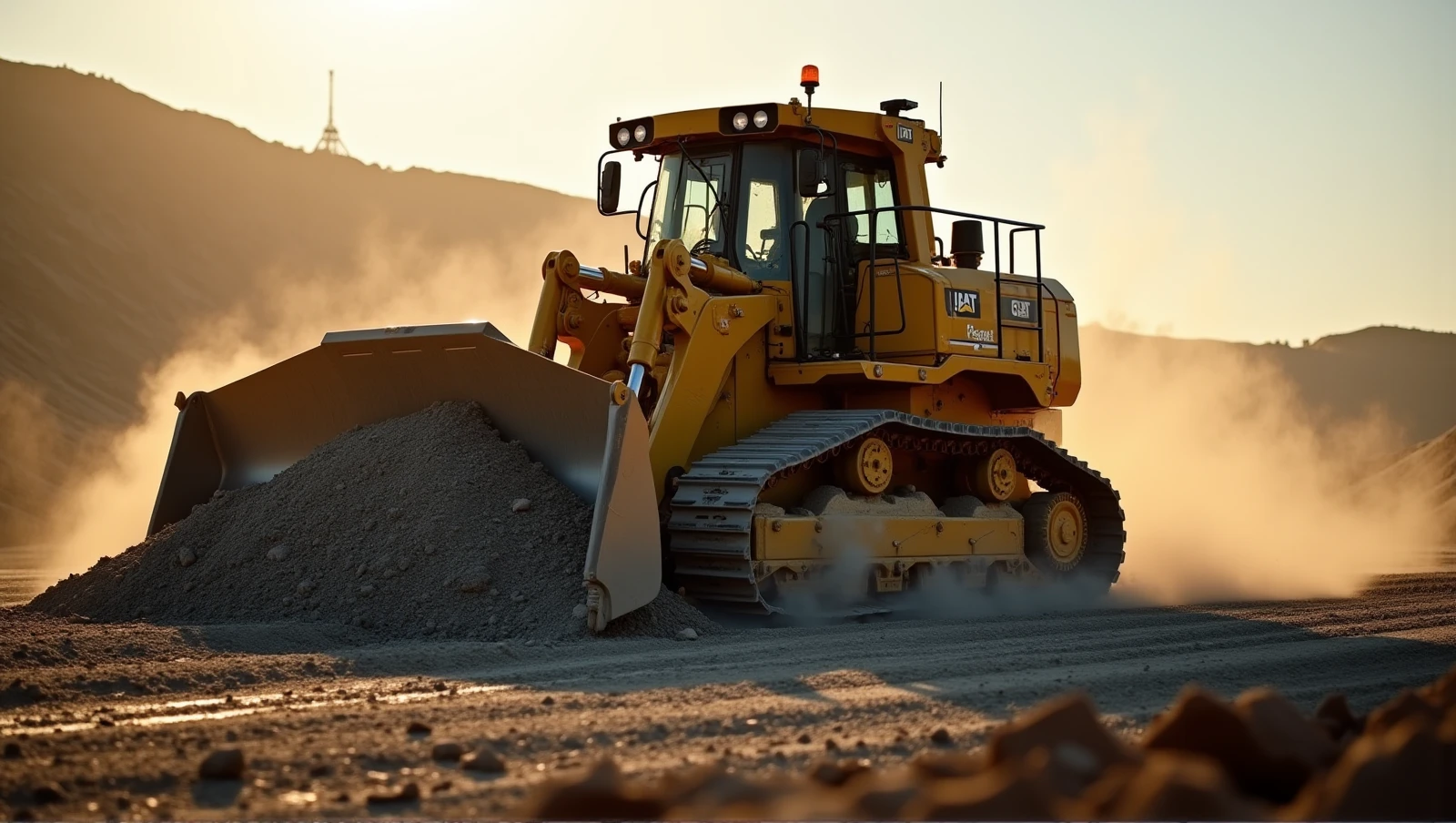
Bulldozers, often referred to as dozers, track type tractors, or crawler tractors, are foundational assets in industries dealing with large material volumes. Based on standard deployment data, these machines are critical in construction, mining, agriculture, and forestry. The core value proposition is the transfer of power into the ground. The combination of tracks and a low center of gravity provides traction and stability on slopes and unstable ground that wheeled equipment cannot match.
However, versatility has limits. While you can find these machines everywhere from the middle of a forest to the center of a demolition site, there is a hard constraint on surface types. Due to the metal tracks, bulldozers cannot be used on paved surfaces. Ignoring this restriction destroys infrastructure and equipment alike. For fleet managers, this dictates asset allocation. You do not deploy a crawler dozer on a finished road network unless you want to explain massive repair bills to the CFO.
Key Details
Understanding the classification system is vital for procurement specialists. Bulldozers are categorized by function and physical specifications. Functionally, you have Finish Grade Dozers versus Production Dozers. Finish grade dozers are smaller in size, used for tasks such as finish grading and excavation. They are equipped with variable power angle tilt blades that can be moved up or down, tilted on either side, and angled left or right. Production dozers are larger in size, used for rough grading and projects where a large amount of material needs to be transported. They come equipped with heavy-duty blades well-suited for tough environments.
Field Lesson: I once saw a production dozer tried to do finish work. The blade was too heavy, the machine too bulky. They scarred the substrate and missed grade tolerances. Use the right tool. Don't try to make a hauler act like a surgeon.
Physically, the market segments machines by weight and horsepower. Small models are under 20,000 pounds and offer between 75hp and 125hp. Medium models are between 20,000 pounds and 60,000 pounds, offering between 125hp and 250hp. Large models are between 60,000 pounds and 150,000 pounds and offer over 250hp. These figures define your transport requirements and operational capacity.
Operational Impact
The choice between crawler and wheel-based options significantly impacts maintenance schedules and site mobility. A crawler option is the most common option, designed to run off tracks that offer impressive traction. They are able to easily navigate uneven surfaces or terrain that easily shifts, such as gravel or refuse piles. Conversely, a wheel-based option is usually much larger in size, designed to run off heavy-duty tires and hydraulic steering that allows the bulldozer to maneuver tight turns and handle tasks that need exact positioning.
Wheel-based units are able to offer increased horsepower, but offer less traction. They are often used by facility maintenance and commonly found on worksites such as college campuses and sport arenas. For fleet operations, this means wheel-based dozers may have higher mean time between failures on hard surfaces, but crawlers dominate in loose material.
Safety Alert: Metal tracks on pavement is a violation waiting to happen. It damages the road and compromises machine stability. If your site has mixed surfaces, you need wheel-based options or transport the crawlers between zones.
Attachments also drive efficiency. One great advantage of bulldozers is their ability to use attachments. These upgrades get attached to the bulldozer, improving the efficiency and versatility of the heavy equipment. Common bulldozer upgrades include a ripper, which is a claw that can break through tough surfaces such as concrete or frozen ground, and a blade, which is a heavy metal plate that can push materials out of the way. Proper specification of these attachments reduces cycle times and fuel consumption per ton moved.
What to Watch
Regulatory compliance regarding ground disturbance and surface damage is tightening. While the source data does not specify EPA tiers, the operational constraint regarding paved surfaces is a de facto regulatory boundary in many municipalities. Damage to public infrastructure by metal tracks can lead to fines exceeding the cost of the equipment itself. Furthermore, as sites become more congested, the maneuverability of wheel-based options with hydraulic steering becomes a safety priority over raw traction.
Market trends indicate a shift toward specialized machines rather than general-purpose fleets. Using a large model (60,000 to 150,000 pounds) for small tasks increases wear rates without increasing output. Procurement must align machine size with the specific weight class requirements of the contract.
Bottom Line
For fleet and operations managers, the recommendation is clear: audit your site terrain before signing purchase orders. If you are working on unstable ground, gravel, or refuse piles, the crawler option is necessary despite the pavement restrictions. If you are on campuses or arenas requiring exact positioning and tight turns, the wheel-based option offers increased horsepower with the necessary maneuverability.
Match the horsepower to the job class. Do not buy a 250hp production dozer for finish grading. Utilize attachments like rippers for frozen ground to maintain cycle times. Finally, respect the weight classes. Small models under 20,000 pounds serve different logistical needs than large models over 60,000 pounds. Get the classification right, and your maintenance intervals will stabilize. Get it wrong, and you'll be seeing me in the field for a repair job that should never have happened.