Mining Machinery Market Hits $77.54B in 2026: What Fleet Managers Must Do Now to Protect Uptime and TCO
The Big Picture (why this matters to your fleet budget and uptime)
I watched a mine ramp turn into a mess overseas after a contractor tried to “stretch” a diesel fleet through a production surge. They ran machines harder, pushed service, and ignored early warnings. Uptime fell off a cliff, rental iron got pulled in at premium rates, and the safety guys started writing reports nobody wanted to read. The lesson wasn’t complicated: when demand spikes, equipment strategy matters as much as ore body and blasting.
That’s the backdrop for the Mining Machinery and Equipment Market Report 2026: the mining machinery and equipment market grows from $73.16 billion in 2025 to $77.54 billion in 2026 (6% CAGR), and is projected to reach $101.66 billion by 2030 (7% CAGR). For fleet decision-makers, that signals two things:
- Competitive pressure to improve operational efficiency and productivity, not just add machines.
- A market shifting toward automation and zero-emission equipment, with real procurement consequences for total cost of ownership (TCO) and future compliance expectations.
The report also links growth to construction demand—meaning even if you’re not expanding a mine, you’ll still feel the squeeze through lead times, pricing, and competition for capable equipment.
Field Lesson: When construction booms, mines feel it twice—once in demand for commodities, and again when OEM slots and dealer service capacity get swallowed up. If you wait until production is already behind, you’ll pay for it in downtime and rushed purchasing.
Key Details (market drivers, major moves, and what’s changing)
The report attributes historic growth to:
- Growth in global mining activities
- Expansion of coal and metal extraction
- Rising demand for heavy construction equipment
- Increased infrastructure development
- Mechanization of mining operations
Looking forward, the forecast growth is tied to:
- Rising demand for critical minerals
- Increasing adoption of automation in mines
- Expansion of mineral processing capacities
- Focus on worker safety improvements
- Growth in electric vehicle mineral supply chains
Major forecast trends called out include:
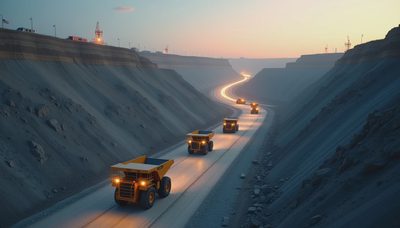
- Increasing adoption of autonomous and semi-autonomous mining equipment
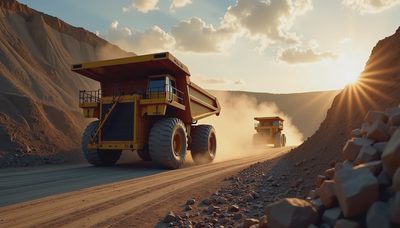
- Rising demand for high-capacity heavy-duty mining machinery
- Growing focus on equipment durability in harsh environments
- Expansion of advanced crushing and mineral processing solutions
- Increasing emphasis on operational efficiency and productivity
There are also two concrete industry moves in the source that should be on every fleet manager’s radar:
1) Liebherr + Fortescue (October 2024): zero-emission fleet scale
- Partnership to develop and deploy zero-emission mining solutions
- Development and supply of a fleet of 475 zero-emission Liebherr mining machines
- Includes around 360 autonomous battery-electric trucks
- Fortescue target: Real Zero Scope 1 and 2 emissions across Australian operations by 2030
- Practical implication: the market is moving from pilot projects to fleet-level deployment.
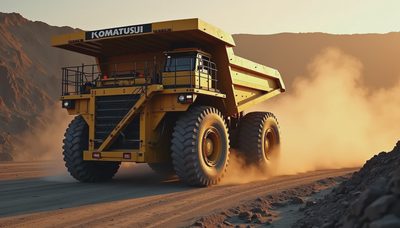
2) Komatsu acquisition of GHH Group (July 2024): underground portfolio expansion
- Komatsu acquired GHH Group GmbH (price undisclosed)
- Goal: expand Komatsu underground portfolio including loaders (LHDs) and articulated dump trucks
- Practical implication: expect accelerated product development and more competitive offerings in underground fleets.
The report lists major players: Caterpillar, Sandvik, Komatsu, Liebherr, Hitachi Construction Machinery, Metso, Epiroc, Sany.
Safety Alert: Autonomous and battery-electric deployments don’t reduce risk by default. They move the risk. You trade diesel hazards for high-energy systems and automation interface risks. If your site doesn’t have controls that match the technology, you just created new failure modes.
Operational Impact (maintenance planning, TCO pressure, and fleet readiness)
This market growth isn’t just investor talk—it hits your operation through procurement timing, staffing, and fleet standardization.
1) Procurement strategy: plan for competition and capacity constraints
Construction activity is specifically cited as a growth driver. The source gives examples:
- New Zealand building activity increased 3.7% in March 2021, and residential activity rose 4.3% in 2021 compared to the prior year (Stats NZ).
- US construction value rose 10.2%, from $1.62 trillion in 2021 to $1.79 trillion in 2022 (US Census Bureau).
When construction expands, it competes for the same heavy equipment manufacturing capacity, components, and dealer labor. For a fleet manager, the “so what” is simple: build purchasing and rebuild plans around realistic lead times, not wishful thinking.
2) Preventive maintenance schedules must match higher utilization
The report highlights demand for high-capacity heavy-duty machinery and harsher-environment durability. That’s code for higher utilization and tougher duty cycles. If production pushes harder, your preventive maintenance schedules need to be locked down and resourced—because downtime costs don’t care about your staffing plan.
Field Lesson: I’ve seen mean time between failures fall fast when crews “temporarily” extend service intervals to keep trucks moving. It looks good on a weekly production report—right up until it doesn’t. Then you’re doing corrective maintenance under pressure, which is where injuries and major component damage show up.
3) Automation and electrification: factor the support ecosystem into TCO
The report calls out a shift toward automated and electric-driven machinery, often delivered through partnerships with tech companies. The Fortescue-Liebherr numbers—475 machines with ~360 autonomous battery-electric trucks—tell you this isn’t theoretical.
For TCO, you need to evaluate:
- Your readiness for automation systems support (commissioning, diagnostics, change management)
- Your ability to maintain and safely isolate electric systems
- How supplier partnerships affect long-term parts and service coverage
Safety Alert: Before you bring autonomous or electric units onto site, make sure your lockout/tagout practices and hazard controls are up to the job. OSHA expectations don’t get softer because the machine is newer. If anything, scrutiny goes up after the first incident.
What to Watch (regulatory pressure, decarbonization targets, and market direction)
The report ties future growth to worker safety improvements and decarbonization momentum, with Fortescue aiming for Scope 1 and 2 emissions elimination in Australia by 2030. Even if you’re not chasing “Real Zero,” large miners setting those targets tend to drag the supply chain with them—vendors, contractors, and smaller operators included.
Also watch the underground segment: Komatsu’s move to strengthen LHD and articulated dump truck offerings via the GHH acquisition is a signal that OEMs expect growth and competition underground. That can benefit buyers—if you use it to negotiate support and lifecycle terms, not just purchase price.
Bottom Line (what I’d do if I owned your fleet uptime)
The market is expanding from $77.54B in 2026 toward $101.66B by 2030, and the direction is clear: automation, higher-capacity fleets, and zero-emission deployments are moving from “next decade” to “this decade.”
Action items for fleet and maintenance leaders based on what the source supports:
- Build a procurement roadmap that assumes tighter competition during construction upswings (the report’s construction growth data supports this).
- Treat autonomous and battery-electric equipment as a full operational change—maintenance capability, safety controls, and supplier support—not just a spec-sheet upgrade.
- Track OEM consolidation and partnerships (Liebherr-Fortescue scale; Komatsu-GHH underground expansion) because it will shape your options, leverage, and long-term supportability.
Field Lesson: The cheapest machine is the one you can keep running safely. Everything else is just a purchase order that turns into downtime.