Hydraulic Pump Repair vs Rebuild: Cutting Downtime Risk and Total Cost of Ownership in Piston Pumps
The Big Picture (why this decision hits your uptime and budget)
I watched a loader in a remote pit keep “getting by” on a quick hydraulic fix until it didn’t. First it was a little drift, then slow cycle times, then heat, then the operator started feathering controls to compensate. Finally, the pump quit at the worst time and took the whole hydraulic system down with it. The lesson for fleet managers is simple: hydraulic pumps rarely fail all at once. Performance declines in stages, and the service choice you make in the middle of that decline determines whether you buy uptime—or buy the same downtime twice.
Panagon Systems’ view is blunt and field-realistic: the real challenge is choosing between a targeted repair and a complete hydraulic pump rebuild. They evaluate piston pumps daily and see both ends of the spectrum—cases where small issues can be corrected by restoring key surfaces and dimensions, and cases where repairs cannot fully return a pump to like-new function even if individual parts look salvageable. That difference matters because it affects uptime, operating costs, and the life of the entire hydraulic system.
For decision-makers, this is not a “shop preference” question. It is a risk and total cost of ownership decision: what option restores reliability without overspending, and what option reduces your chance of repeat failure and a second downtime event.
Safety Alert: A hydraulic pump that “runs but doesn’t run correctly” is a jobsite hazard. Poor stability, internal leakage, and control problems can create unpredictable machine response. Treat degraded hydraulics as a safety issue, not just a productivity problem.
Key Details (what a repair can do, and what a rebuild really includes)
When a targeted repair makes sense
A repair focuses on restoring one or more components so the pump can return to service. Per Panagon, many hydraulic pump components are repairable if critical specifications can be precisely restored, including:
- Tolerance
- Surface finish
- Unit dimensions that affect sealing and flow
In the right scenario, a repair can correct a localized problem and return the pump to acceptable performance quickly. Panagon flags typical repair candidates such as:
- Housings with minor wear that can be reconditioned
- Mounting surfaces that can be restored
- Select sealing interfaces that can be brought back within specification
- External issues like damaged ports, worn fittings, or a shaft seal leak
Their key qualifier is the health of the rotating group and contamination history: when the rotating group remains healthy and the pump has not been run in a severely contaminated condition, a repair can be the most efficient solution.
Field Lesson: I’ve seen crews chase a shaft seal leak and ignore what caused it—heat and internal leakage pushing temps up. Fixing the external symptom got the machine moving, but the underlying wear kept eating the pump. If you’re only repairing what you can see from the outside, you’re gambling.
Where repairs fall short (and why “salvageable” is not “serviceable”)
Panagon’s warning is one I wish more procurement folks heard: repairing a part does not always re-establish the full functionality that part provided as a new component. Hydraulic piston pumps depend on a balance of clearances across multiple surfaces. If any of the following are true, restoring one component may not correct internal leakage or stability issues:
- Wear is widespread
- Heat has altered surfaces
- Hard particles have circulated through the unit
In that situation, the pump may run, but it may not run correctly—meaning you can get the machine back, but not back to spec.
What a hydraulic pump rebuild includes (per the source)
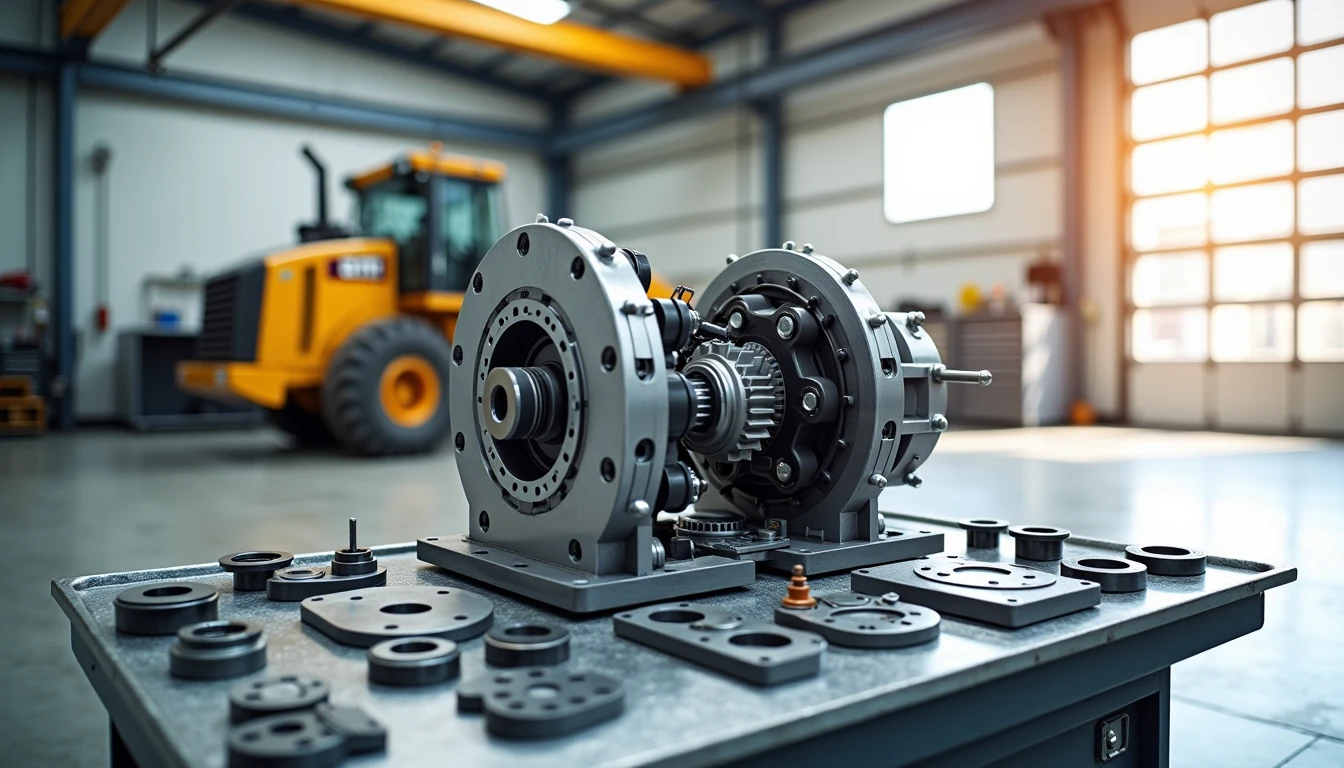
Panagon defines a rebuild as a comprehensive restoration process: identify bad components and rebuild the pump with new parts to deliver a fully functional unit operating to original specifications. The goal is not just rotation—it is restoring performance, efficiency, and control.
A rebuild typically includes:
- Full disassembly and cleaning
- Inspection for wear patterns, scoring, discoloration from heat, and contamination damage
- Measurements at key surfaces and interfaces
- Evaluation of rotating group components for wear affecting sealing and volumetric efficiency
- Bearing inspection for roughness, looseness, and spalling
- Examination of valve and control elements for sticking, erosion, or internal leakage
Then the rebuild work focuses on replacement:
- Worn bearings, seals, and O-rings are replaced
- Damaged rotating group parts are replaced where necessary to restore performance
- Control components affecting stability and response are returned to specification
- Surfaces requiring restoration are corrected to dimensional requirements only when restoration can be achieved precisely and reliably
Operational Impact (maintenance strategy, downtime risk, and TCO)
Panagon offers a practical decision frame: risk. A repair can be the right answer when the problem is limited and the remaining components are within tolerance. But when wear has spread across critical pairs, a repair can leave the pump vulnerable to repeat failure.
For fleet operations, that translates into two competing cost models:
- Repair-first strategy (lower immediate spend, higher repeat-risk): Best when you have evidence the issue is localized, the rotating group is healthy, and contamination has not been severe. It can reduce time-to-return-to-service, but it only pays off if it truly restores function and doesn’t trigger a second event.
- Rebuild strategy (higher scope, lower repeat-risk): Built around restoring the pump to original specifications by replacing worn components and bringing stability/response back to spec. The value is in avoiding the “pump runs but doesn’t run correctly” trap and reducing the odds of cascading hydraulic system damage.
Panagon’s key operational cost warning is one every maintenance superintendent should tape to the wall: the cost of a second downtime event often outweighs the savings of a minimal repair. That’s pure uptime math—lost production, dispatch disruption, emergency service, and the collateral wear you put on the rest of the hydraulic system while operators compensate for poor pump performance.
Safety Alert: If contamination is suspected (hard particles circulated through the unit), treat it as a system-level problem. A “fixed” pump pushed back into a dirty circuit is a repeat failure waiting to happen.
What to Watch (failure patterns and decision triggers)
From the source, the triggers aren’t fancy analytics—they’re condition realities:
- Staged performance decline (not sudden failure) means you have a window to decide intelligently.
- Evidence of heat discoloration, scoring, and contamination damage should push you away from minimal repair expectations.
- Control instability, sticking, erosion, or internal leakage in valve/control elements is a rebuild-level concern because it affects stability and response—not just flow.
If you’re managing multiple assets, standardize your decision criteria around what Panagon emphasizes: tolerance, surface finish, dimensional restoration capability, rotating group health, and contamination severity. The more consistent your criteria, the more predictable your downtime planning becomes.
Bottom Line (actionable guidance for fleet and maintenance leaders)
If the problem is localized, critical specifications can be precisely restored, the rotating group is healthy, and the pump has not been run in severely contaminated conditions, a targeted repair can be an efficient return-to-service move.
If wear is widespread, heat has altered surfaces, or hard particles have circulated through the unit, stop pretending a partial fix will buy like-new performance. In those cases, a rebuild—full disassembly, inspection, measurement, and replacement of worn bearings, seals, O-rings, and damaged rotating group/control components—reduces repeat-failure risk and protects uptime.
Field Lesson: The cheapest pump work is the work you only pay for once. The moment you suspect you’re buying “temporary,” budget for the rebuild and schedule it—because the jobsite will schedule it for you otherwise.