Off-Highway Vehicle Selection Guide: Operational Specs and Fleet Integration for Industrial Use
The Big Picture
Off-highway vehicles (OHVs) are motor-driven machines engineered for natural terrains that conventional road vehicles cannot navigate. This category addresses operational needs on tricky, rough, uneven, and steep ground across agricultural, construction, and mining sectors. The OHV umbrella includes all-terrain vehicles (ATVs), utility task vehicles (UTVs), recreational off-highway vehicles (ROVs), snowmobiles, dirt bikes, and four-wheel drive (4WD) vehicles such as Jeeps or specific sport utility vehicles (SUVs). Fleet integration requires distinguishing between recreational platforms and those built for industrial durability. Selection directly affects mean time between failures and total cost of ownership. Vehicles must handle the physical demands of off-road driving, which requires extra power—specifically torque—rather than on-road speed.
Field Lesson: "Back in '98, I was at a remote mine site. Supervisor wanted to save budget, ran a standard pickup up a 20% grade on loose shale. Center of gravity was wrong, tires didn't bite. Vehicle rolled, driver walked away, but the rig was scrap. We lost three days hauling out the wreck. If you're going off-pavement, you need the right machine. No shortcuts."
Key Details
ATVs are versatile units often fitting into spaces larger OHVs cannot access. Characterized by motorcycle-like seating, handlebar steering, and four large low-pressure tires, ATVs provide excellent traction. They are typically open-air vehicles without roll cages or protective structures. Variations include Sport ATVs, built with lightweight frames and powerful engines for speed and agility in racing or recreation. Utility ATVs are bulkier, designed for work on farms and construction sites, with robust builds accommodating attachments like plows or trailers. Youth ATVs feature smaller frames, reduced power, and safety features such as speed limiters and remote shut-off. ATVs generally offer four-wheel drive or two-wheel drive configurations with high ground clearance.
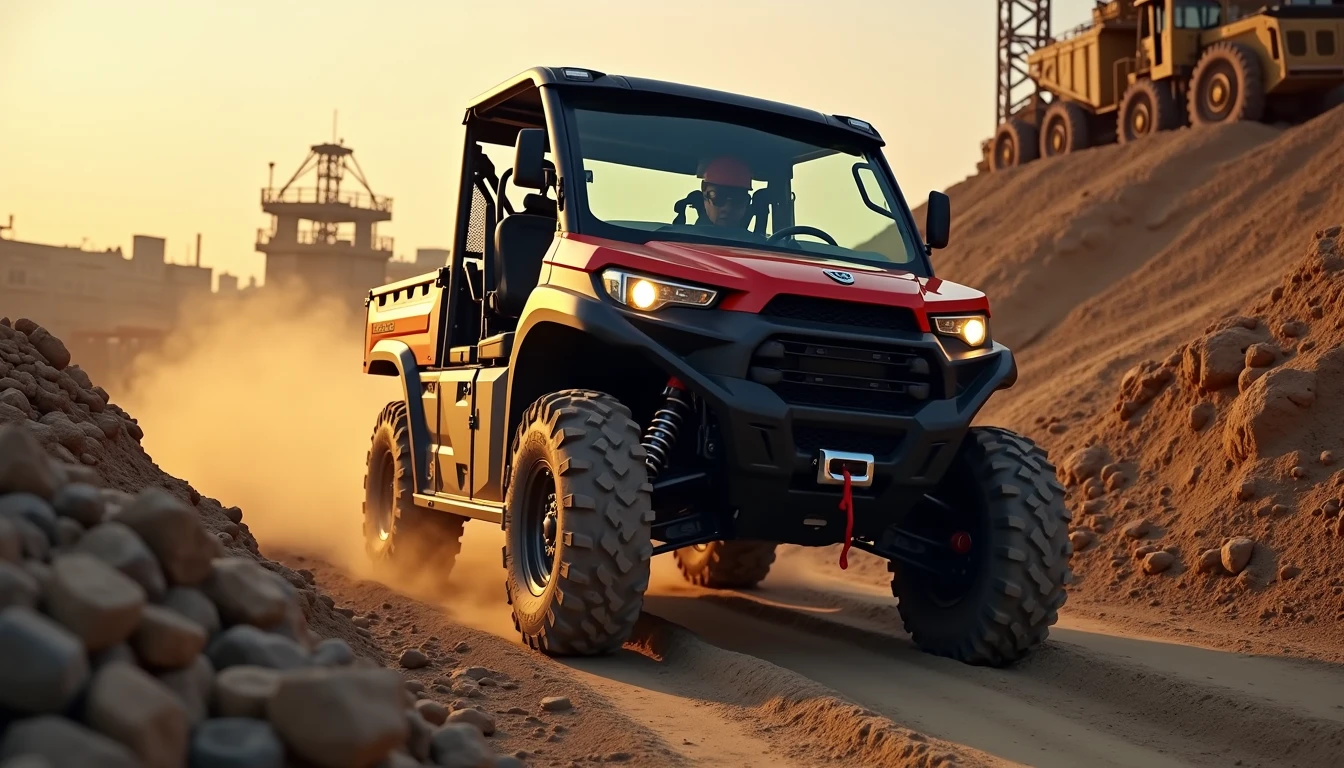
UTVs, or side-by-sides, support both work and recreation with side-by-side seating for two to six passengers. This configuration is ideal for group activities and team-based tasks. Work UTVs are built for heavy-duty duties in agriculture, landscaping, and construction, featuring cargo beds, towing capabilities, and support for various attachments. Sport UTVs focus on high performance. Both classes utilize durable construction to withstand harsh conditions and heavy use.
Operational Impact
Maintenance planning must address the specific stressors of off-road operation. Flexible suspension systems are critical for maneuverability and stability on rough terrain; neglecting suspension service intervals leads to premature failure. Large tires with deep treads require monitoring for wear patterns associated with loose and uneven ground. High ground clearance protects undercarriage components from obstacles, but impact damage remains a risk. Fleet managers should evaluate attachment compatibility for Utility ATVs and Work UTVs, as plows and trailers increase load cycles on drivetrains. Engines in these platforms prioritize torque delivery to manage demanding conditions. Procurement should consider enclosed cabs for operator protection where open-air designs expose crews to environmental hazards.
Safety Alert: "ATVs are open-air with no roll cages. If you're rolling, you're exposed. UTVs are safer for crews, but that side-by-side seating means you're moving people, not just gear. Enforce seatbelt use. On Youth ATVs, I've seen parents disable the speed limiter. That's negligence. Remote shut-off is there for a reason. Keep the kill switch in the supervisor's hand, not the kid's pocket. You don't get a second chance with a tipped quad."
What to Watch
Market trends show an expansion in enclosed OHV options, addressing operator safety and comfort. Accessories like winches, roll cages, additional spare tires, and self-inflating tires are becoming more common for enhancing operational capability. Self-inflating tires allow pressure adjustment for varying terrain, optimizing traction. Procurement teams should assess the availability of these features when comparing models. The distinction between recreational and industrial builds remains vital; a Sport ATV may lack the durability for daily farm work. Evaluate total cost of ownership based on expected duty cycle, attachment usage, and terrain severity.
Bottom Line
Deploy ATVs for solo operations in confined spaces where maneuverability is paramount. Utilize UTVs for tasks requiring crew transport, cargo hauling, or team coordination. Match the subtype to the application: use Utility ATVs and Work UTVs for heavy-duty attachments and rough terrain; reserve Sport models for performance needs. Verify that youth units are equipped with functional speed limiters and remote shut-offs. Prioritize platforms with flexible suspension, high ground clearance, and torque-focused engines. Implement preventive maintenance schedules focused on tires, suspension, and drivetrain components to maximize uptime and safety.